
Published on by Olivier Maupas-Sehikyan · Rings
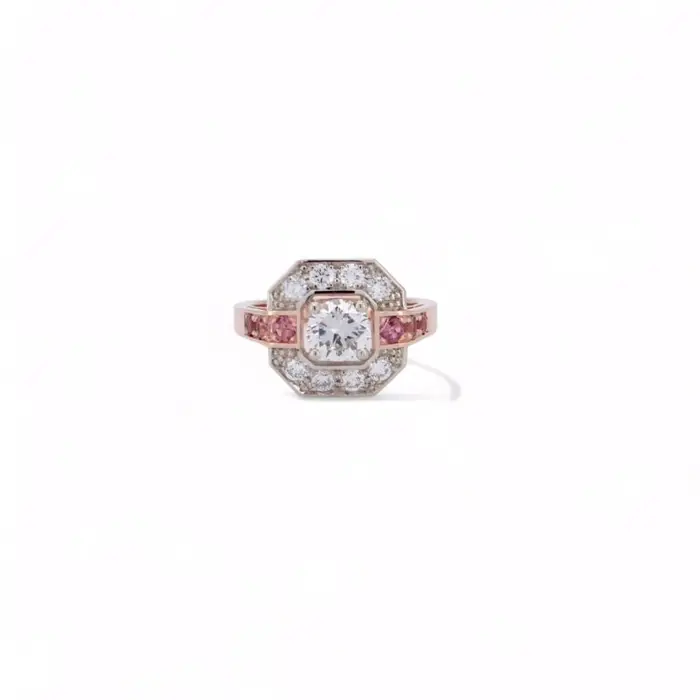
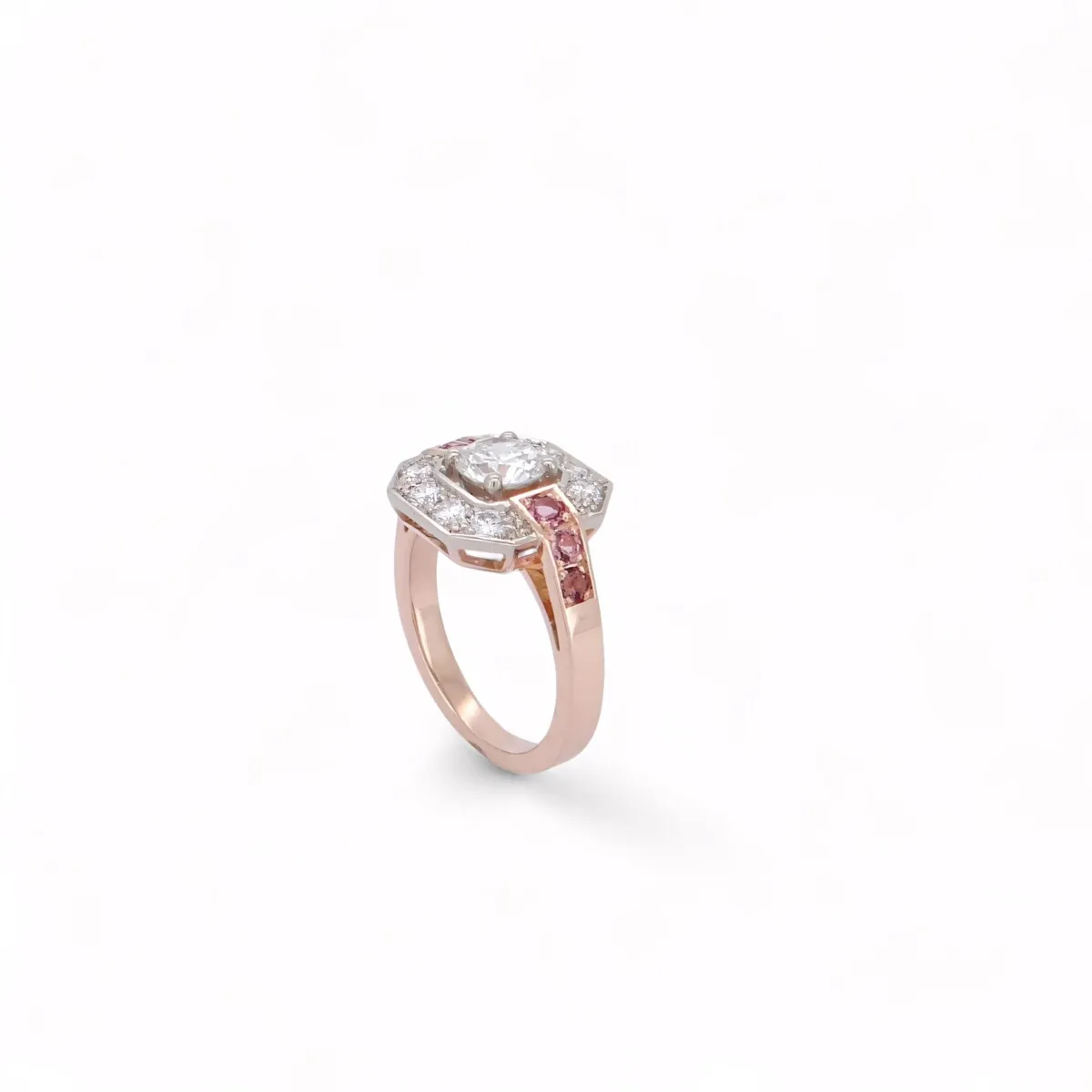
Some stories begin with a small bag placed on the workbench. One day, a client came into my workshop in Saint-Sébastien-sur-Loire, near Nantes, with several pieces of gold jewellery. They were pieces rich in history, which she had kept safe but no longer wore. She took them out one by one, unhurried, the way one leafs through old memories. Her request was clear: she wanted a bespoke Art Deco ring in Nantes, a one-of-a-kind piece born from this jewellery rather than an object that came from nowhere.
I did not answer straight away. I took the time to listen, then to handle each piece, to study its structure, to feel its weight, to imagine what this metal might yet become. The gold was assayed, and we decided together that it would be reused for the new ring. Nothing would be lost: the memory of these pieces would remain in the very material.
Transforming Old Jewellery, Guided by Listening
In my work as a jeweller in Nantes, the transformation of old jewellery calls for more delicacy than technique. You have to understand why a piece is no longer worn, what it represents, and what the client wishes to keep of it. My client did not want to erase the past. She wanted it to live on in another form, on her finger, every day.
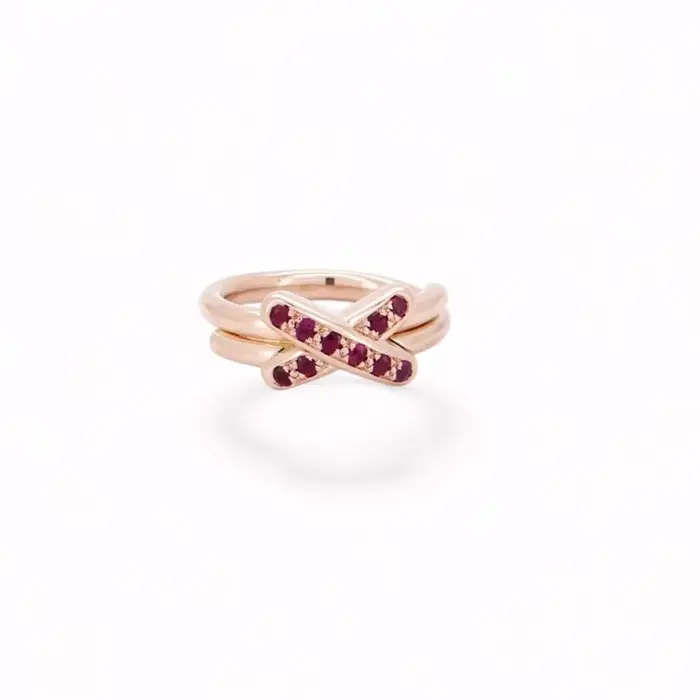
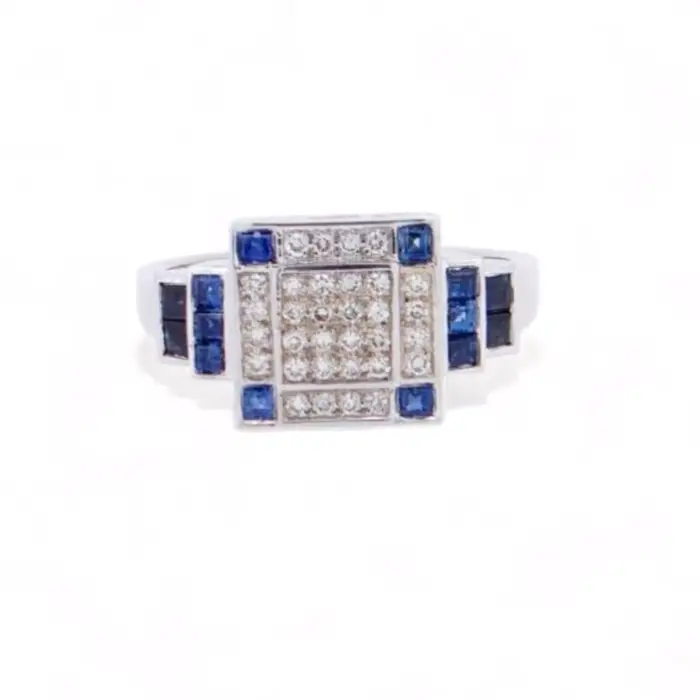
I suggested drawing on the Art Deco style, which I love for its geometric lines, its symmetry and its bold elegance. The idea: an 18-carat rose gold ring with a confident structure and a strong central motif. Neither too restrained, nor showy. Something that holds the hand and dares to stand out.
The sketch was drawn by hand, in pencil, in front of her. I set down the volumes, the proportions and the placement of the stones. The design sought a balance between modernity and heritage. When she approved this first stage, I felt the project had just come to life, and that we both had the same ring in mind.
Diamonds and Pink Tourmalines: Choosing the Stones
Next came the selection of the stones. My client already owned a few diamonds, taken from her old jewellery. I sorted them, assessed them and compared them under the loupe, then kept those with the finest brilliance and purity. There was a lovely coherence in this: stones that had accompanied her for years would find a new place in her future diamond and tourmaline ring.
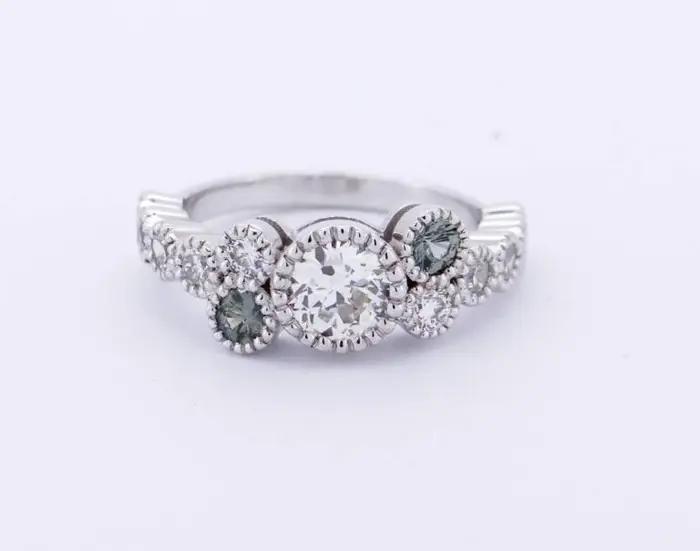
The diamonds bring light and a real visual structure. In this project, they were to surround the centre to underline the Art Deco character of the ring. A central diamond, encircled by pavé, so that the eye is drawn at once to the heart of the piece.
For colour, I suggested tourmalines. This stone fascinates with the variety of its hues, and I chose pink tourmalines, which converse with the rose gold without ever competing with it. Their softness contrasts with the vivacity of the diamonds, like a low voice set beside a clear one.
A Setting Designed for Each Stone
Each stone was precisely calibrated, and the dimensions adjusted to fit the mount perfectly. The diamonds are set to catch as much light as possible. The tourmalines call for a setting that respects their colour and transparency. This choice has a direct influence on the final result: a stone poorly held loses half its charm.
At the Workshop: From Melted Gold to 18-Carat Rose Gold
All the making took place in my workshop in Saint-Sébastien-sur-Loire. This matters to me, because it allows me to control every detail, from the first gesture to the last stroke of the polishing tool.
I began by melting the reclaimed gold. It was refined, then reworked to obtain an 18-carat rose gold alloy. This warm tone comes from a precise blend of fine gold, copper and silver. Watching these pieces from the past melt into a single luminous ingot is always a special moment. You know there is no going back, and that everything now rests on the hand.
The metal was then rolled, cut and formed. The body of the ring was shaped by hand, the various parts assembled with precision, and the Art Deco motif emerged little by little, line after line. I made the central plateau, structured to receive the main diamond, then prepared the seats for the smaller diamonds around it. Each was adjusted with meticulous care, to within a tenth of a gesture.
Then came the setting, the stage I savour most. Each diamond was fixed to play with the light. The tourmalines took their place at the sides, bringing that touch of colour that changes everything. The setting is secure, yet remains discreet so as not to weigh down the design.
The techniques I use are those of tradition: sawing, filing, soldering, polishing. Everything is done by hand, with no shortcuts. Once the stones were in place, I moved on to the finishing. The ring was polished, cleaned and checked under the loupe. The edges were softened, the surface made perfectly smooth, and the stones shone at last just as I had hoped.
Handing Over the Ring: The Past in the Palm of Her Hand
The day my client returned to the workshop, I placed the box in front of her without a word. She opened it, fell silent for a moment, then smiled as she looked at the tourmalines. The emotion was strong, and mine too, I won't hide it. She slipped the ring onto her finger, turned her hand towards the light of the window, and I saw in her eyes that her old jewellery had not disappeared: it was still there, but it had found a new voice.
This 18-carat rose gold ring, set with diamonds and tourmalines, reflects both past and present. It is not merely a creation, it is a memory that continues to be written. Every project of this kind reminds me why I love this craft: turning what lay sleeping in a drawer into a piece of jewellery that one wears with pride.
If you too keep gold jewellery that no longer suits you, come and show it to me at the workshop in Saint-Sébastien-sur-Loire, near Nantes. We will take the time to talk, simply, over a coffee and a sketch.