
Published on by Olivier Maupas-Sehikyan · Necklaces
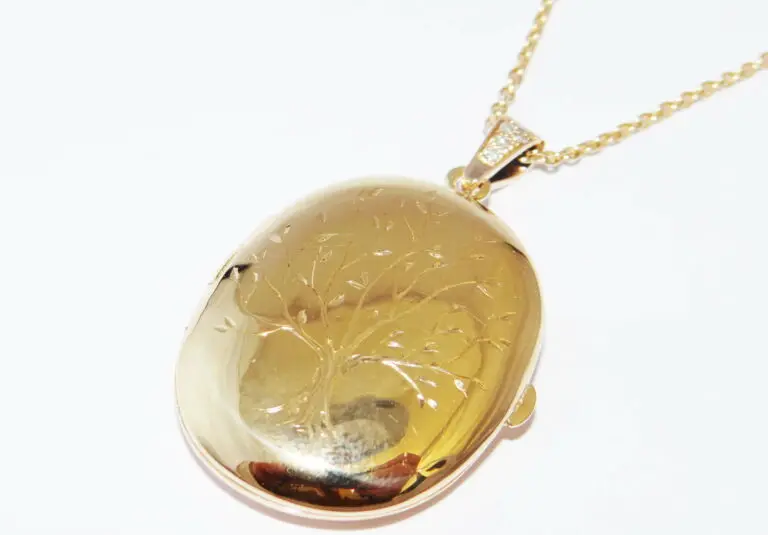
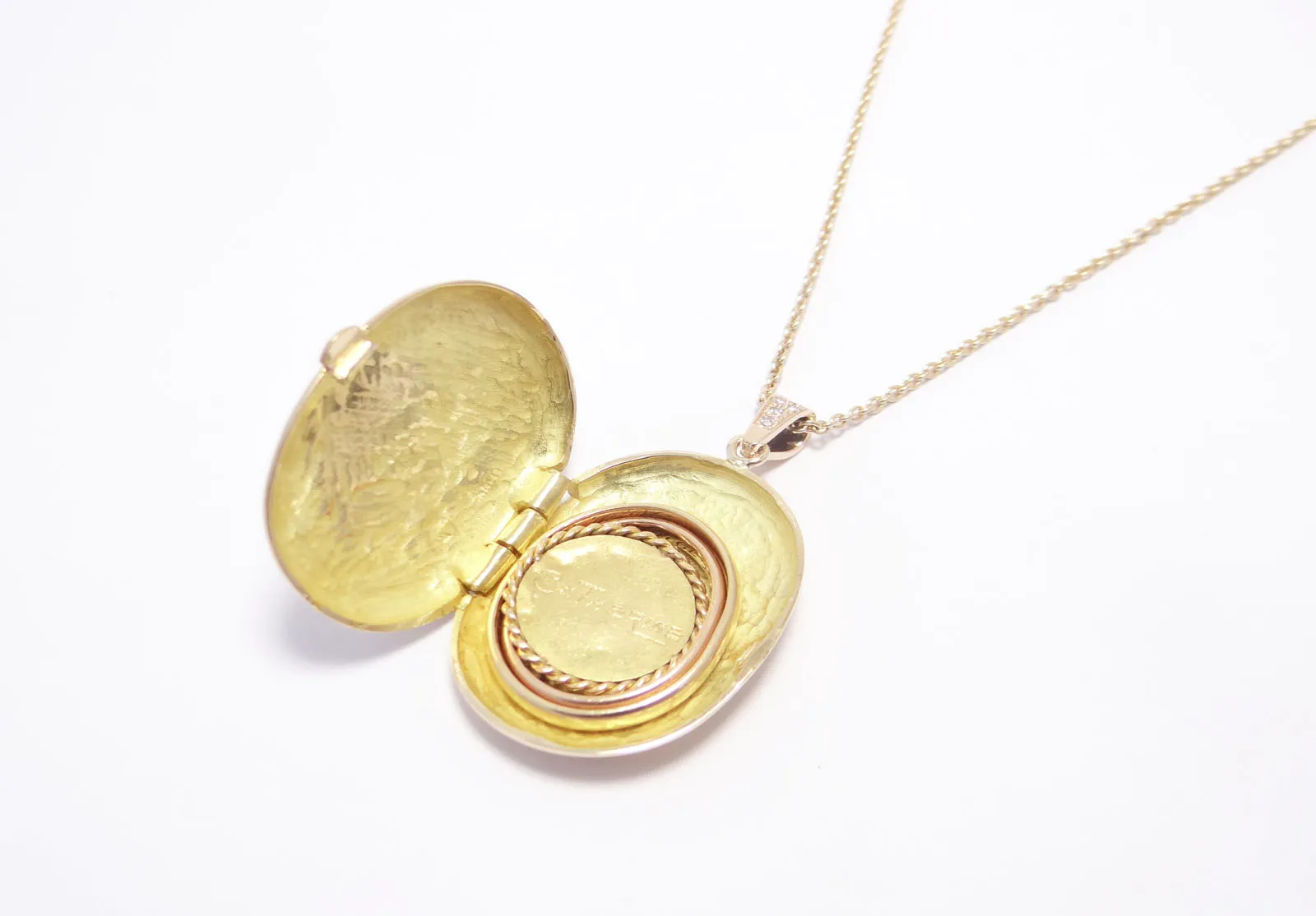
With some visits to the workshop, you know from the very first minute that they will be unlike any other. This client's was one of them. She walked into my workshop in Saint-Sébastien-sur-Loire, near Nantes, clasping a small jewellery box in her hand. She had come to entrust me with a project for an 18-carat yellow gold photo locket, a piece designed to keep her parents' wedding bands close to her. Let me tell you how it came to life.
Her parents' wedding bands, resting on my workbench
She opened the box in front of me. Two wedding bands, her parents', still shining despite the years. For a few seconds, nobody spoke. I did not need long explanations to understand that these two rings were worth far more than the metal they were made of.
For her, they were first and foremost the symbol of a love that had lasted. But they were also a living memory, and this is where her request touched me: she did not want to put them away in a drawer, she wanted to wear them every day. She was determined that they should remain whole, exactly as her parents had worn them. They would be neither melted down nor altered.
She had brought something else as well: a little family gold. She wished for this metal, which already had a history, to be transformed and woven into the new piece. I listened to her for a long time before picking up a pencil. In this trade, that is often the best way to begin.
Why a pomander photo locket
The idea came almost of its own accord. A pomander locket is a pendant that opens and protects whatever is placed inside: a photograph, a keepsake, a tiny and precious object. Here, it would hold the two wedding bands. A pomander photo locket and family wedding bands: the pairing seemed obvious to me, almost necessary.
I drew several sketches, searching for the right proportions. The locket had to be generous enough to hold both rings without constraining them, and harmonious enough to be worn without feeling heavy. I also had to think about the clasp: easy to open for the hand that wished to see the wedding bands again, but secure enough that nothing could slip out.
Once the design was approved, we talked about the metal. For this bespoke jewellery commission in Nantes, 18-carat yellow gold was the natural choice: its warmth echoed that of the story, and it blended naturally with the family gold she had entrusted to me.
At the bench: family gold, hammer and graver
The work began with the gold. The gold my client had given me was melted down, then combined with the new metal, so that the locket would carry a part of that history within it. I find this stage particularly moving: you are no longer working simply with a material, you are working with a legacy.
Over the following days, the workshop settled back into its quiet rhythm. Hammer blow after hammer blow, stroke of the graver after stroke of the graver, the raw metal took shape. The locket emerged little by little, just as it had existed on paper, and then a little better still. Every surface was reworked, checked and adjusted, then polished until the gold regained its soft glow.
There is always a moment when an object stops being a project and becomes a piece of jewellery. For this locket, that moment came when I was able to place the two wedding bands inside. They settled in effortlessly, nestled against one another, still together, still in harmony. I stayed for a moment looking at them, then carefully closed the locket.
A diamond-set bail, discreet and luminous
One detail remained, and not the least: the bail, the small fitting that joins the locket to the chain. My client wanted it set with diamonds. She was looking for a discreet sparkle, one you notice second, when the eye lingers.
Setting calls for patience and precision. Each diamond was placed with care, then secured so that it held firmly without weighing down the bail. For me, each of these stones represented a memory, a moment these two wedding bands had lived through over the years. I did not set them as one adds a mere ornament, but as one punctuates an important sentence.
A final polish gave the whole piece its coherence: the yellow gold, the diamonds, the rounded form of the locket. Nothing was to draw the eye more than anything else. Everything was to tell the same story.
Handing over the locket
On the day she returned to the workshop, I had placed the locket on a small cloth, near the window. I let her discover it alone. She picked it up, studied it, then opened it. Her eyes lit up. I did not need to ask whether she liked the result: it was all written on her face.
She closed the locket gently, as one closes a book one loves. Then she slipped the chain around her neck. In that instant, I knew that my creation had found its rightful place: against her, as close as possible to those she wanted to keep with her.
As a jeweller, nothing moves me more than giving new life to family treasures, adding my own creative touch. This experience reminded me why I love my craft so much: sometimes I am entrusted with far more than gold.
A family jewel to imagine together
Do you, too, have wedding bands, a little old gold or an object you would like to wear in a different way? An 18-carat yellow gold photo locket is just one way of doing so. If you feel like talking about it, come and see me at the workshop in Saint-Sébastien-sur-Loire, near Nantes. We will take the time to talk it over, with a coffee, without obligation.