
Published on by Olivier Maupas-Sehikyan · Earrings
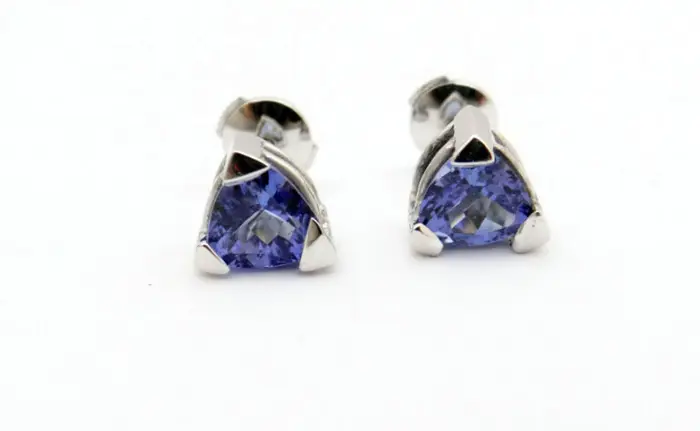
In my trade, some projects begin with an idea, others with an object. This one began with a small box, placed on the bench in my workshop in Saint-Sébastien-sur-Loire, near Nantes, by a client whose eyes were shining before she had said a single word.
Before I even opened the box, I knew that we were about to embark on a real journey together.
A box of gold and the wish to begin again
Inside the box was gold. Not just any gold: this gold carried memories, emotions, a story that my client wished neither to forget nor to keep at the bottom of a drawer. She wanted to transform it into a new piece of jewellery, one that would carry the story forward rather than freeze it.
She had a precise picture in mind: a pair of earrings. Something that, each time she glanced in the mirror, would remind her of that pivotal period of her life, the passage from one chapter to the next. I listened without interrupting her. At moments like these, my role is above all to understand what lies behind the words, and to imagine the piece that will resemble them.
Then she named the stone: tanzanite.
Why tanzanite, the stone between blue and violet
I understood her choice. Tanzanite has an unforgettable colour, a deep blue-violet that evokes both mystery and serenity. Depending on the angle and the light, it leans towards ink, towards twilight, or lightens like a sky clearing. For someone going through a transition, it is hard to imagine a more eloquent stone.
Two triangular stones
Together we chose two tanzanites in a triangular cut, the shape that lapidaries call trillion. Its three slightly curved sides give the stone a design that is at once crisp and soft, like a very geometric pebble. I selected them with care, side by side under the loupe, for the depth of their colour and their lovely clarity. They looked like two drops of blue ink frozen in time.
The metal remained to be decided. Here, the answer was obvious: white gold. Its discreet, luminous tone gives the colour of the stone all the space it needs, without competing with it. And since the original gold was to be melted down, it could become white without betraying its origins: it is the very same material, simply rewritten.
Work at the bench: melting, forging, filing
I began with the most symbolic part. The gold my client had brought was melted, then turned into a sheet of white gold, as bright as a mirror. I must admit that this moment always moves me. An object laden with memories disappears, and in that same instant a blank material appears, ready to receive another life.
Then comes the long stretch at the bench. Every blow of the hammer is struck to soften and shape the metal. The file is passed over and over to refine the lines, and the surfaces are reworked, adjusted, compared from one earring to the other. A pair of earrings is judged at a glance: the slightest difference between the two sides would be noticed immediately. So I look, I correct, I look again.
This precision work is the heart of bespoke jewellery in Nantes and the surrounding area: nothing is standard, everything is conceived for one person and one story.
The claw setting, or how to let the light breathe
To hold the tanzanites, I chose a claw setting. The choice came almost immediately. The claws grip the stone firmly, so that it is perfectly secure, yet they remain fine and discreet. Above all, they hide almost nothing: light passes right through the stone, revealing each of its facets and bringing out the full depth of the colour.
Setting demands a sure hand and a great deal of patience. Each claw is adjusted, then gently folded over the stone, never forced. A tanzanite is not a diamond: it deserves particular care, and I handle it with the caution it requires.
Polishing completed the work. It restores the mirror shine of the white gold and erases the last traces of the tools. When the earrings came back from the final pass, they no longer resembled the sheet of metal at the start in the slightest, and yet I recognised in them every hour spent on them.
Handing over the earrings: when gold finds a new life
On the day my client returned to the workshop, I confess I was almost as nervous as she was. I placed the earrings before her, in their box. Her face lit up. For a few seconds she said nothing, then she smiled, and that smile was worth more than any words.
The memories the gold had held had not vanished. They had found a new form, lighter, turned towards the future. These white gold tanzanite earrings were no longer merely a piece of jewellery: they told the story of a transformation, that of the metal of course, but also that of a woman moving forward.
I believe this is what I love most about my work. I am a witness to these metamorphoses, and sometimes their humble craftsman. A stone, a little gold, a few weeks of work, and a moment of life becomes something that can be worn, touched, handed down.
What if your gold is also sleeping in a drawer?
Many people keep a ring, a chain, a family jewel that they no longer wear but cannot bring themselves to sell. Melting down that gold to create something new is often a lovely way of giving it back its place, without denying anything of its past.
If this idea speaks to you, or if you dream of a particular stone, come and talk it over at the workshop in Saint-Sébastien-sur-Loire, near Nantes. Bring your box, your memories, your questions. We will take the time to look at it all together, simply.