
Published on by Olivier Maupas-Sehikyan · Rings
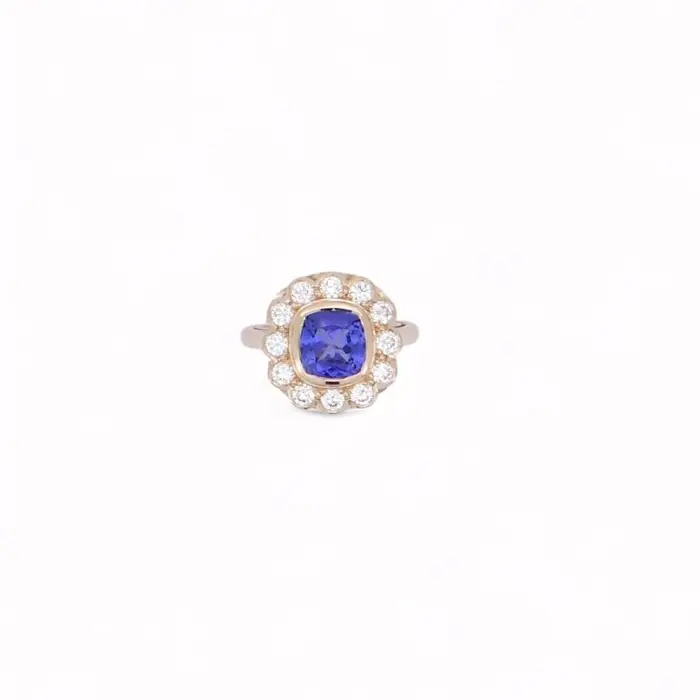
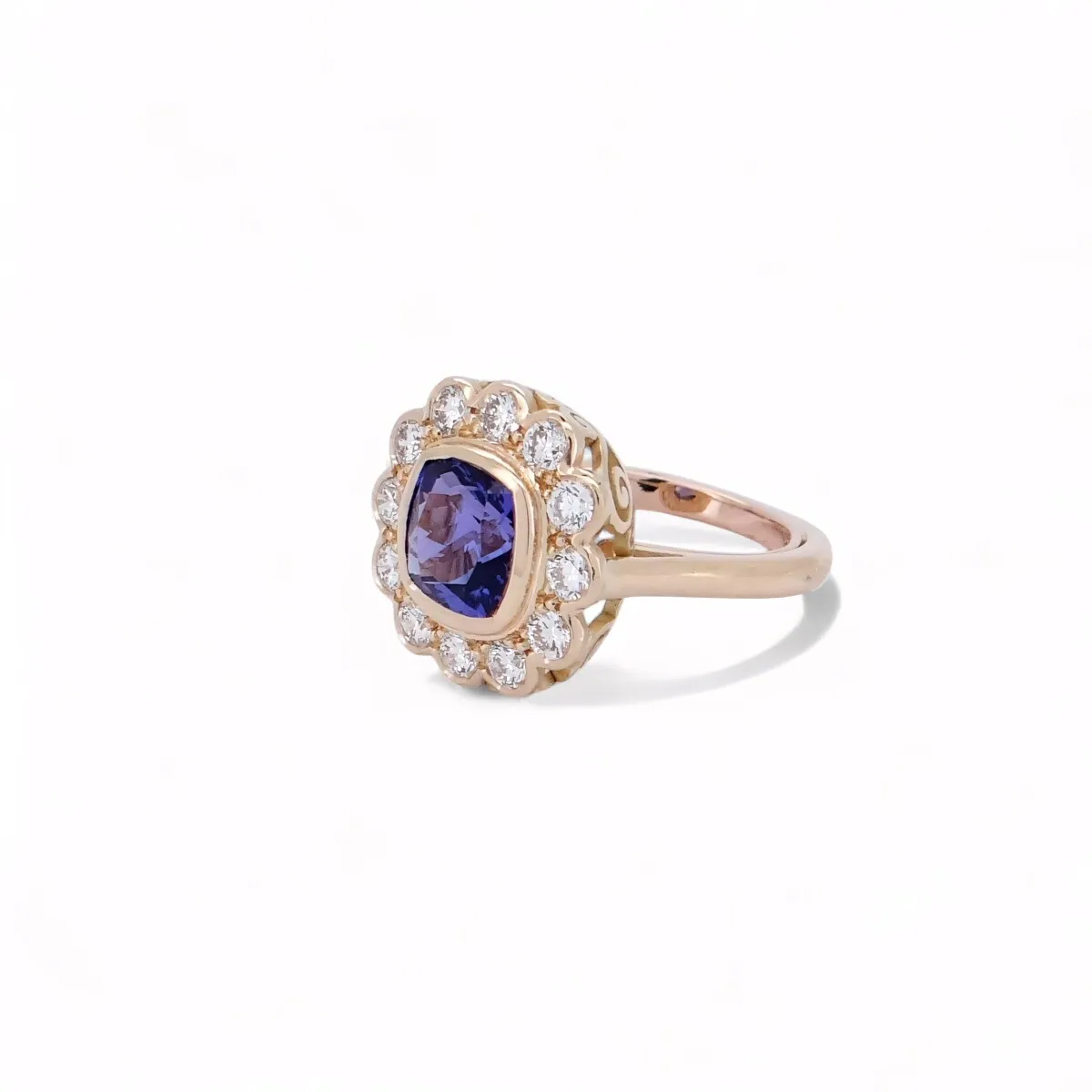
In my workshop in Saint-Sébastien-sur-Loire, near Nantes, every piece of jewellery begins with a door opening. That day, it was the door to a loyal client, a velvet case clasped tightly in her hand. I still remember the small silence before she opened it. Nor have I forgotten what I felt on seeing what lay inside.
Transforming old jewellery: a loyal client's velvet case
Inside lay jewels that had been put away for decades: a broken chain, a ring inherited from her grandmother, and a loose sapphire, kept with extreme care. These family treasures had a story to tell, but they could no longer be worn. They simply waited.
Her request was clear. She wanted to give them a second life and have a piece to wear every day, elegant and full of meaning. As we talked, the idea of a bespoke Pompadour ring suggested itself almost of its own accord. This style, which dates from the 18th century, has a slightly antique charm and an unabashed femininity that suited her project so well.
I let her speak at length about her tastes. The deep blue of her sapphire, with its slightly violet reflections, reminds her of the sea where she was married. As for the gold, she was attached to its golden glow, which warms her skin. The choice of 18-carat yellow gold was therefore swift: it would be the setting for the stone, at last given pride of place, with brilliant-cut diamonds all around.
This old jewellery transformation project captivated me from the outset. Every gram of melted-down gold and every re-used stone carries a part of someone's memory. She was entrusting me with her inheritance, and I was committed to serving it as well as I could. Her old jewellery was not disappearing: it was to be reborn as a unique ring.
Why a cushion-cut Ceylon sapphire for a Pompadour ring
Before speaking of tools, I must tell you about the stone. The Ceylon sapphire comes from Sri Lanka, formerly known as Ceylon. It is known for its velvety, luminous blue, sometimes tinged with touches of violet. My client's stone, a cushion cut, hovers between royal blue and bluish violet. With a hardness of 9 on the Mohs scale, just behind diamond, it withstands daily wear very well. That was an important point for a ring meant to live on a finger, not in a drawer.
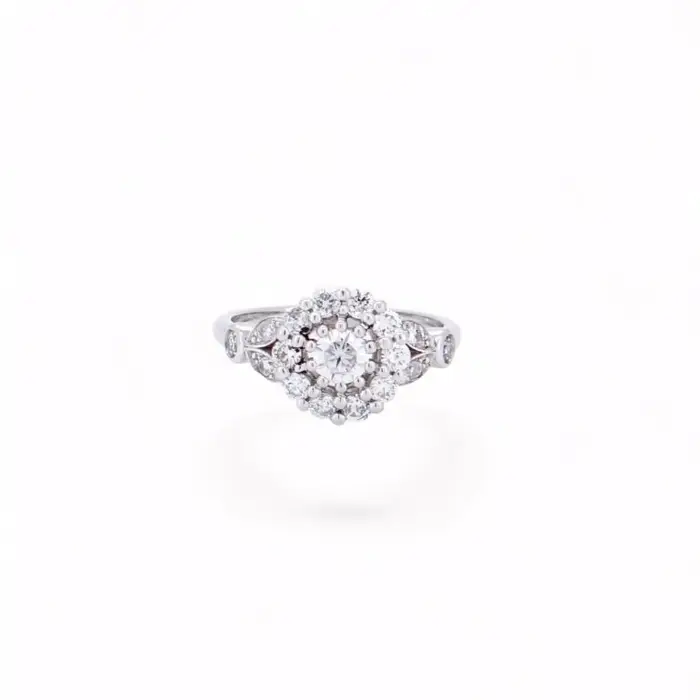
The Pompadour style takes its name from Madame de Pompadour, favourite of Louis XV. It is recognised by its imposing central stone, set off by a corolla-like surround of diamonds. I chose twelve brilliant-cut diamonds, carefully calibrated and arranged around the sapphire like a flower opening. The deep blue, the white of the diamonds and the warmth of the yellow gold answer one another. It is this three-part harmony that, to my mind, gives the ring its whole spirit.
There is also the meaning of the stones. The sapphire evokes wisdom, fidelity and sincerity. Diamonds recall purity and endurance. My client wished to give this ring to her daughter for her thirtieth birthday. A gift from one generation to the next, as much as a gesture of love handed down. Listening to her, I understood that I was not merely designing a ring: I was preparing the passing of a baton.
From wax to gold: making an 18-carat yellow gold ring
Everything was done in my workshop, a few metres from the reception area. I value this proximity: my clients see their jewel come to life and are advised at every stage. In my eyes, it is the soul of the jeweller's craft.
The drawing and the wax model
I first drew several variations by hand, so as to agree the silhouette with her. Once the design was approved, I carved a wax model. It allows me to judge the volumes, the openwork gallery with its scroll motif and the proportions of the whole before the final casting. Touch matters as much as sight, and wax still forgives second thoughts, which gold will not.
Lost-wax casting and refining the rough casting
The gold from her old jewellery was then melted in a crucible, at more than 1,000 °C. The pieces of the past faded away to be reborn in another form. This lost-wax casting makes the molten gold take the exact place of the wax in its mould. Melting down the gold of an old piece of jewellery is a common practice, but for me it retains something solemn and beautiful: the material of memories lives on. Once cooled and removed from its mould, the rough casting was carefully cleaned. The openwork and the arabesques were refined with file and graver. Little by little, the curves of the ring emerged beneath my tools.
Setting, then polishing
Then comes the most delicate stage. The sapphire was placed in the centre and held by a closed setting in yellow gold. A fine band of gold follows its outline, protects the stone and gives it a crisp frame, in the spirit of antique Belle Époque rings. The diamonds were fitted one by one into their seats, then secured in grain setting, which lets the small stones show all their brilliance. Here everything is decided to the millimetre, and the hand must know its business.
Finally came the polishing. Every facet of gold was buffed to a mirror shine, then the ring was inspected closely before being handed over. I never return a piece without having looked at it for a long while in the light, turning it between my fingers.
Handing over the ring: an inheritance comes back to life
When my client saw the finished piece, she remained silent for a moment, then emotion rose. I admit I had a lump in my throat too. In the yellow gold, she recognised the material of her jewels of old. In the sapphire, she recognised the stone she had protected so carefully. And the whole now formed a ring made for her, ready to be worn and, one day, passed on.
It is for such moments that I do this work. Seeing an inheritance come back to life in a new form is the finest reward for a maker.
If you too have a broken chain, a family ring or a stone set aside in a drawer, come and show them to me at my workshop in Saint-Sébastien-sur-Loire, near Nantes. We will take the time to talk, simply, about what these jewels mean to you.