
Published on by Olivier Maupas-Sehikyan · Rings
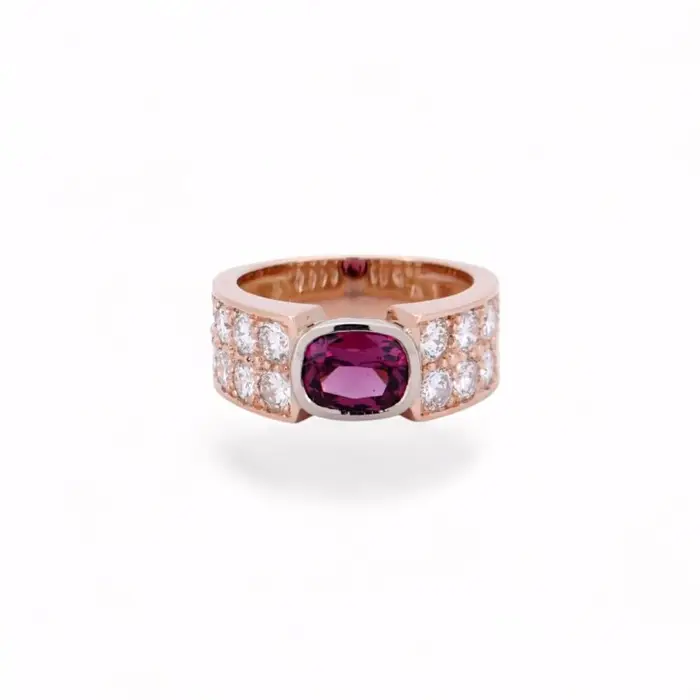
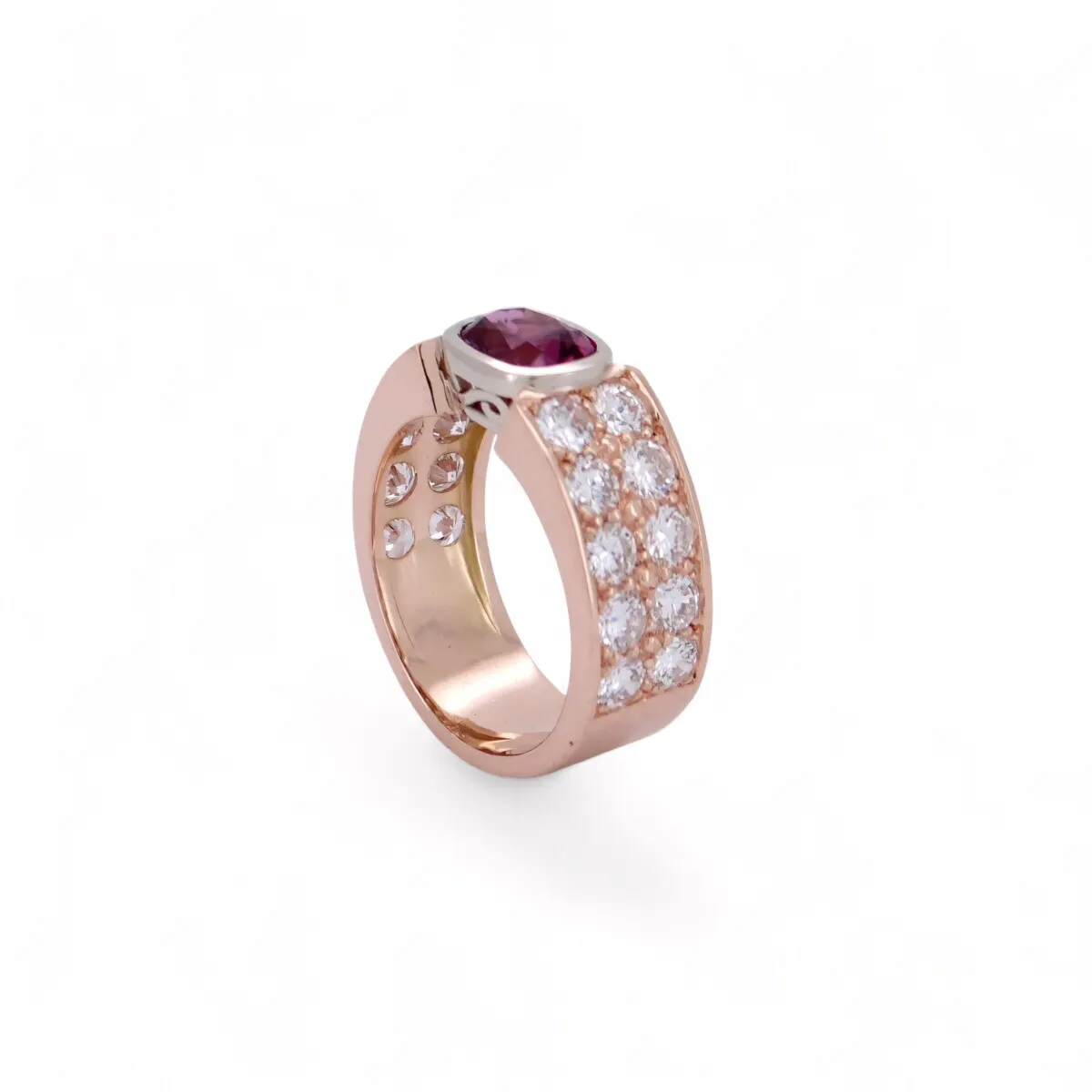
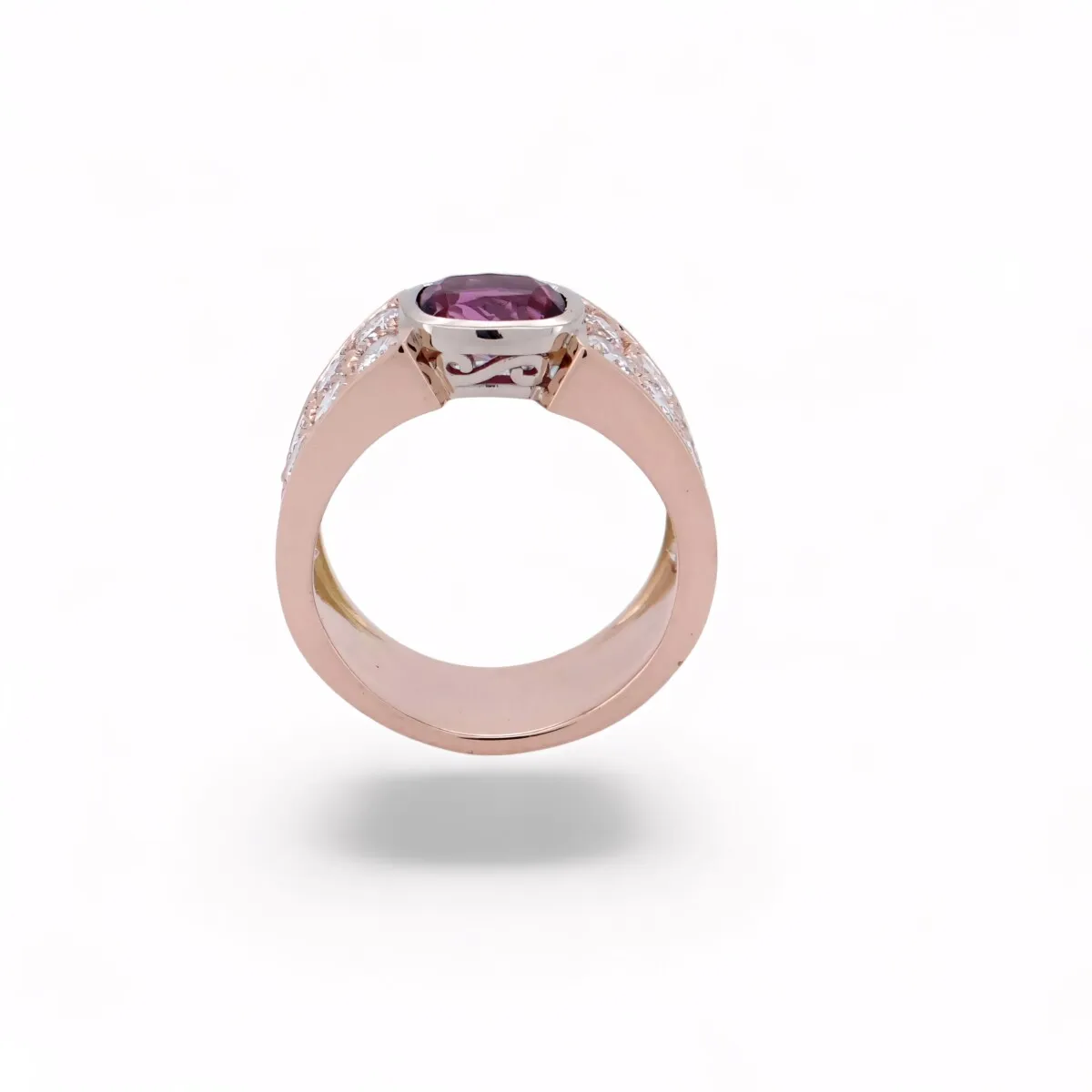
In my workshop in Saint-Sébastien-sur-Loire, near Nantes, some encounters begin with a small bag placed on the workbench. The one I want to tell you about today began exactly that way. It gave rise to a bespoke spinel ring that I shall not forget for a long time, and I take great pleasure in recounting its stages.
Inherited jewellery asleep in a jewellery box
A client came through the workshop door with old pieces of jewellery she had received as an inheritance. She kept them safe and treasured them, but she never wore them. They were full of memories, certainly, and yet they stayed at the bottom of a jewellery box, far from sight and from hands. She wished to give them a second life, without erasing them.
We talked for a long time. I always listen before I draw, because a piece of jewellery handed down through a family calls for delicacy: one must respect what these objects represent while allowing them to evolve. The idea soon became clear. The old pieces would provide the raw material, the gold itself, and a new rose and white gold ring would take shape from them.
It was then that her gaze came to rest on the display cabinet. A cushion-cut spinel was on show there, of a bewitching colour. She stood in front of it for a moment, saying nothing. I understood that the stone had chosen her as much as she had chosen it.
Why the spinel deserves a closer look
Many people are unfamiliar with this gemstone. I explained to her that the spinel was long regarded as the fifth precious stone. Its rarity has a lot to do with it, but that is not all: it exists in a wide range of colours, with very strong saturation. Its hardness of 8 gives it an excellent polish, and its great transparency lends it a lovely brilliance. For centuries it was even mistaken for ruby, and it adorns several jewels of royal crowns. My client listened, her eyes shining. Her decision was made, there and then, in the shop.
Designing a spinel ring in rose and white gold
Once the stone had been chosen, I took up my pencils. I drew several sketches, to explore different avenues and let my client picture herself wearing the ring. In the end, only one stood out: the one that combined two metals. 18-carat rose gold, warm and romantic, to echo the hue of the spinel, and 18-carat white gold, brighter, to frame two pavé diamond settings on either side.
This marriage of colours is never left to chance. Every proportion was weighed by eye, so that the central stone is shown to its best advantage without ever being overwhelmed. The cushion-cut spinel reigns at the centre, while the diamonds extend its fire with restraint. In its own way, this ring tells a story of inheritance and rebirth.
For the main stone, I chose a discreet claw setting. It is a choice of security as much as of aesthetics: the claws hold the gemstone firmly, yet they let the light through, and it is light that brings the colour to life. For the sides, I preferred grain-set pavé, a demanding technique. In jewellery making, diamond pavé is often considered the exercise that calls for the greatest technical skill.
In the workshop: casting, lost wax and stone setting
All of the making took place in the workshop in Saint-Sébastien-sur-Loire. My client dropped in regularly, and at each visit she discovered how the project was progressing. These moments gave the adventure a very human dimension, which I particularly appreciate.
It all began with the melting. The gold from the old pieces was melted down, then worked into a new metal, ready to be used. The mount was born from a lost-wax model designed specially for her: I first sculpt the model in wax, which is then cast in metal. Filing, shaping and soldering followed. Each step demands patience, and one cannot always go back.
The setting is probably the most delicate stage. It involves securing the stones in the metal, without glue, solely through the work of the metal itself. Using a pointed graver, I adjusted the claws one by one around the cushion-cut spinel, until it was held perfectly. Then the diamonds of the two pavé settings were set grain by grain. This technique, also known as bead setting, consists of raising tiny beads of metal to hold each stone in place. Under the microscope, concentration must be total: a single poorly seated diamond, and the whole alignment suffers.
Polishing came last. It revealed the depth of the spinel and the sparkle of the diamonds, and it was at that moment that the ring ceased to be an assembly of parts and became a piece of jewellery. When I placed it under the light of the workbench, I knew it was ready.
Handing over a ring that carries memory
On the day my client came to collect it, she gazed at the ring for a long time before slipping it on. Her emotion touched me deeply. She found in it the material of her inherited jewellery, but transformed, alive, and at last worn. I believe it is moments like these that give my craft all its meaning.
This spinel ring is not merely a beautiful piece of jewellery. It holds the memory of the pieces handed down, the beauty of a stone chosen with the heart, and the fruit of a patient dialogue between a client, a gemstone and my hands.
If you too own family jewellery sleeping in a drawer, or if a stone has ever caught your eye, come and talk to me at the workshop in Saint-Sébastien-sur-Loire, near Nantes. We shall take the time to look at what you have, to discuss your wishes, and to see together what we might imagine.