
Published on by Olivier Maupas-Sehikyan · Rings
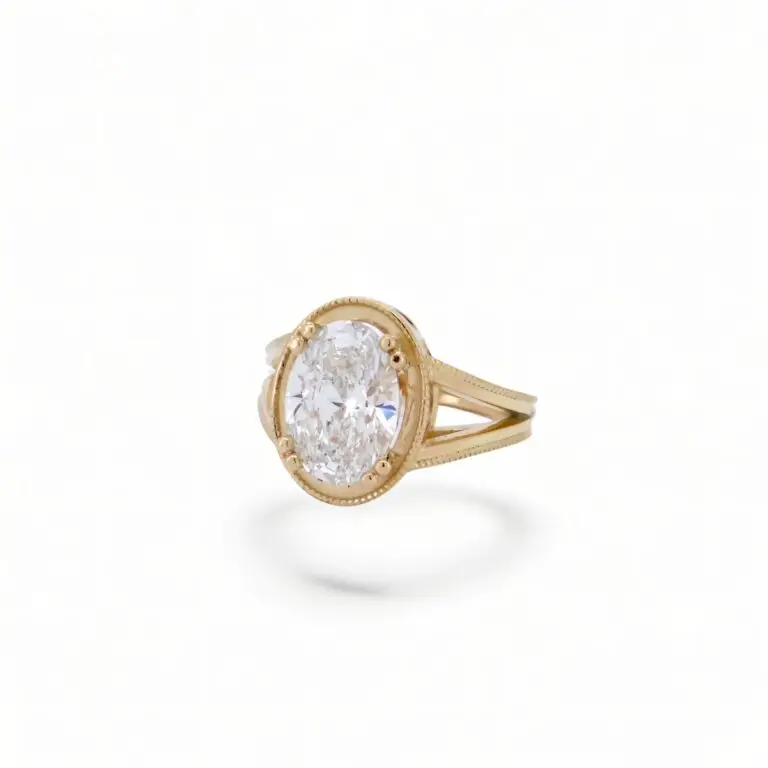
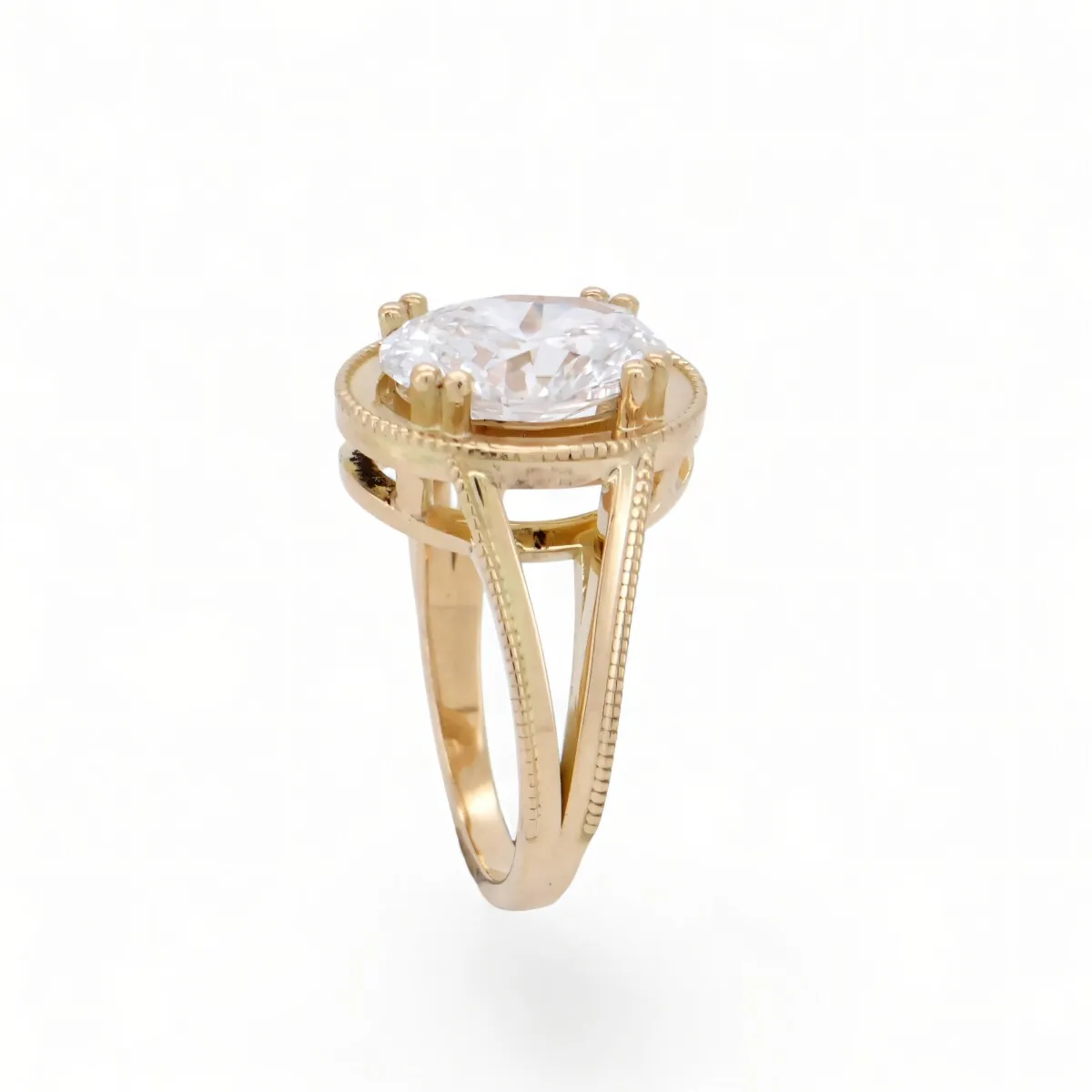
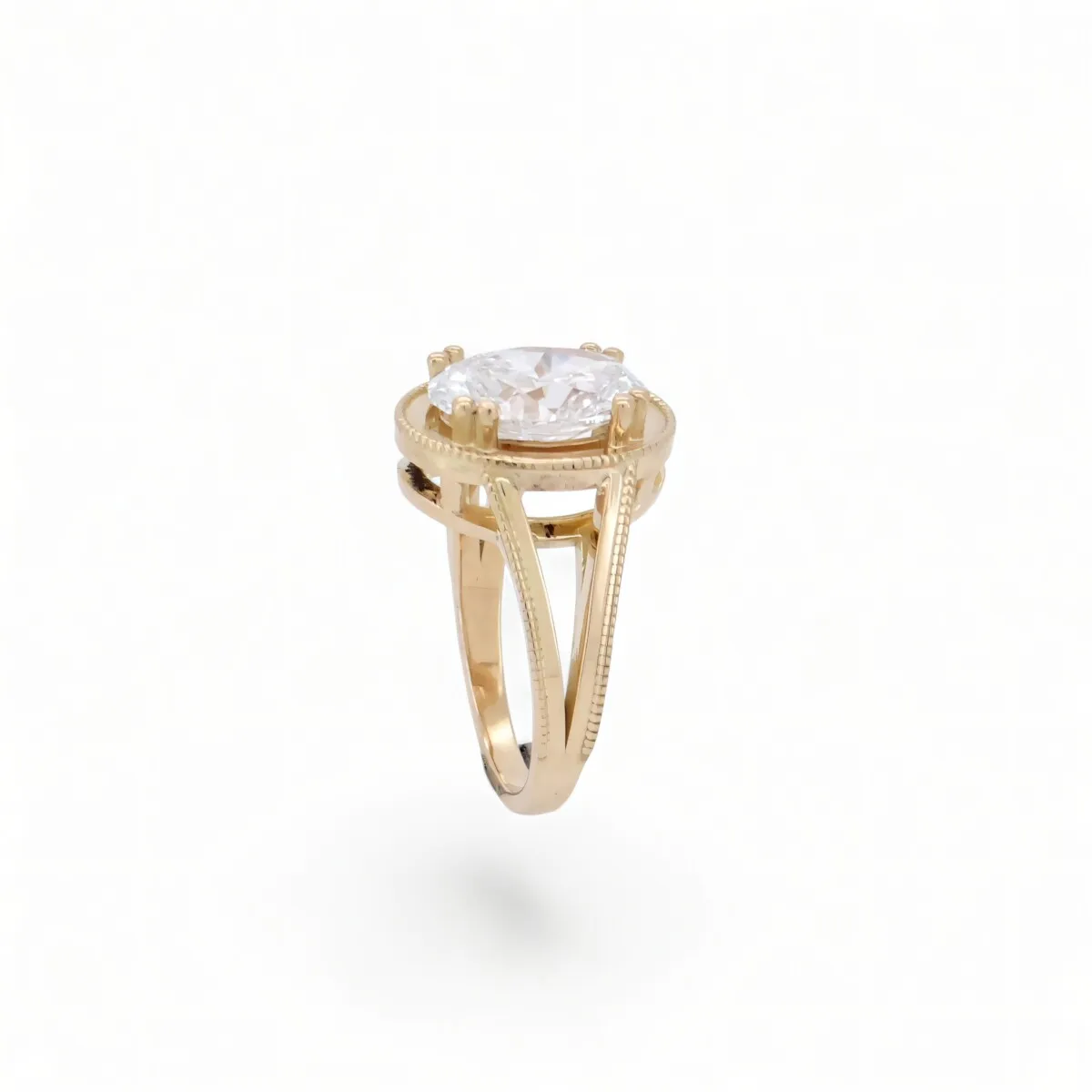
Some commissions arrive with an obviousness you can feel within the first few minutes. This was one of them. A client pushed open the door of my workshop in Saint-Sébastien-sur-Loire, near Nantes, with a very clear idea in mind: to give her daughter, for her 20th birthday, a piece of jewellery she would keep for the rest of her life. A lab-grown diamond solitaire, to be precise, and not just any one.
A mother's request for her daughter's 20th birthday
Twenty is a singular milestone. You leave adolescence behind for good and step into a life that you are beginning to choose for yourself. This client knew it, and she wanted the gift to carry the same weight as that passage. Not a piece bought on impulse from a shop window, but one that was thought through, with a story behind it, unlike any other.
She described what she was looking for in few words, but well chosen ones. An ethical ring, first of all, because the origin of the stones mattered to her and to her daughter. An elegant ring, next, without superfluous effect. And a sparkling ring, of course, because a solitaire that did not make people look twice would not have fulfilled its purpose. I listened to her at length, and I asked questions about the young woman, about the way she dresses, about what she likes to wear day to day. This is always where a bespoke ring in Nantes begins: in the details of a personality you have not yet met, but are learning to imagine.
Why a 3-carat lab-grown diamond
The choice of stone came quite naturally. We settled on a 3-carat lab-grown diamond, accompanied by a certificate attesting to both its quality and its origin. I insist on this point: a certified stone is a stone whose story you know, and that reassures the person giving it as much as the person wearing it.
A lab-grown diamond has exactly the same characteristics as a natural diamond. The same brilliance, the same hardness, the same fire. The difference lies in its birth: it is produced responsibly, without drawing on natural resources. For a young woman of 20, who is growing up with these questions in mind, this detail is far from trivial. It makes an ethical piece of jewellery a coherent choice, not a compromise.
When I placed the stone on my workbench, under the light, the client fell silent for a moment. Three carats make an impression. It therefore needed a setting to match, which is to say, a discreet one.
From drawing to casting: an 18-carat yellow gold mount
I began with the drawing. Several sketches, in search of a line that was understated and perfectly balanced, where the metal accompanies the stone without ever stealing the limelight. The metal itself was an obvious choice: 18-carat yellow gold, whose warmth gives the diamond a soft, almost living presence. On a young hand, it has a luminous quality that never ages. If I were to use the word only once, I would say the whole is timeless, because nothing in this line depends on fashion.
Then comes the time at the bench. The drawing becomes a wax model, which I work, rework and compare against the stone to check every proportion. The wax is then replaced by metal: the yellow gold is melted and cast, before being shaped by hand. This stage demands patience. The mount comes out of the casting still raw, and it is with the file, the tool and repeated gestures that it takes its final form. I use traditional jewellery-making techniques, but I also rely on modern tools when they serve precision. One does not exclude the other: the former gives the piece its soul, the latter refines its finish.
A mount designed around the young woman's personality
Every proportion was considered with the wearer in mind. Not too high, so that it remains comfortable every day, and not too discreet, so that the diamond keeps its full presence. It is a balance adjusted to a tenth of a millimetre, and one that you notice only when it has been achieved.
Four-claw setting and polishing
The moment of setting is always the one when I hold my breath, even after all these years. I chose a four-claw setting, because it lets light in from the sides as well as from above. The diamond breathes, it captures everything that passes, and its brilliance is magnified. Each claw is adjusted, tightened and checked, so that the stone is held perfectly without the metal hiding it.
Then comes polishing, the final stage and not the least. The gold is polished patiently, until the surface becomes a warm mirror. I examine the piece again under the loupe, turning it, searching for the slightest flaw. When I can find none, the ring is ready. This handcrafted work, carried out from start to finish in my workshop, guarantees a solid, lasting piece, made to last through the years and, why not, to pass one day to another generation.
Handing over a ring means handing over a story
When the client returned to the workshop, the ring was waiting for her in its box. I took it out gently and placed it in her palm. She looked at it without a word, then she smiled. In that smile was all the preparation of the gift, the hesitations, the impatience, and the certainty of having found the right piece for her daughter.
This lab-grown diamond ring says a great deal without shouting it: the authenticity of an object designed for one person alone, the beauty of a clean line, the durability of a metal and a stone made to last. It is a gift that celebrates a young woman's 20th birthday, but it also speaks of a mother's love, and that is what I take away from this commission. I am proud to have been able to bring this unique piece to life and to have slipped, in my own way, into such a significant moment of their story.
Come and talk it over at the workshop
If you too have a date to mark, someone to surprise, or simply a desire for a lab-grown diamond solitaire designed for them, you are most welcome at the workshop in Saint-Sébastien-sur-Loire, near Nantes. We will take the time to look at stones, to talk about what you have in mind, and to see together what it is possible to create. No obligation, over a coffee.