
Published on by Olivier Maupas-Sehikyan · Rings
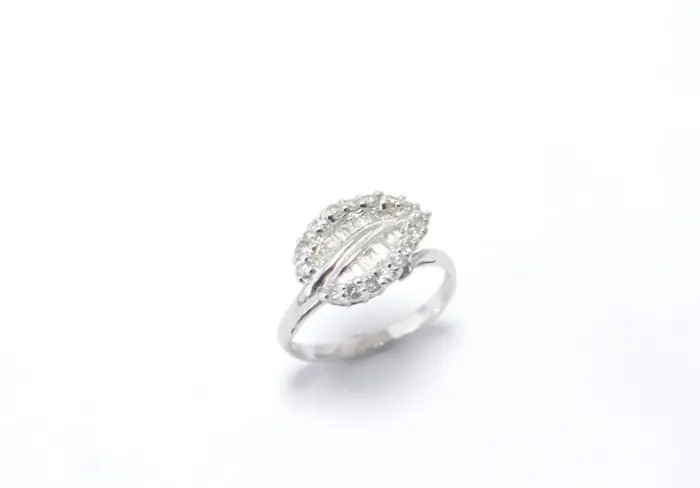
Some pieces of jewellery come into the workshop carrying a weight you can feel before you even touch them. This was one of them. An antique Art Deco ring, handed down through the generations, entrusted to me with a mixture of confidence and apprehension. I placed it on my bench, under the lamp, and took the time to look at it, for a long while, without saying a word.
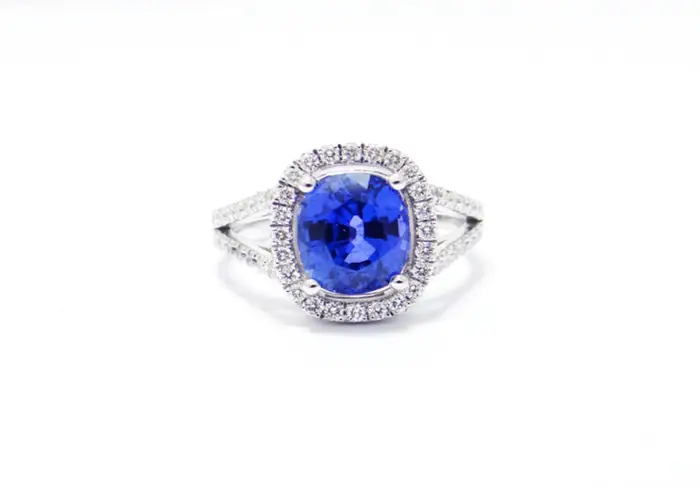
An antique Art Deco ring, the heirloom of several generations
I work as a jeweller in Saint-Sébastien-sur-Loire, near Nantes, and I have seen a great many pieces pass through my hands. Yet an antique Art Deco ring always holds a particular charm for me. It was born of an era when art and design answered one another with rare precision: clean lines, controlled geometry, and a constant dialogue between the white gold and the light of the diamonds.
But time had left its mark. Several diamonds had gone from their settings, leaving gaps where the design called for continuity. The mount itself had lost some of its original lustre. Nothing beyond repair, I understood fairly quickly. And yet, faced with a piece of jewellery that had come through so many years, I felt a kind of responsibility.
I was, I admit, immediately delighted. Here was a challenge worthy of my craft: to bring this exceptional piece back to life without erasing what made up its memory. That day, I set myself a simple rule. Add nothing that is not already in the spirit of the ring. A successful antique ring restoration is work that no one notices.
Replacing the missing diamonds: finding the right stone
The first task was obvious. The missing diamonds had to be replaced, and this was no trivial matter. A new stone set beside old ones can quickly look wrong: too white, too lively, or simply different in the way it plays with the light. The challenge was therefore to find stones that would blend perfectly with the originals.
I searched for a long time. My network of trusted suppliers, built up patiently over the years, allowed me to find suitable diamonds. I compared them one by one with the stones already in place, under several kinds of lighting, tilting the ring to observe their fire. When the right ones appeared, I knew at once: they respected the brilliance and character of the piece, without trying to modernise it.
Setting, an act of patience
Next came the setting. Each stone was placed in its seat with particular care, because nothing is forced on a piece of this age. Old metal has its own memory, its fragilities, its habits. So I proceed slowly, I check, I go back over my work, until each diamond is held firmly and faces in the right direction.
Reviving the white gold mount without betraying the design
The mount remained. It had lost its shine, but its lines were intact, and that is precisely what needed preserving. Polishing an Art Deco piece demands restraint: too heavy a hand softens the angles, rounds off the edges, and the geometry that is the very signature of the style gradually fades away.
So I worked in small touches, keeping the original design in mind. Little by little, the white gold regained its clarity, both discreet and deep. The old stones and the new began to answer one another, as if they had always been together. It is a moment I particularly love: the one when you can no longer tell what has been restored from what has simply come through time.
Resizing an antique ring: goldsmith's work
One step remained, the resizing of the ring. On paper, it sounds simple. In reality, adjusting an antique piece demands constant vigilance. Modern methods are not always suited to traditional techniques, and what works on a recent ring can damage a piece that is several generations old.
So I took my time. Every modification was considered so as to preserve the integrity of the Art Deco design: the proportions, the balance between the head of the ring and its shank, the hold of the stones. More than once I put down my tools to look at the piece from a distance, simply to check that its appearance had not changed. The hours passed, meticulous and almost silent. At such moments, my workshop in Saint-Sébastien-sur-Loire becomes a place where time deliberately slows down.
Rediscovering the sparkle of old, and passing it on once more
When I looked up, I was delighted with the result. The ring had regained its sparkle of old. It was ready to be worn, admired, and handed down again for many years to come. Returning a piece like this is placing a fragment of family history back into attentive hands, now in full health and able to resume its place on the finger of those who love it.
This project reminded me why I love my work so much. To be a jeweller is to have the privilege of preserving the heritage and history of beautiful works of art, while adding, with humility, my own touch. Every piece carries its story, and it is an honour to step, for a few weeks, into the continuation of that story.
If you own an antique ring, a family jewel with a missing stone, a mount that has lost its light, or a ring that no longer sits quite right on your finger, you are welcome to bring it to show me at the workshop, near Nantes. We will take the time to talk it over, simply, with a coffee and your jewel resting on the bench.