
Published on by Olivier Maupas-Sehikyan · Bracelets
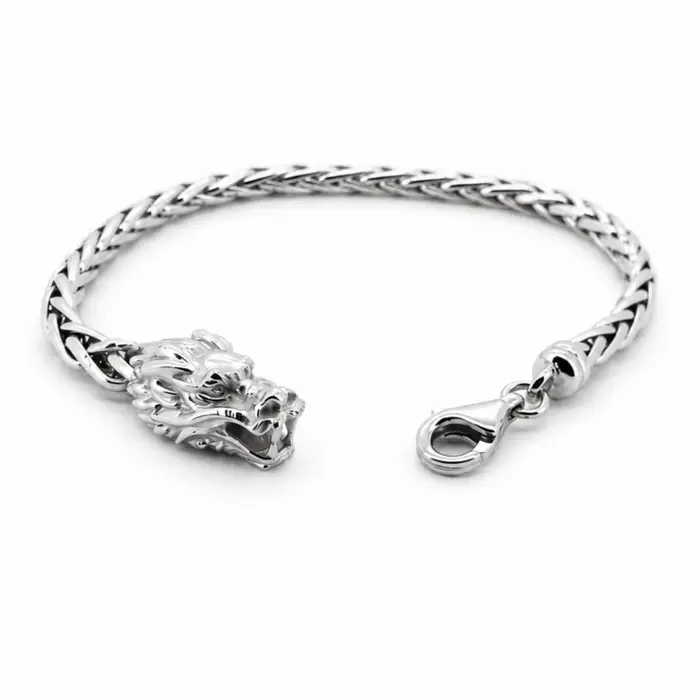
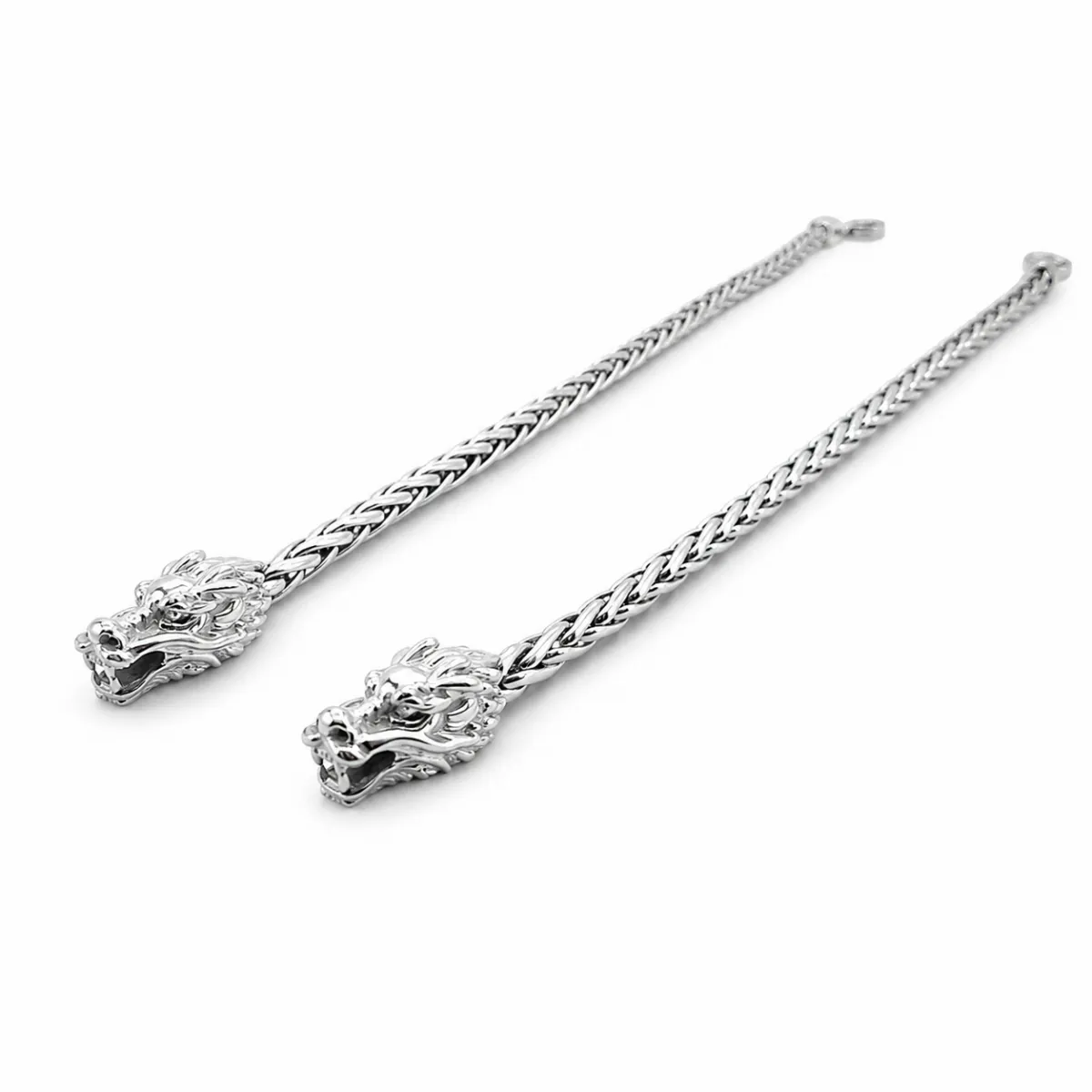
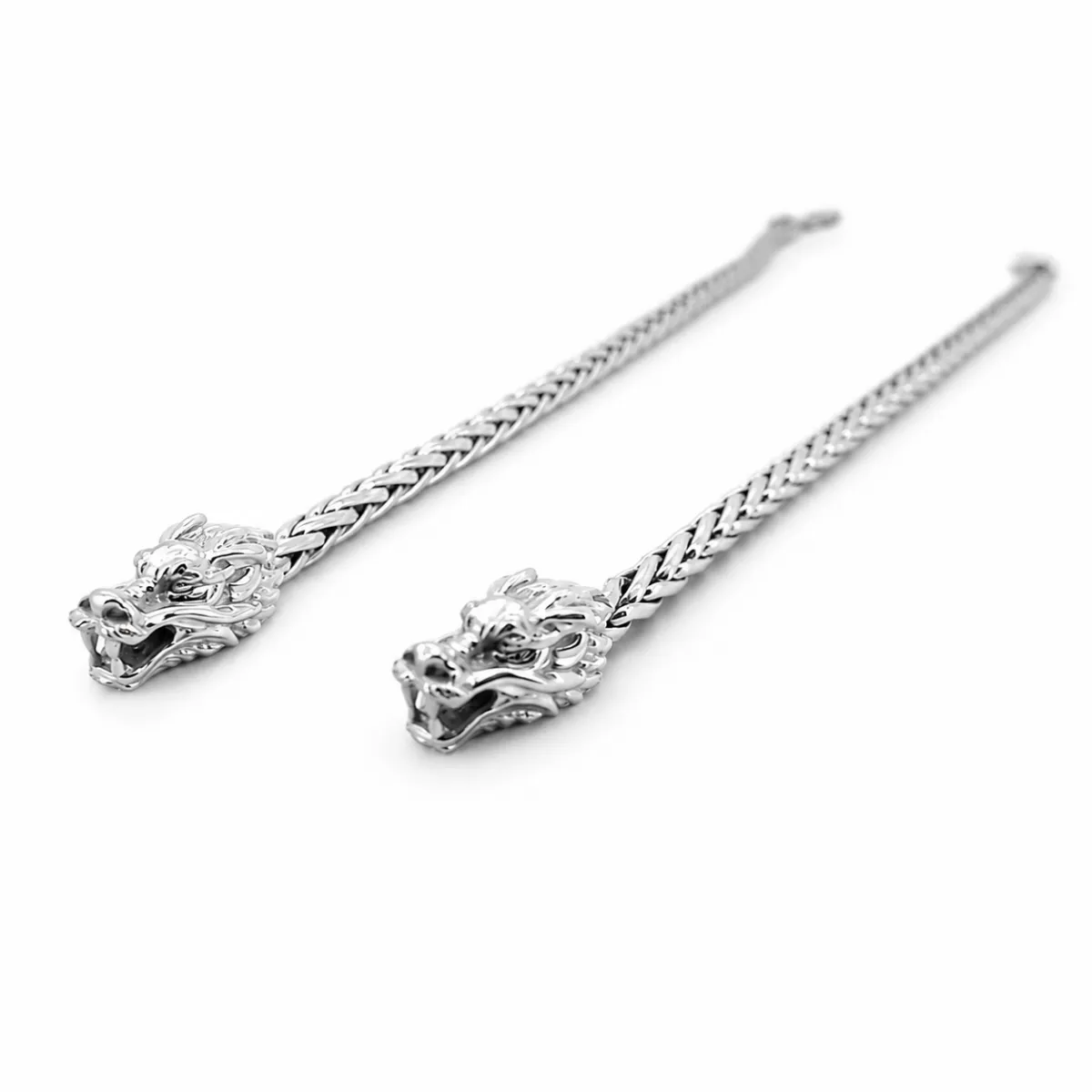
Some commissions begin with a simple “hello” and become, over time, jewels that a family talks about. The one I am telling you about today comes down to two 18-carat white gold dragon bracelets, born in my workshop in Saint-Sébastien-sur-Loire, just south of Nantes. I created them for a couple who wanted to seal their union in a way other than with wedding bands.
A meeting at the workshop: the idea of a bespoke couple's jewel
One day, a couple pushed open the door of my shop-workshop. They were close, smiling, and you could tell they had already talked a great deal about their project before arriving. Their request was precise and very personal: a bespoke jewel for a couple, strong and symbolic, that each of them would wear in memory of their union.
They told me their story with stars in their eyes. Both share a passion for Asian culture and have travelled widely together, in China, Japan and Vietnam. Temples, Zen gardens, age-old traditions: they explored it all side by side. And from one country to the next, one motif kept returning like a golden thread: the dragon. Strength, wisdom, luck, protection: these were the values they wanted to place at the heart of their relationship.
We talked at length. No stones, they told me from the outset. They wanted an entirely metal jewel, pared back and essential, one that makes its presence felt without ever imposing itself. The idea almost drew itself: a sculpted dragon's head at one end, extended by a sturdy palm link chain, like the body of the creature.
The metal remained to be chosen. 925 silver and white gold were competing for the place. After some thought, it was 18-carat white gold that won: its nobility, its durability and its cool brilliance would show off the relief of the sculpted heads.
The dragon and the palm link chain: a universal symbol, a chain with character
Before picking up a pencil, I like to understand what I am about to draw. The dragon is one of the most widespread figures in mythology. In China, it embodies strength, wisdom, luck and prosperity, and for a long time it was the emblem of emperors. Unlike the Western dragon, often associated with fire and destruction, the Eastern dragon is benevolent: it brings rain, protects homes and guards treasures. The Vikings carved dragons on the prows of their ships for protection at sea, and the Celts saw in them sovereignty and ancestral wisdom. Everywhere, it is a guardian.
For a couple, this motif takes on a particular meaning: it speaks of the power to protect the other, and of the balance between strength and kindness. Some Asian traditions pair it with the phoenix to evoke eternal love, but two dragons can just as well tell the story of a union of equals, two forces that accompany one another. This is the reading my clients chose.
Why the palm link chain
The palm link chain, also known as the spiga chain or wheat-ear chain, is among the oldest in the jewellery repertoire. It is based on a tight weave of threads crossed on the diagonal, reminiscent of ears of wheat or palm leaves. It gains in delicacy, suppleness and genuine strength. It does not catch on clothing, does not twist and withstands daily wear very well. On the wrist, it follows the curve with grace.
As for 18-carat white gold, it is composed of 75% pure gold, alloyed notably with palladium. A rhodium plating as a finish gives it that crisp brilliance that picks out every sculpted detail.
At the workshop: from the wax model to the final polish
I first took out my notebook to sketch several designs. The one we kept shows a finely detailed dragon's head, its open mouth seeming to “swallow” the first link of the chain. At the other end, a white gold lobster clasp ensures a secure closure. Two identical bracelets, sized to fit each wrist. The couple approved the project, and the real work could begin.
The dragon heads demanded particular attention. I sculpted a wax model of each by hand, working every scale, every nostril, every curve of the horns. These days of patience (it takes several) are among my favourites. Once the wax was approved, it was cast in 18-carat white gold using the lost-wax method, a technique inherited from Antiquity that reproduces complex forms with great fidelity.
Once out of the mould, the rough heads were cleaned and then reworked with a needle file to reveal the finest detail. Hand chasing then brought the final relief, the kind that catches the light.
The two chains were made from 18-carat white gold wire patiently drawn at the bench. Each link was shaped, curved, then woven using the palm link technique. The regularity of the weave is essential: the slightest irregularity is spotted at once, and the hand feels it even before the eye does.
Then comes the most delicate moment. Each head was soldered to the end of a chain with millimetre precision, so that the illusion of the mouth “swallowing” the first link would be perfect. I fitted the lobster clasp at the other end. Finally, the bracelets were sanded, then polished with felt and then cotton, before receiving their rhodium plating.
Handing over the bracelets: when the dragon meets the wrist
On the day the couple came back, I placed the two jewellery boxes on the workbench, without a word too many. They slipped the bracelets onto their wrists, one after the other, then onto each other's. Their emotion spoke for them. I believe these dragons, guardians of a shared story, will now accompany them everywhere, from distant journeys to the simplest gestures of everyday life.
If you too have a symbol that ties you to someone, come and tell me about it at the workshop in Saint-Sébastien-sur-Loire, near Nantes. We will take the time to talk it through, over a coffee and a sketchbook, and we will see together what it might become.