
Published on by Olivier Maupas-Sehikyan · Rings
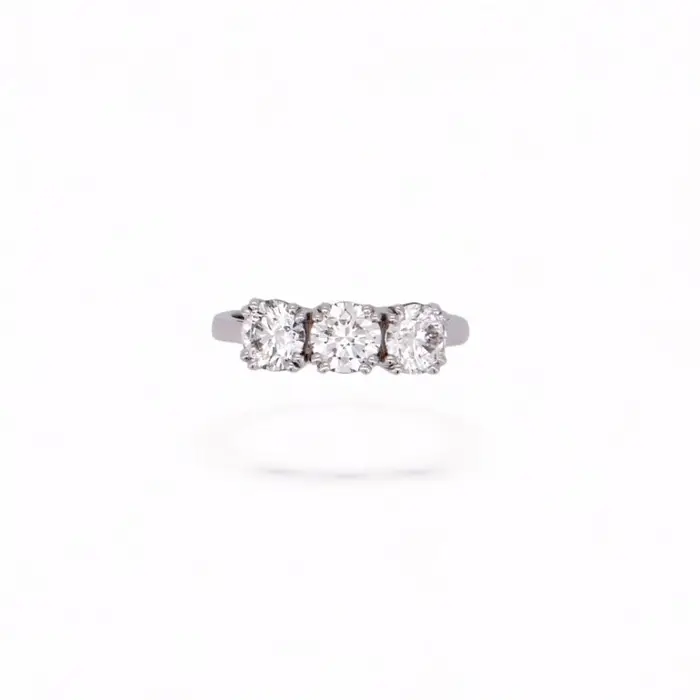
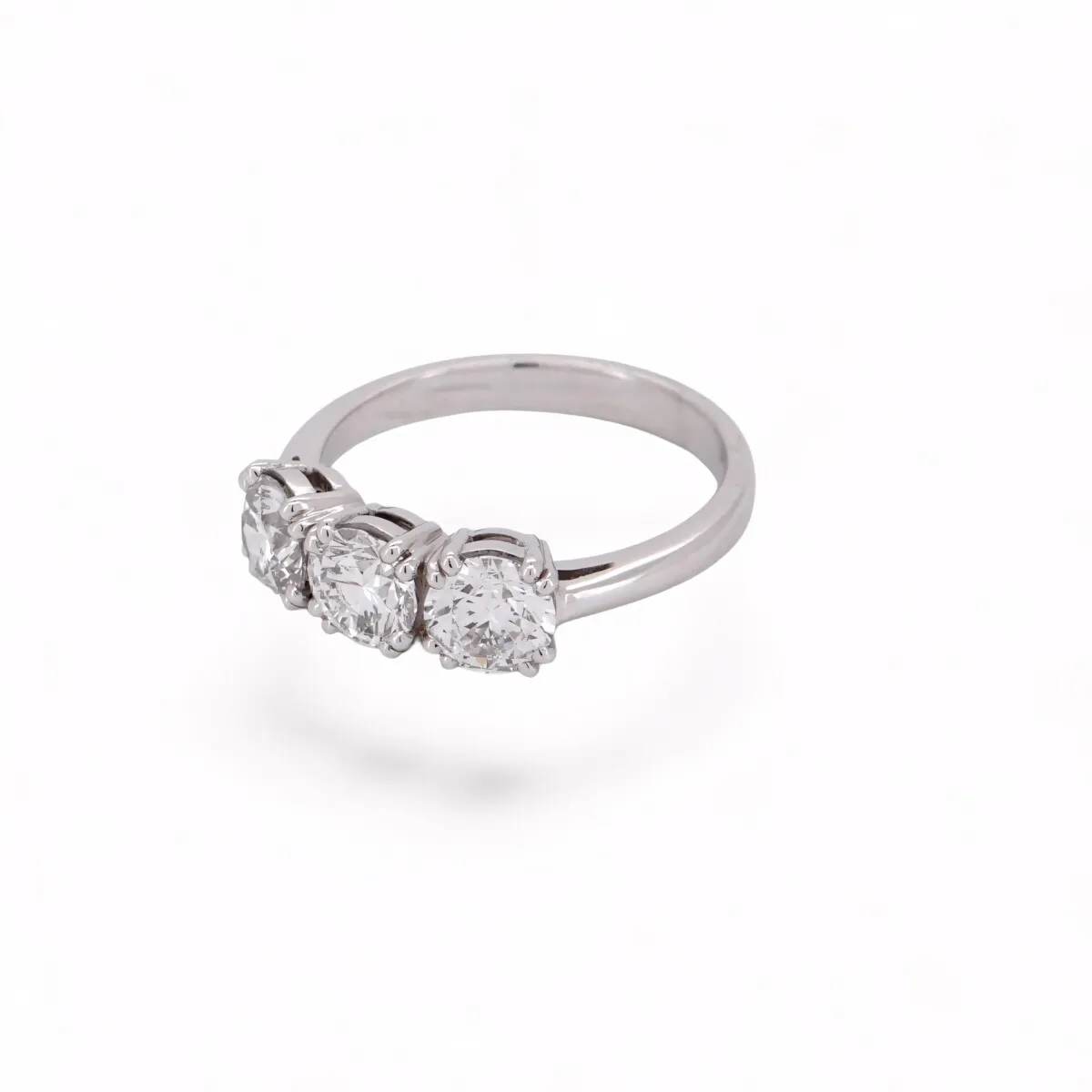
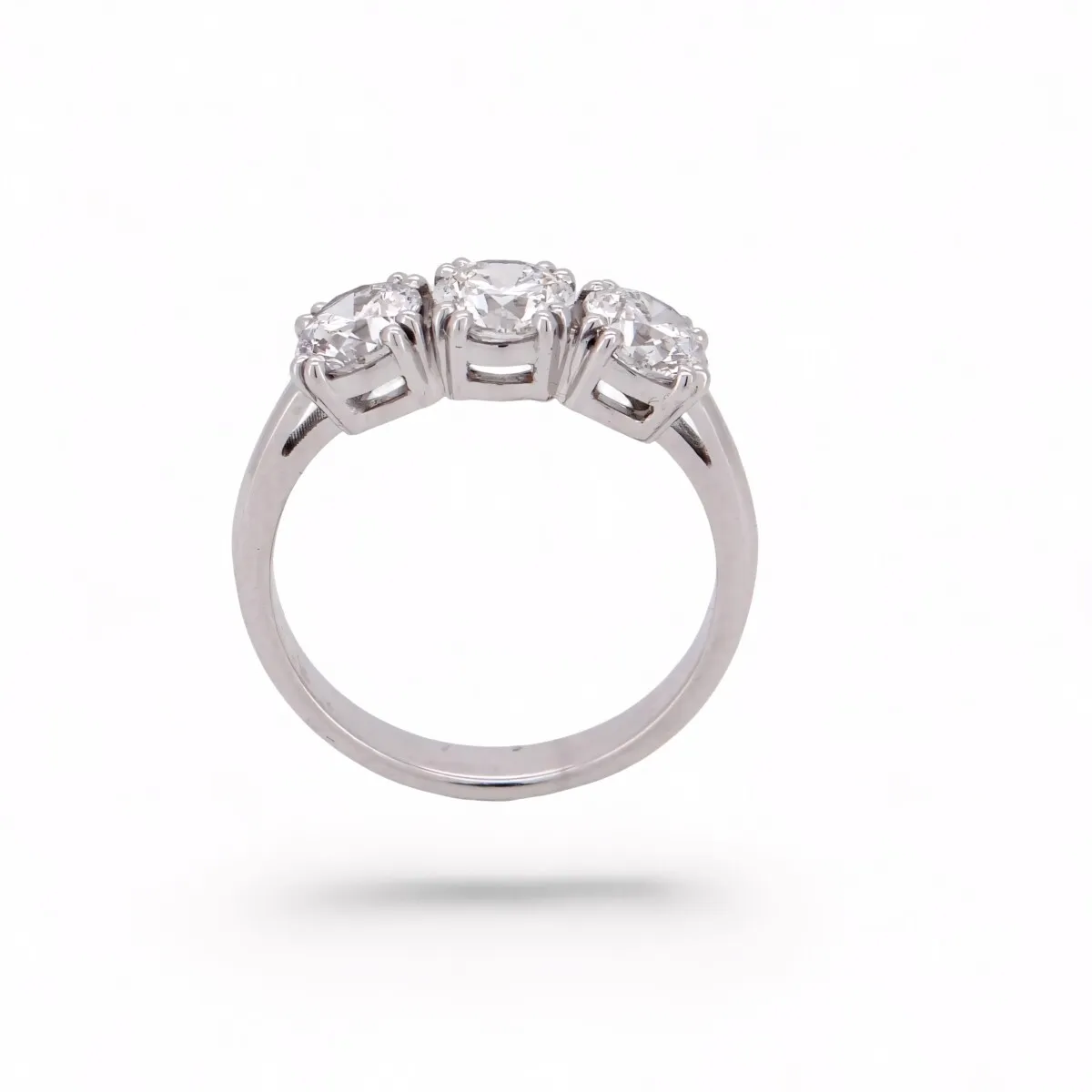
A client, a birthday and the wish for a trilogy ring
One day, a client pushed open the door of my workshop in Saint-Sébastien-sur-Loire, near Nantes, with a very precise idea in mind. An important birthday was approaching, and she wanted to give herself a piece of jewellery worthy of the milestone she was about to reach. Not a token gift, but an object that truly matters.
She spoke to me about the past few years. A new professional chapter, a family that had reorganised itself, priorities that had to be redefined. She did not wish to celebrate a date alone, but the whole road she had travelled. I listened to her for a long time without picking up a pencil, because this kind of confidence already draws half of a bespoke ring.
She loved classic lines, provided they carried meaning. The solitaire felt too one-dimensional to her, too focused on a single moment. When I mentioned the three-stone ring, her eyes lit up. She had found what she was looking for without knowing how to name it.
Past, present, future: what three diamonds tell
The trilogy ring, also known as a trilogy ring or three-stone ring, is one of the great classics of Western jewellery. Its symbolism is ancient and very simple: three stones in a row for the past, the present and the future. It is given for a marriage, a birth, an achievement, or, as here, for a birthday that marks a turning point.
What I like about this design is that it fixes nothing in place. The three stones do not tell a finished story; they tell of movement, that of a life moving forward. My client understood this at once, and it is what made our work together so fluid.
We then talked about the stones. She wanted certified diamonds of fine quality, well balanced in size, within a controlled budget. We agreed on three round brilliant-cut diamonds of similar dimensions, colour G and clarity VS. Then I took out my sketchbook. Several drawings later, one design stood out: three diamonds set in claws, each in its own mount, aligned at the top of a slender white gold band. A pure line, where nothing distracts the eye from the trio. She approved the design without hesitation.
G VS diamonds and 18-carat white gold: choosing the materials
In a trilogy, harmony depends on the consistency of the stones. Three criteria matter in particular: matching of size, colour and clarity. According to the Gemological Institute of America grading system, colour runs from D, perfectly colourless, to Z, distinctly yellowish. Grade G denotes a near-colourless diamond, whose tint cannot be perceived with the naked eye. In my view, it is one of the best balances between beauty and budget.
For clarity, the scale runs from FL, flawless, to I3, where inclusions are visible. The VS category, for Very Slightly Included, covers stones with very minor inclusions, invisible to the naked eye and barely detectable under a x10 loupe. A G VS diamond therefore offers fine brilliance and real clarity, without the price of the rarest grades.
I selected the three diamonds one by one, then examined them under a x10 loupe: colour, clarity, matching, cut. The trio had to form a perfectly even line, and it was not enough for each stone to be beautiful on its own.
To hold them, 18-carat white gold was the obvious choice. This alloy, made up of 75% pure gold and enriched with palladium, provides a sober, luminous setting. A rhodium plating at the end of the process gives it its brilliant white, which shows the diamonds to advantage without ever competing with them.
Handmade in my workshop in Saint-Sébastien-sur-Loire
From molten gold to band
Everything was made on site, by hand. I began by melting the white gold to obtain a clean ingot. The metal was heated to around 1,064 °C, its melting point, purified with borax, then cast. The ingot was then rolled into a sheet and drawn through the draw bench to produce the sections I needed.
The band was cut with a piercing saw, then shaped on the ring mandrel to fit my client's finger size exactly. I soldered it into a comfortable ring. Its slenderness is essential: it leaves all the space to the diamonds and visually slims the finger.
Three mounts, a single line
I built the three mounts separately, from round wire, with four claws fitted using a needle file. Consistency between them is paramount, as the slightest asymmetry would ruin the harmony of the trio. Each mount was then soldered with a flame onto the top of the band, equidistant from the others. I checked the alignment under the loupe, since a shift of a tenth of a millimetre would be seen immediately.
Setting and polishing
Then comes the most delicate moment. Each diamond was placed in its seat, then its four claws were closed over with a pusher. The tips were rounded with a bud burr for a clean finish. This gesture, repeated three times, demands constant concentration: a single failure on one of the three settings would compromise the whole.
The ring was then sanded, filed, and polished with felt and cotton. Finally, it received its rhodium plating, which gave it its mirror-white brilliance.
Handing over the ring: a past, a present, a promise
The day my client came back to collect it, I placed the box in front of her without saying a word. When she slipped the trilogy ring onto her finger, she immediately understood what she was wearing: her past, her present and her promise of the future. There was a silence, then a smile, and I think this is the moment I treasure most from the whole project.
If you too wish to mark a turning point with a three-stone ring, you are most welcome at my jewellery workshop in Saint-Sébastien-sur-Loire, south of Nantes. We will take the time to talk, look at stones and design together something that truly reflects you.