
Published on by Olivier Maupas-Sehikyan · Signet rings
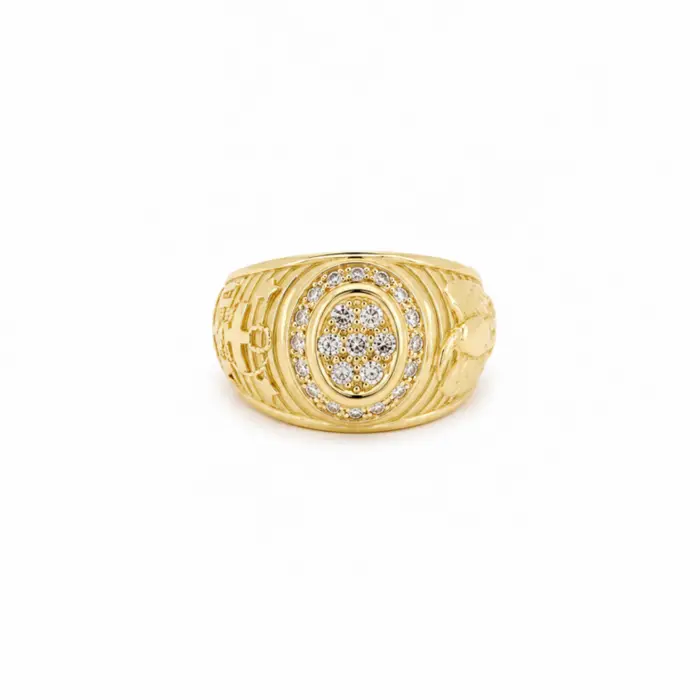
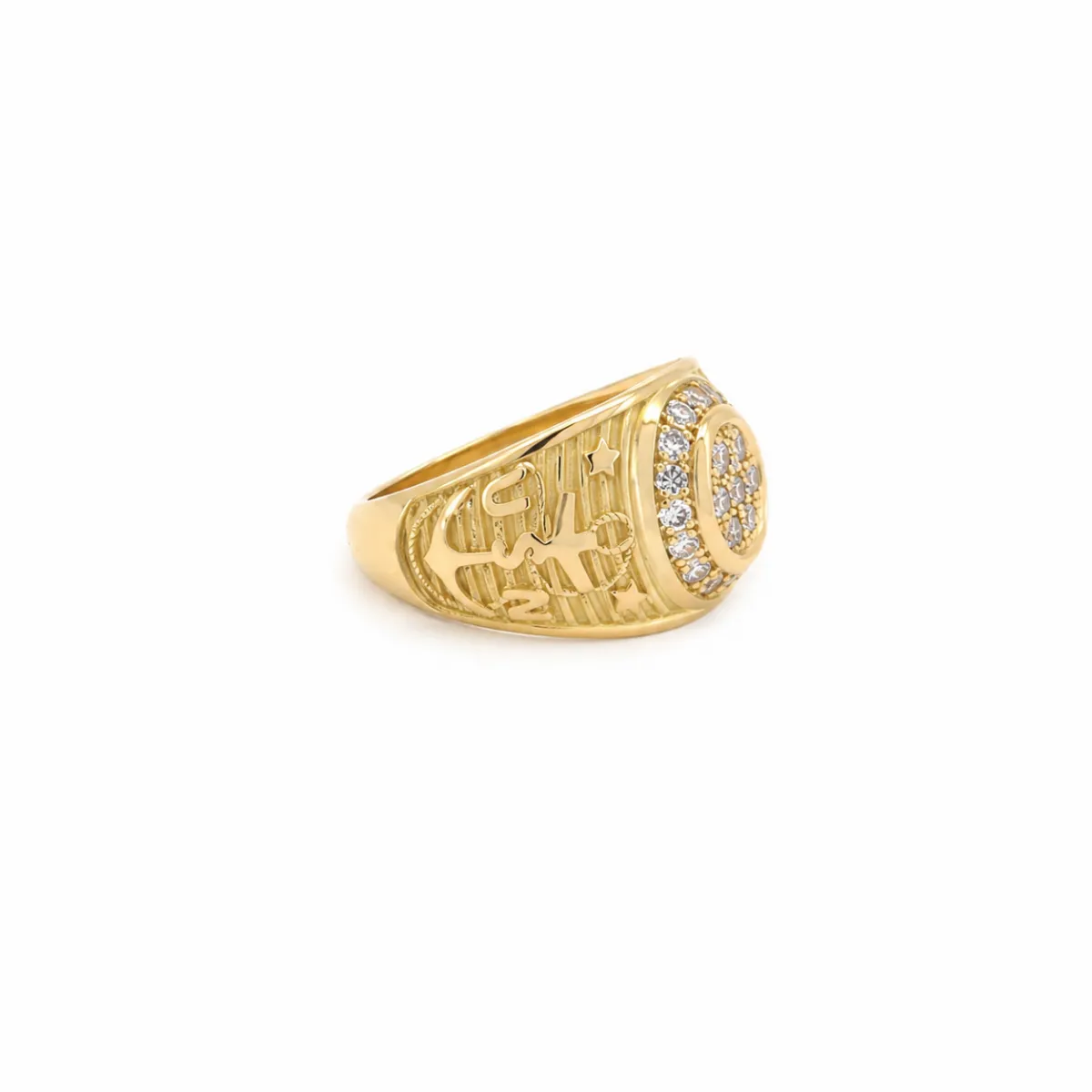
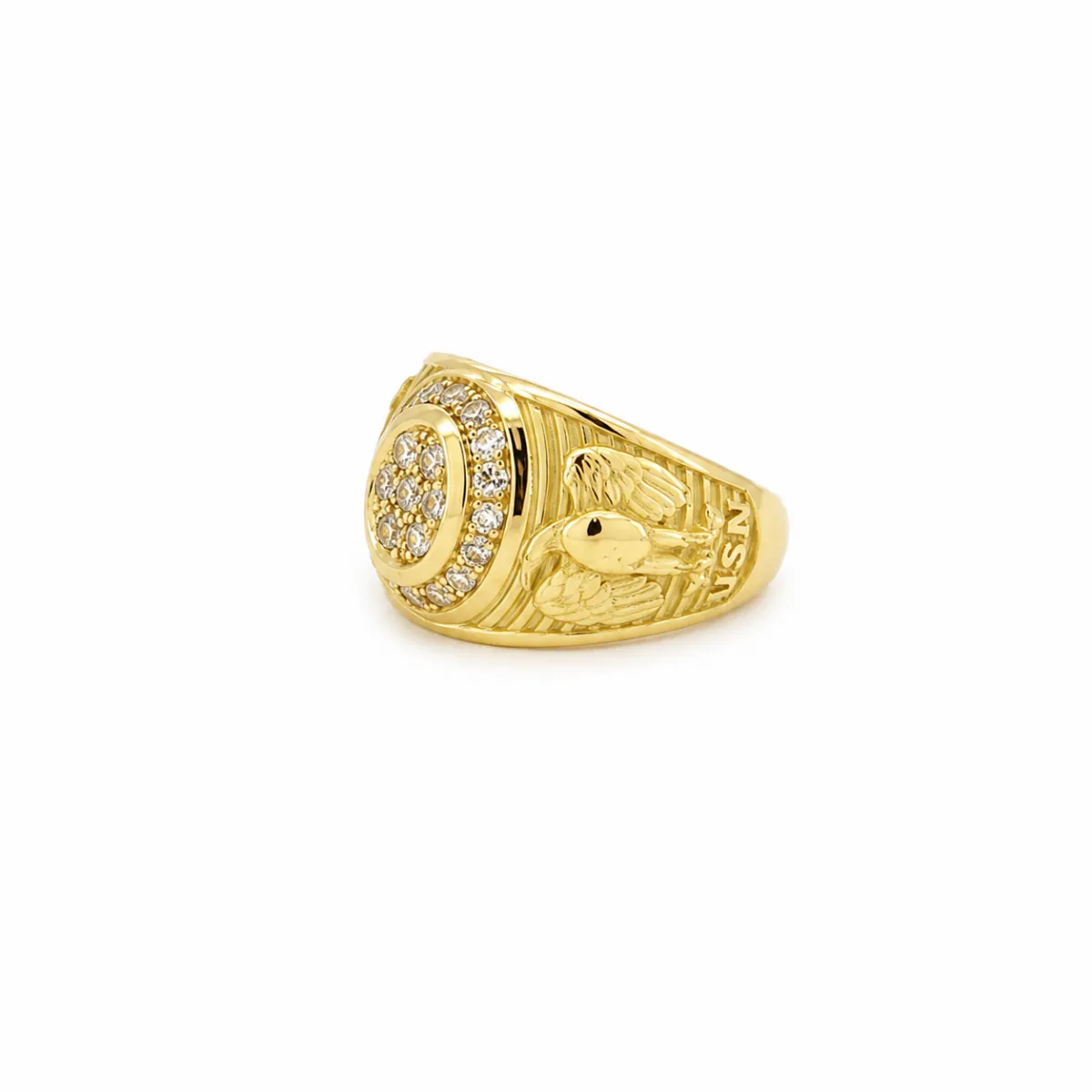
Some clients arrive with a precise idea, others with a pouch full of memories. That day, it was both at once. In my workshop in Saint-Sébastien-sur-Loire, south of Nantes, I created an American signet ring in 18-carat yellow gold, pavé-set with diamonds, with a family motto chased in relief on each shoulder. Let me tell you how it came to life.
A bespoke American signet ring born from a pouch of memories
My client pushed open the door of the shop and workshop with a small pouch in his hand. One after the other, he took out two 18-carat yellow gold rings he no longer wore, a broken chain and a few small diamonds he had kept over the years. Nothing spectacular at first glance. Yet I could feel that each of these pieces carried far more weight than its metal.
His request was clear: a bespoke American signet ring in Nantes, that bolder, more sculpted, more assertive men's ring than the classic European signet. He liked generous volumes, strong relief and a confident presence on the finger. He also wanted to inscribe a family motto, handed down over several generations. Engraved in relief on the shoulders, it would speak of his belonging to his lineage. As for the oval face, it would be pavé-set with the diamonds from his old jewellery, a nod to his story, transformed.
We talked at length. He cared about the legibility of the motifs, the graphic strength, the sturdiness of a ring designed to be worn for a lifetime. Very quickly, the combination became obvious: a motto, diamonds, yellow gold. Strength, tradition, transmission.
From sketches to 3D, then to wax
I began with several sketches. I then modelled the ring in 3D, which allowed him to see every detail precisely before any material was worked: the depth of the inscriptions, the layout of the pavé, the volume of the shoulders. He approved every angle on screen. A wax model was then made for final approval. Holding the object between your fingers, even in wax, always changes the way you see it.
American style and diamond pavé: power and prestige
Before stepping into the workshop, a word on the codes of this style, as they explain a great deal.
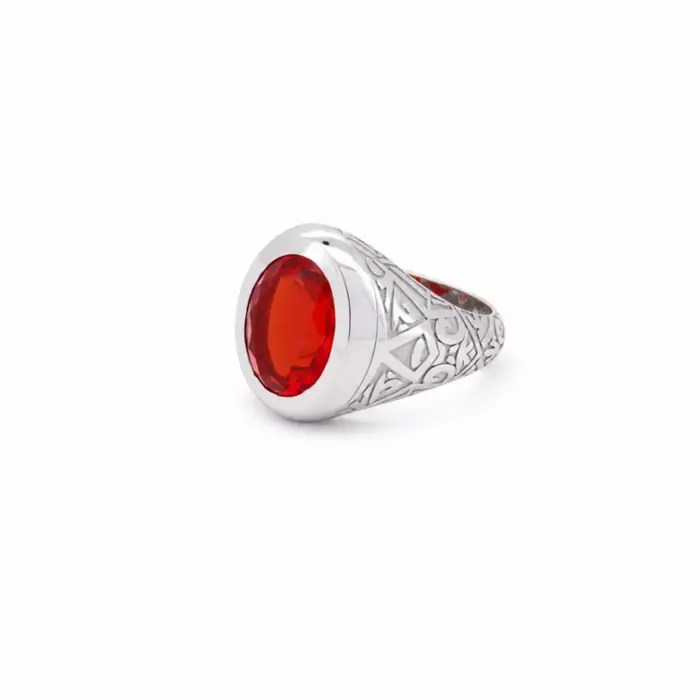
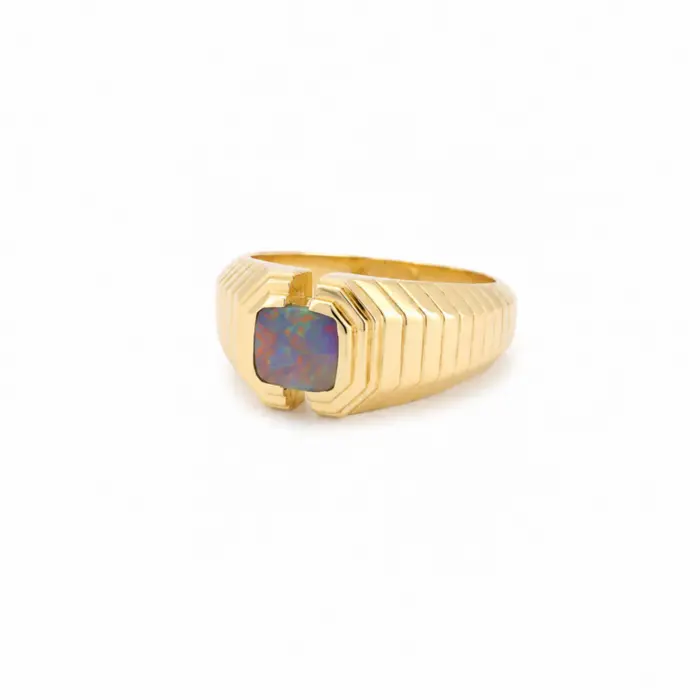
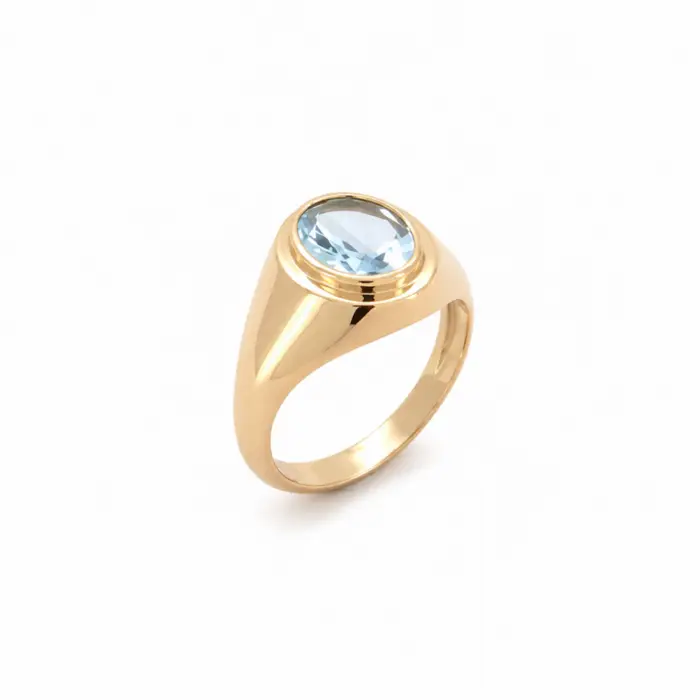
The American signet ring, also known as a class ring, statement ring or signet ring in the English-speaking world, relies on sculptural strength. The European version often remains understated, intaglio-engraved with initials or a coat of arms. The American version dares to use voluminous shoulders, pronounced relief decoration and a generous face.
This style has its roots in the class rings of American universities, rings handed to students on graduation day. Each university had its own design, enriched with symbols, dates and initials, and still does today. The tradition spread to the professional world: sporting championships (think of the famous Super Bowl rings), corporations, associations, fraternities. The ring became an emblem of belonging and pride. Later, the world of hip-hop and then high-end men's fashion made it their own. Houses such as Cartier and Bulgari now offer creations that borrow from these codes: assertive volumes, bold settings, intense presence.
Diamond pavé also deserves a closer look. A solitaire rests on a single central stone. Pavé, by contrast, brings together many small stones set very close to one another, so as to form a continuous surface of light. This technique, much prized in high jewellery, gives a spectacular result.
The diamonds in this signet ring all came from my client's old jewellery. I sorted them one by one under a x10 loupe, looking at clarity, colour and calibration. The final selection forms a harmonious whole on the oval face. As for the 18-carat yellow gold, an alloy of 75% pure gold with copper and silver, it is the traditional metal of the American style: warm, shimmering, associated with success in Anglo-Saxon culture. Its sunlit hue brings out the full brilliance of the diamonds.
Lost-wax casting and stone setting: the work in the Saint-Sébastien-sur-Loire workshop
Everything took place on site, by hand, in my jewellery workshop in Saint-Sébastien-sur-Loire, near Nantes.
From wax to molten gold
From the approved 3D rendering, I sculpted the wax model in detail. Each inscription on the shoulders was worked letter by letter, until I achieved the depth and legibility we wanted. This preparation time matters enormously: it allows the final result to be refined before any casting.
I then melted down the gold from my client's old jewellery. The metal was brought to around 1,064 °C, its melting point, then purified with borax and cast into a clean ingot. It became a fresh material once more, yet it kept its memory.
Next comes lost-wax casting, a technique inherited from Antiquity that faithfully reproduces complex motifs in relief. The molten gold was cast under pressure into the refractory plaster mould, following every detail of the inscriptions and volumes.
Chasing, setting and polishing
The raw signet ring was released from its mould, cleaned, then finished by hand. I took particular care over the raised inscriptions, using a needle file and a burr to reveal the outline of each letter. The chasing brought the final contrast between recesses and raised areas.
The oval face was then prepared for the pavé. Each seat was cut with a conical burr, in a symmetrical, rhythmic layout.
Then came the moment of setting. Each diamond was placed gently into its seat, then secured in a grain setting with my graver and beading tool. This work called for several hours of concentration: each grain must be perfectly formed to hold the stone and shape that distinctive little metal bead.
Finally, the signet ring was sanded, then polished with felt and cotton, until the 18-carat yellow gold and the pavé regained their full radiance.
A signet ring that carries an entire lineage
When my client slipped the ring onto his finger, he understood at once what he was wearing: his lineage, made into jewellery. His family's motto, the metal of his old jewellery, the diamonds kept over the years, everything was there, gathered in a single piece made to last.
If you too have old jewellery sleeping in a drawer, or a motto, a name, a story you would like to wear, come and talk to me about it. Push open the door of my workshop in Saint-Sébastien-sur-Loire, south of Nantes: we will take the time to look at what you have, and to imagine your yellow gold signet ring together.