
Published on by Olivier Maupas-Sehikyan · Rings
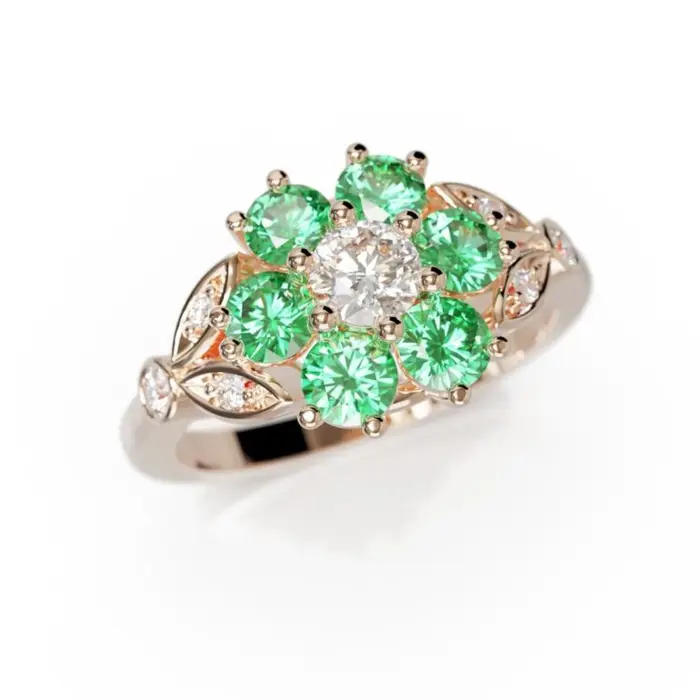
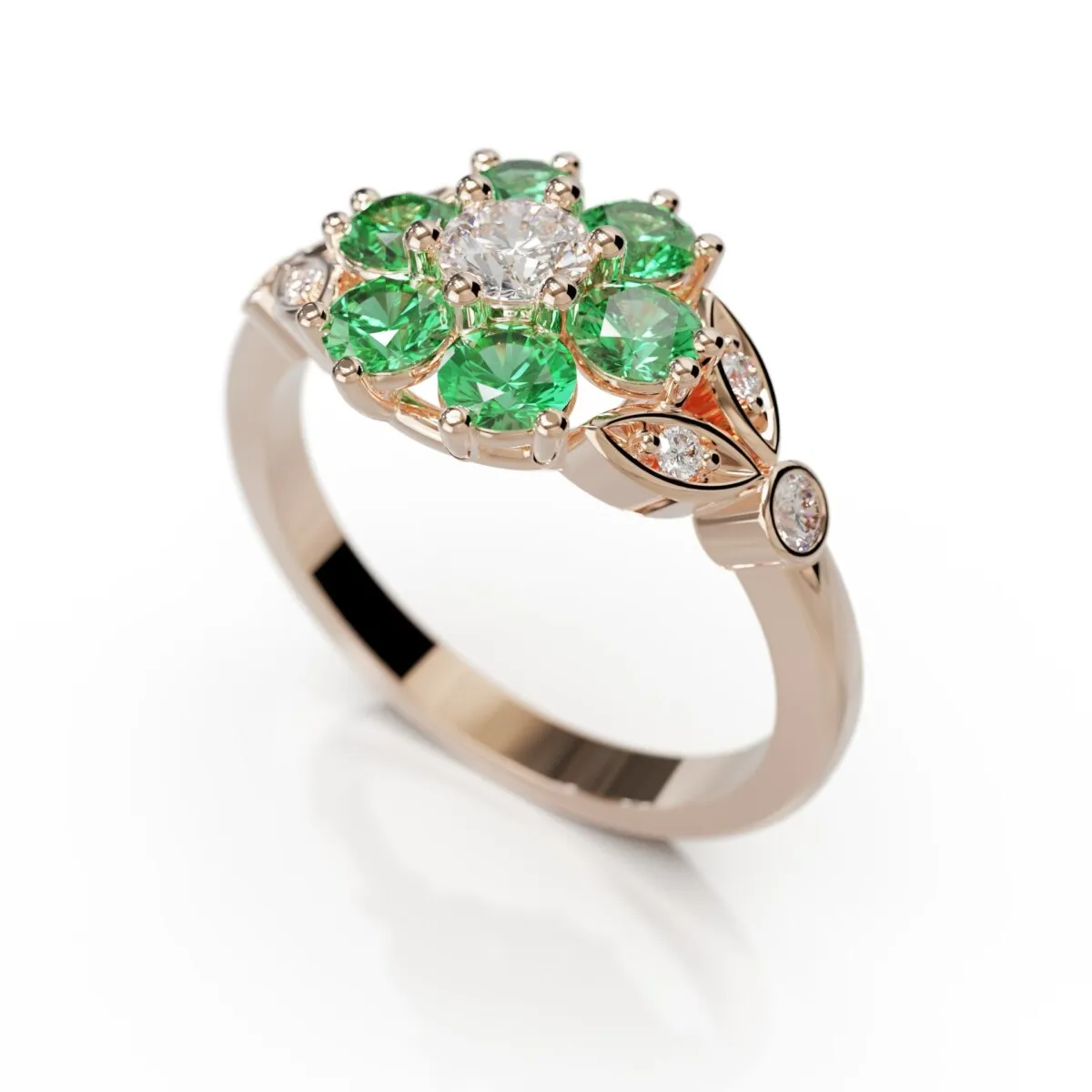
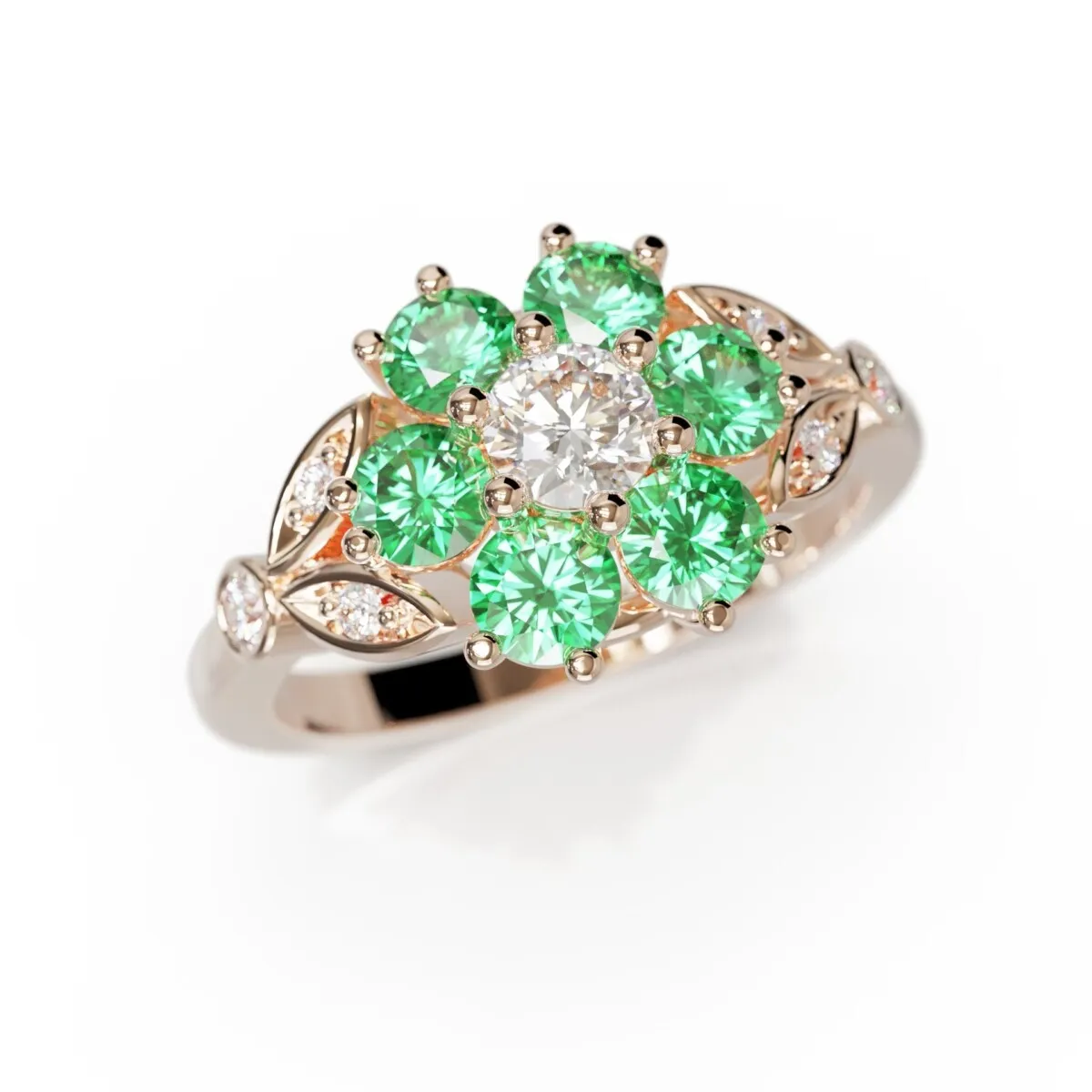
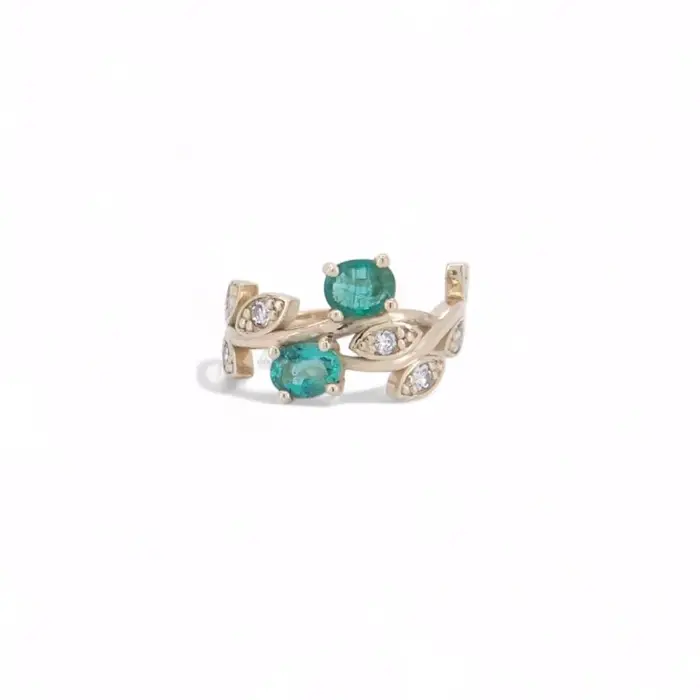
Some stories begin with the opening of a small pouch. This one dates from an autumn morning. The pouch weighed almost nothing in my client's hand, and yet it held an entire lineage. Let me tell you how an emerald and diamond rose gold flower ring was born in my workshop in Saint-Sébastien-sur-Loire, near Nantes, from the memory of a grandmother.
A family heirloom to transform, entrusted to me one autumn morning
She came into the workshop with a velvet pouch. She set it down on my bench, then opened it with a care I know well. Inside lay an old rose gold jewel, handed down by her grandmother, long out of fashion, forgotten for years at the bottom of a box. Close by were a few stones: emeralds of a deep green and a fine natural brilliant-cut diamond.
Her request fitted into a single sentence, spoken softly: to bring these sleeping stones back to life for a wedding anniversary. I needed to know no more to understand what was at stake. This was not about making one more object, but about transforming a family heirloom without erasing its memory. The metal of yesterday was to become the material of tomorrow, and the stones were to find a new home.
Designing a flower ring: bespoke jewellery in Nantes begins with a conversation
We sat down at my drawing table. I took out my pencils, I listened, I asked a great many questions. Which shapes speak to her? Which curves soothe her? Does she like a ring that people notice, or a ring that people discover? She hesitated for a few minutes, and then the flower presented itself, almost of its own accord.
Sketch after sketch, the project took shape: a generous corolla, emeralds arranged around a central diamond, the whole carried by a band with a floral design in 750-standard rose gold. I proposed, I erased, I began again. She adjusted a petal, asked for a little more air between two stones. This is what I love about bespoke jewellery in Nantes as anywhere else: the dialogue makes the piece unique, a world away from mass-produced rings.
18-carat rose gold, emerald and diamond: three materials, three characters
Materials dictate the final aesthetic, and I always choose them with care. 18-carat rose gold is an alloy of pure gold, copper and a touch of silver. It offers a warm, slightly coppery hue, very romantic. It awakens the green of the emeralds and softens the cool brilliance of white diamonds. Here, the gold came from the family: I melted it down and refined it before casting it anew.
The emerald belongs to the beryl family. Its colour comes from chromium and vanadium lodged in its crystal structure. It is a precious stone, but a relatively fragile one, which calls for patient setting. Its inclusions, which gemmologists charmingly call the "jardin", tell a geological story millions of years old. I never regard them as flaws: they are the stone's signature.
The central diamond, for its part, is the hardest mineral formed on Earth. It is born more than 150 kilometres below the surface, under colossal pressure, and waits billions of years before being mined. Its 57-facet brilliant cut returns light with rare vivacity.
Before any making began, I examined each gemstone myself: clarity, colour, weight. The emeralds were counted and calibrated one by one. The diamond was weighed, then inspected under a x10 loupe. This stage may seem austere, but the precision of the final piece depends on it.
From lost-wax casting to claw setting: the work of the workshop
Once the design was approved, craftsmanship took over. Everything was made on site, in my workshop, with no subcontracting. I always begin with a wax model, at the exact dimensions of the future jewel. It is set in a cylinder of refractory plaster. Then comes lost-wax casting, a technique inherited from Antiquity: heat drives out the wax, leaving a cavity, and the rose gold is poured in under pressure. The metal then follows every detail of the flower.
Filing, hollowing, fitting
The raw piece is then removed from its mould, cleaned and filed by hand. The seatings for the stones are drilled out, then fitted with a burr. The claws are shaped one by one. It is slow, quiet work, in which one loses track of time.
The crowning stage: claw setting
Each emerald is placed in its cradle. With my pusher, I fold the claws over the stone, never forcing it. Claw setting demands a steady hand and a great deal of restraint, for the emerald does not forgive haste. The central diamond is set last, like a star at the heart of the corolla. The small shoulder diamonds are fixed in finely beaded grain setting.
Polishing to reveal
Finally comes polishing, first with felt, then with cotton charged with compound. This is the phase that gives the gold its mirror shine. One last check under the loupe, and the ring is ready to join its case.
The handover: when a family story comes back to life
When my client came back to collect her jewel, I opened the case in front of her without a word. She looked at the flower for a long time. Her eyes misted over. She slipped the ring onto her finger, turned it towards the light from the window, then laughed, a little embarrassed by her tears. I believe I had a lump in my own throat.
This emerald and diamond rose gold flower ring is no longer a mere object. It keeps the grandmother's gold and the stones she once treasured, but it now belongs to the woman who wears it. That is all I seek in my work: that an old jewel should find a second life, and that one should be able to read it on a face.
Do you, too, have a forgotten jewel in a drawer, or stones you do not know what to do with? Push open the door of my workshop in Saint-Sébastien-sur-Loire, near Nantes. We will take the time to talk it over, with a pencil and a sheet of paper, without any obligation.