
Published on by Olivier Maupas-Sehikyan · Rings
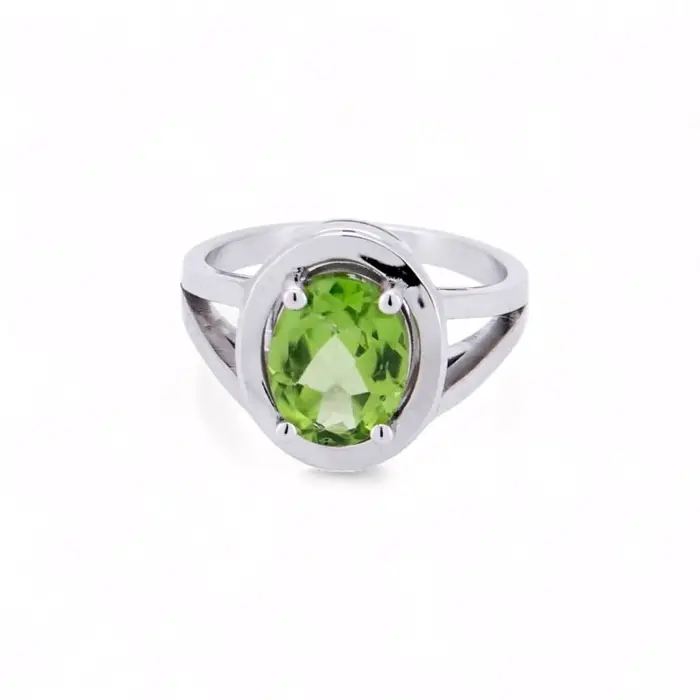
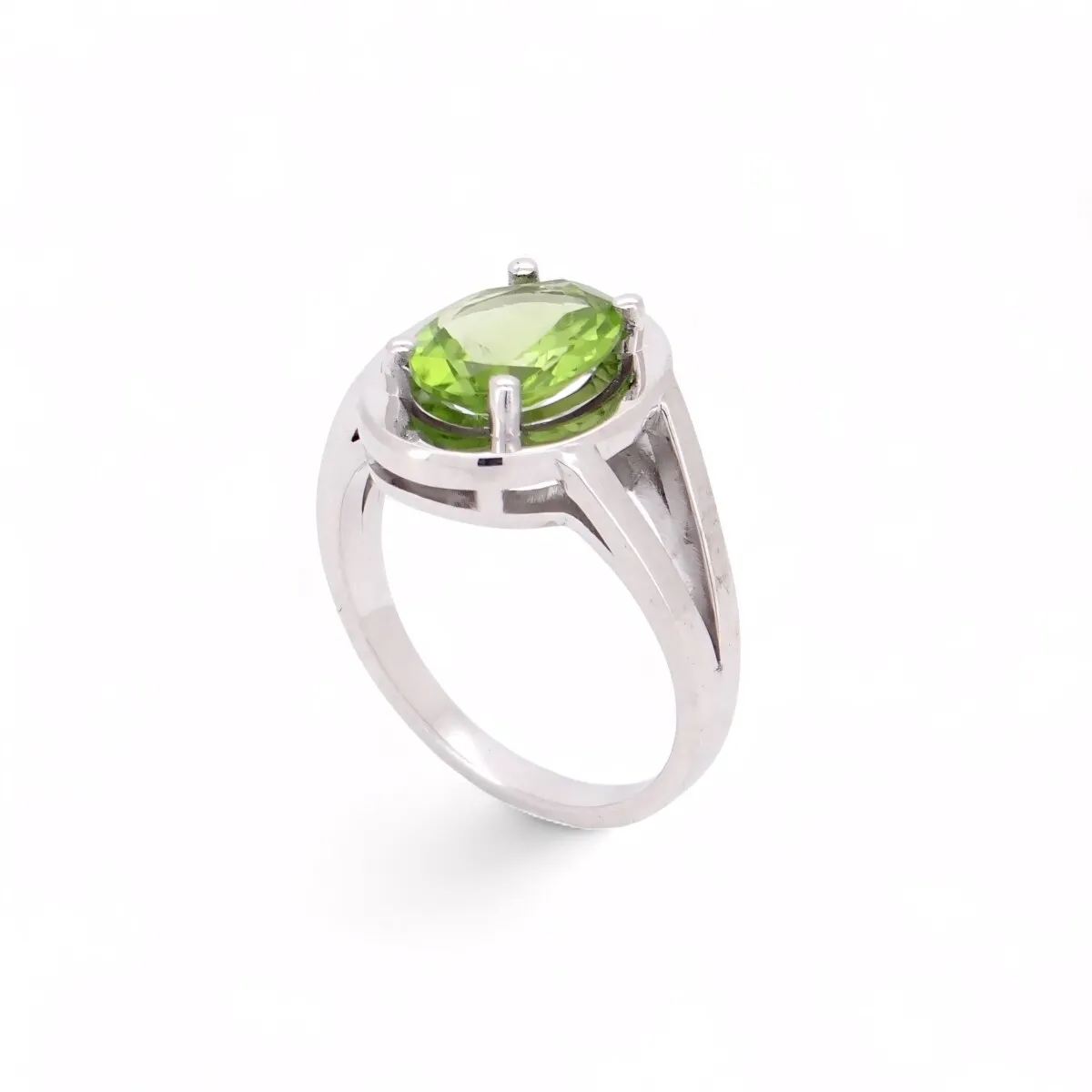
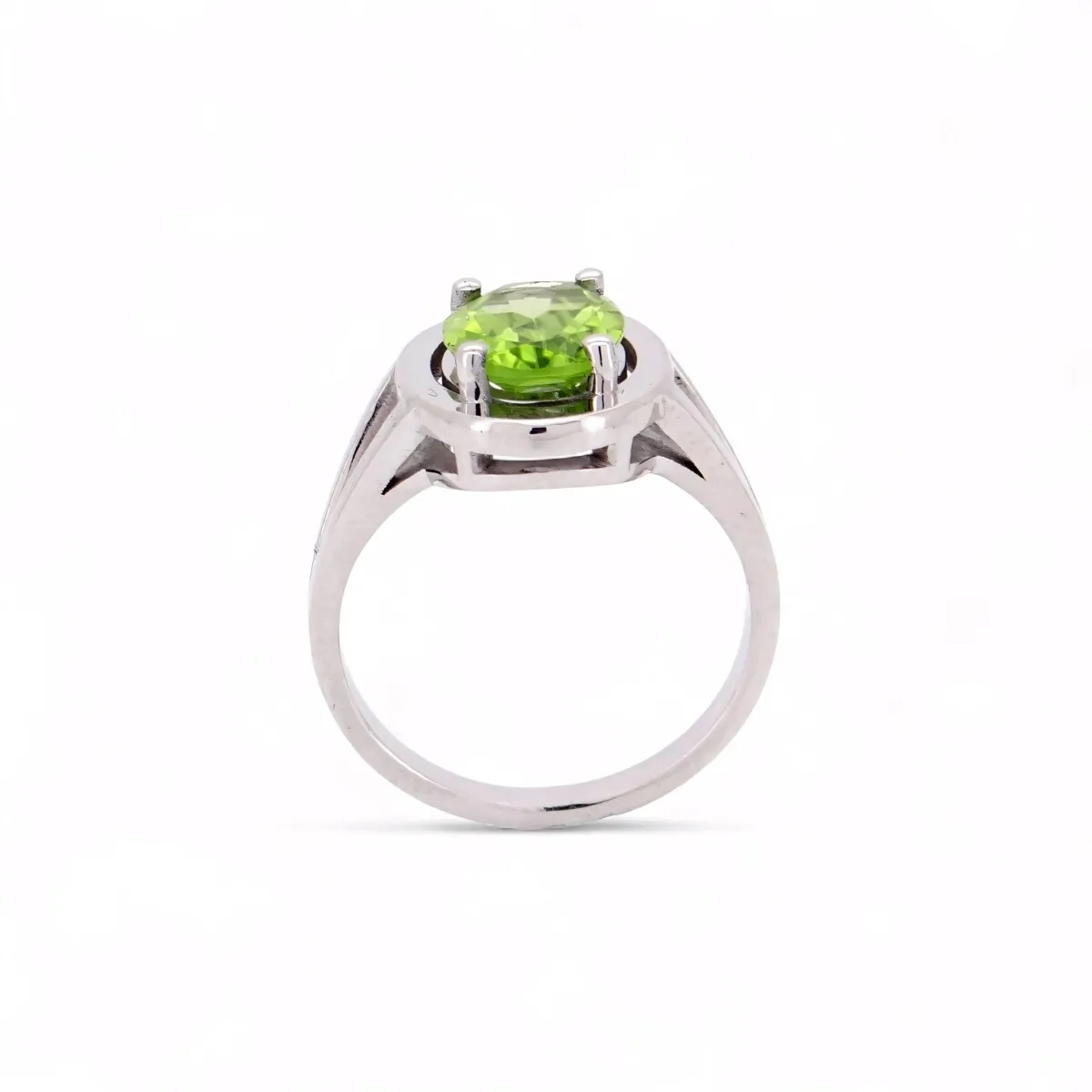
Some rings are born from love at first sight in a shop window. Others, like this 18-carat white gold peridot ring, begin with a small pouch placed on my workbench. Every piece that leaves my workshop in Saint-Sébastien-sur-Loire, near Nantes, has its own story. This one rests on a shared project: giving a second life to jewellery that was no longer being worn.
A discreet pouch and the wish to transform old jewellery
It all began when a client pushed open the door of my shop, holding a very plain pouch. She opened it in front of me with a certain reserve: broken chains, a ring that had gone out of fashion, odd earrings. All of it was white gold, inherited or set aside over the years.
These pieces were no longer used, and yet she had never been able to part with them. I understand that feeling, and I come across it often. Her wish was perfectly clear: to transform old jewellery into a unique, luminous piece that truly reflected her. A personal birthday was approaching, and she wanted to mark it with a ring made in her image.
We talked at length about her tastes and her daily life, then looked through my display cases together. Topaz, aquamarine, green sapphire: several gemstones were examined in the light. But it was an oval peridot of 10/8 mm that caught her eye, almost immediately. Its green, tending towards yellow, delighted her. Taken from my own personal selection, it won us both over.
With a pencil, I drew in front of her an oval mount, framed by a double band. The lines remained clean and contemporary, to let the stone speak for itself. The design was approved by mutual agreement, and this bespoke ring project in Nantes could begin.
Peridot, the sun stone that rises from the depths
Before touching the metal, allow me to tell you about this gemstone, because it deserves it. Peridot is the gem variety of olivine, a magnesium and iron silicate. It is the iron that gives it its colour, from soft green to olive. It is one of the few precious stones to occur in only one hue.
Its origin is even more remarkable. Where most minerals form close to the surface, peridot is born in the Earth's mantle, between 20 and 55 kilometres deep. Volcanic activity then brings it back to the light. It is even found in certain meteorites, the pallasites: some peridots therefore come from somewhere other than our planet.
In antiquity, it was mined on the Egyptian island of Zabargad, in the Red Sea. The pharaohs called it the "stone of the sun". Today it is the birthstone for August and symbolises 16 years of marriage.
A luminous stone that deserves care
Its hardness lies between 6.5 and 7 on the Mohs scale: sturdy, but sensitive to knocks. An oval peridot in a claw setting suits it well, as the claws let the maximum amount of light pass beneath the gemstone and enhance its brilliance. I examined this oval under a x10 loupe: clarity, colour, calibration. This check guarantees a perfectly fitted mount.
A ring shaped by hand, without lost-wax casting
On to the workbench. I chose the traditional route: no mould, no 3D printing, no lost-wax casting. Just metal, my tools, and gestures handed down from generation to generation.
First I melted the 18-carat white gold recovered from my client's old jewellery. Heated to around 1,064 °C, the metal was purified, then poured into an ingot. The ingot was then rolled into a sheet and drawn through the draw bench to obtain wire of a suitable section. This gold already had a history, and I worked it with that in mind.
For the band, I cut a strip with a piercing saw, then bent it with a mallet on a steel ring mandrel. The ends were fitted together, then soldered with a flame using 18-carat gold solder. The doubled shoulder, which gives the ring its signature, is an added wire, carefully aligned and then soldered.
The oval mount started from a domed round wire, curved with pliers and soldered to form the setting basket. I added the four claws one by one, aligned with the axes of the peridot. Patient work: half a millimetre out of true, and the balance of the stone would be lost.
Claw setting, polishing and rhodium plating: the final touches
Now comes the moment I like best, and dread a little. The stone was placed in its seat, then, using my onglette graver, I pushed each claw over the girdle of the peridot without ever weakening it. The tips were then rounded with a bud burr: the finish is clean and pleasant to the touch, with nothing to snag.
The ring was sanded, filed, then polished with felt and cotton. Finally, it received a rhodium bath. This fine layer of white precious metal enhances the brilliance of the 18-carat white gold and protects the surface for years to come. Against this pale backdrop, the green of the peridot stands out with real clarity.
My client left with a unique ring, born from her old jewellery and a stone chosen together. What moves me in this kind of commission is that nothing is lost: yesterday's gold becomes today's light, and a birthday finds its jewel.
And what if your jewellery is also sleeping in a drawer?
You may also have a broken chain, a ring you no longer like, a few odd earrings. Come and show them to me at the workshop in Saint-Sébastien-sur-Loire, near Nantes. We will talk it over simply, and see together what they could become.