Published on by Olivier Maupas-Sehikyan · Rings
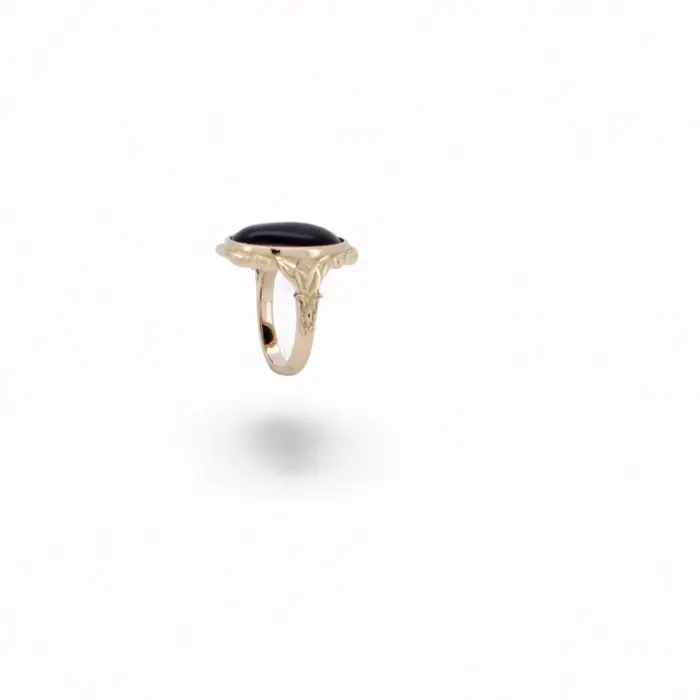
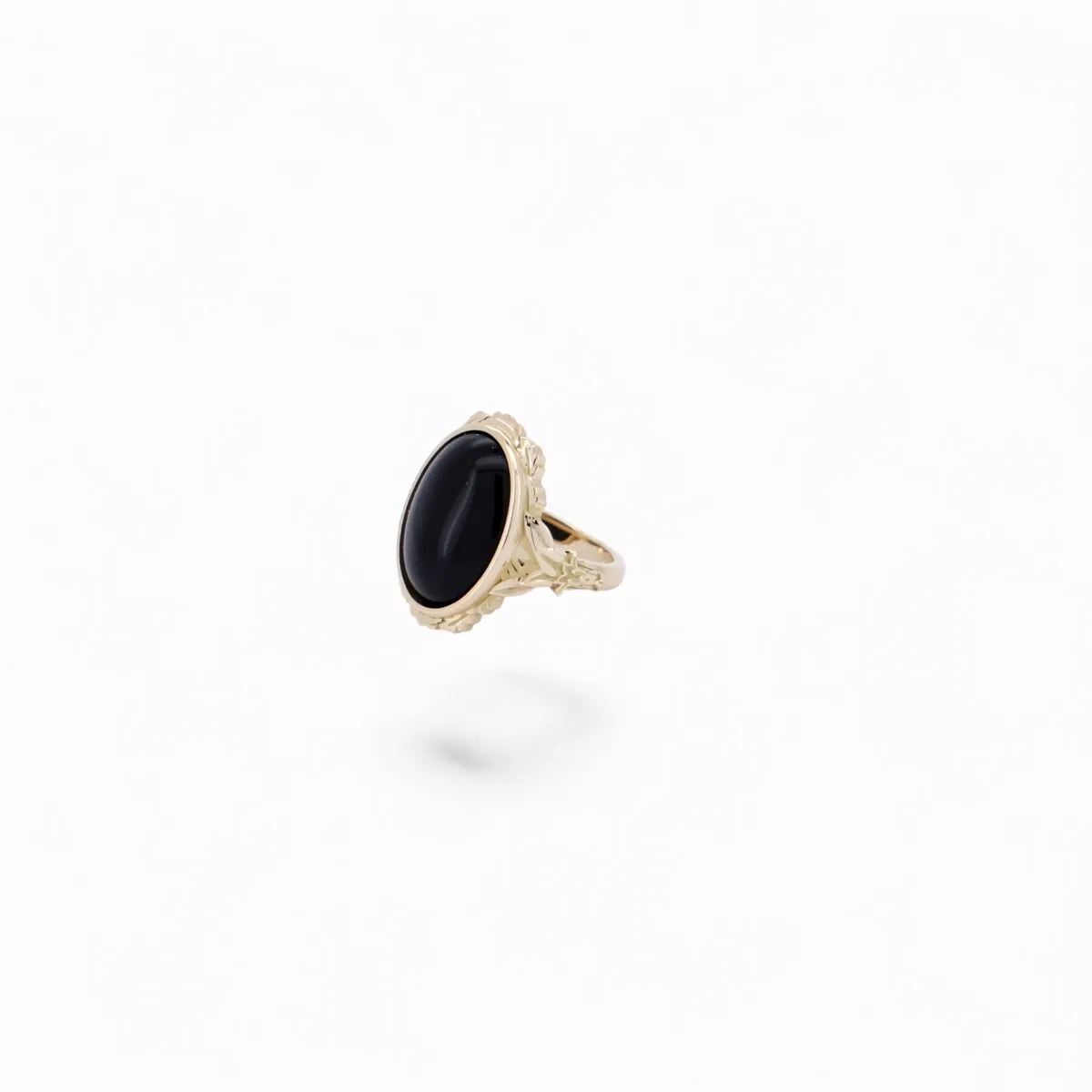
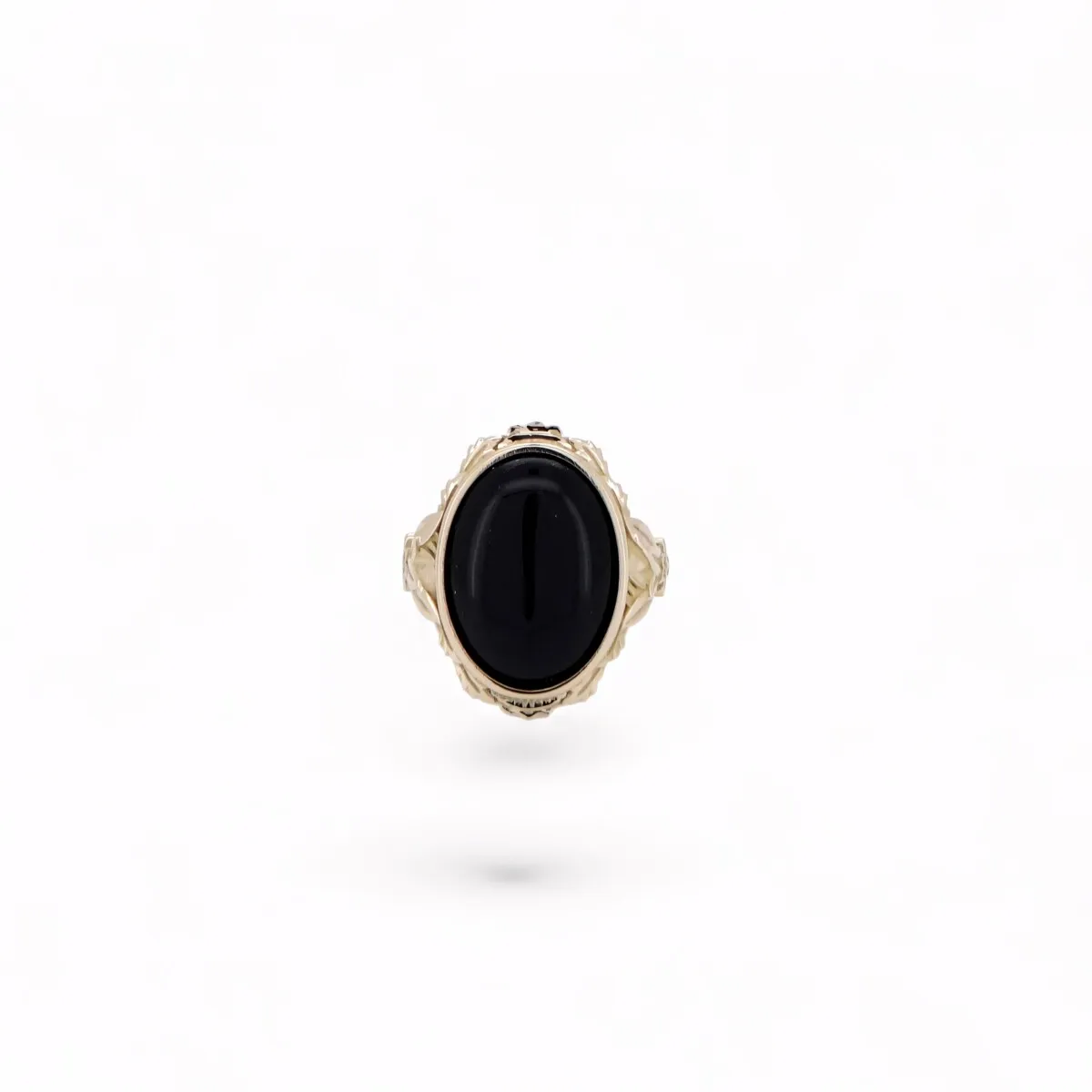
Some commissions move me before I have even drawn the first sketch. This one was about something passed between a mother and her daughter. The brief was to create a bespoke onyx and yellow gold ring, but also a keepsake that would travel from one generation to the next. Let me tell you how it came to life, in my workshop in Saint-Sébastien-sur-Loire, near Nantes.
A loyal client, her daughter and a first degree
A client I have known for several years pushed open the door of my shop-workshop. She was not alone. Beside her stood her daughter, a young woman in her twenties, rather quiet at first, who was taking in the workbenches, the files and the small tools lined up in rows.
The reason for their visit was a lovely one. The young woman had just earned her first degree, after several years of study. Her mother wanted to mark the occasion with a jewel that would last, but not with something chosen from a shop window. She wanted a piece designed for her daughter, and to share with her what she has long appreciated about my work: watching a jewel being born by hand. This heirloom jewel had to carry the story of both women.
The young woman, for her part, knew above all what she did not want. No discreet solitaire, no pastel stone. She wanted a ring that asserted her personality, and she was drawn to dark gemstones, graphic contrasts and a resolutely modern look. We talked at length. Black onyx imposed itself almost naturally, so closely did its depth resemble her.
It remained to balance this mineral strength. We imagined a floral design around the stone: power on one side, the softness of plant forms on the other. I took out my notebook. A few sketches later, the design was settled: an oval onyx in a closed setting at the centre, crowned with chiselled petals in 18-carat yellow gold, with a shank that echoes the motif in variation to sit comfortably on the finger. Mother and daughter approved it together.
Why an onyx ring suits a young woman of character
Before beginning the work, I like to explain to my clients what they will be wearing. Onyx belongs to the chalcedony family, those microcrystalline quartzes also found in agate and carnelian. It is composed of silicon dioxide. Its hardness, between 6.5 and 7 on the Mohs scale, makes it perfectly suited to a jewel worn every day.
Its name comes from the Greek onyx, meaning "nail" or "claw". Legend has it that Aphrodite, asleep by a river, had her nails cut by Cupid. Fallen to the ground, they were turned into black stones by the Fates, the goddesses of destiny. I told this story to the young woman, who smiled: a stone linked to beauty and destiny, for the start of a working life, was not a bad choice.
Onyx has also travelled through the centuries. The Romans made seals from it, because wax does not stick to the stone. In the 19th century, in England, Queen Victoria, in mourning after the death of Prince Albert in 1861, set a fashion for all-black dress, and onyx jewellery became a must-have of high society. The deposits are found in Brazil, Mexico, India, Iran, Russia and Madagascar. Most of the black onyx sold today is dyed grey chalcedony, treated by a process practised since Roman antiquity and accepted by gemmologists.
Today, the stone is enjoying a second youth. It evokes inner strength, determination, grounding and self-confidence. For this project I selected an oval onyx, examined under a x10 loupe. Its deep black, with no reflections or banding, matched exactly the graphic style we were after.
From ingot to floral ring in 18-carat yellow gold
Everything was made by hand, on site, in my workshop as a jeweller in Saint-Sébastien-sur-Loire. I began by melting the 18-carat yellow gold, an alloy of 75% pure gold enriched with copper and silver. The metal was brought to around 1,064 °C, its melting point, purified with borax and then poured into an ingot. This was then rolled into a sheet and drawn on the draw bench to obtain the sections required.
The shank and the closed setting
The shank was cut with a piercing saw, then shaped on the ring mandrel to follow the young woman's finger size exactly. Once soldered, it formed a comfortable band. I then built the mount for the onyx: a fine strip of gold, shaped to the exact perimeter of the oval stone. This closed setting protects the gem and leaves its uniform black to speak for itself.
The petals, the most delicate stage
For this floral ring in 18-carat yellow gold, each petal was shaped separately. I cut the plant silhouettes with the piercing saw, then refined each outline with a needle file to obtain lively curves. The chasing gave the motif its relief and veining. The petals were then soldered by flame, one by one, around the edge of the central setting. The heat had to remain perfectly controlled: one second too long, and a fine cut-out warps.
The setting and the polishing
Then comes the setting itself. The onyx was placed in its seat, then the fine gold strip was folded over the girdle with my pusher, applying gradual pressure. The ring was then sanded, taken back with a needle file to refine the floral contours, and polished with felt and cotton. It is at this moment that the yellow gold regains all its light and the black of the stone takes on its depth.
The handover: a knowing smile
On the day of the handover, mother and daughter returned to the workshop together. When the young woman slipped the ring on her finger for the first time, she looked up at her mother. That knowing smile said everything: pride in a degree, gratitude, and the pleasure of having lived this creation together. I added nothing. Some silences are worth far more than a jeweller's commentary.
This jewel marks both a personal achievement and a gift passed down. If you too are thinking of a bespoke onyx and yellow gold ring near Nantes for someone close to you, or simply for yourself, do come and see me at my workshop in Saint-Sébastien-sur-Loire. We will take the time to talk it over, pencil in hand, and see together what your story could become.