Published on by Olivier Maupas-Sehikyan · Rings
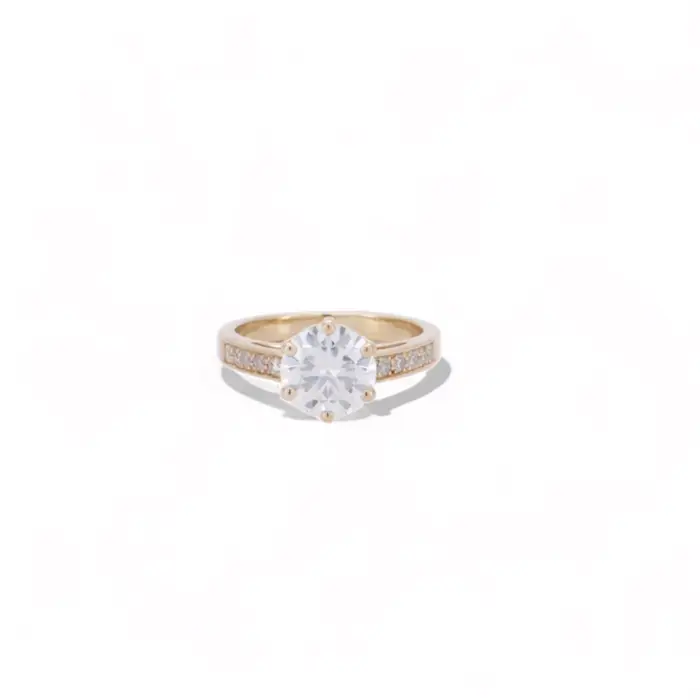
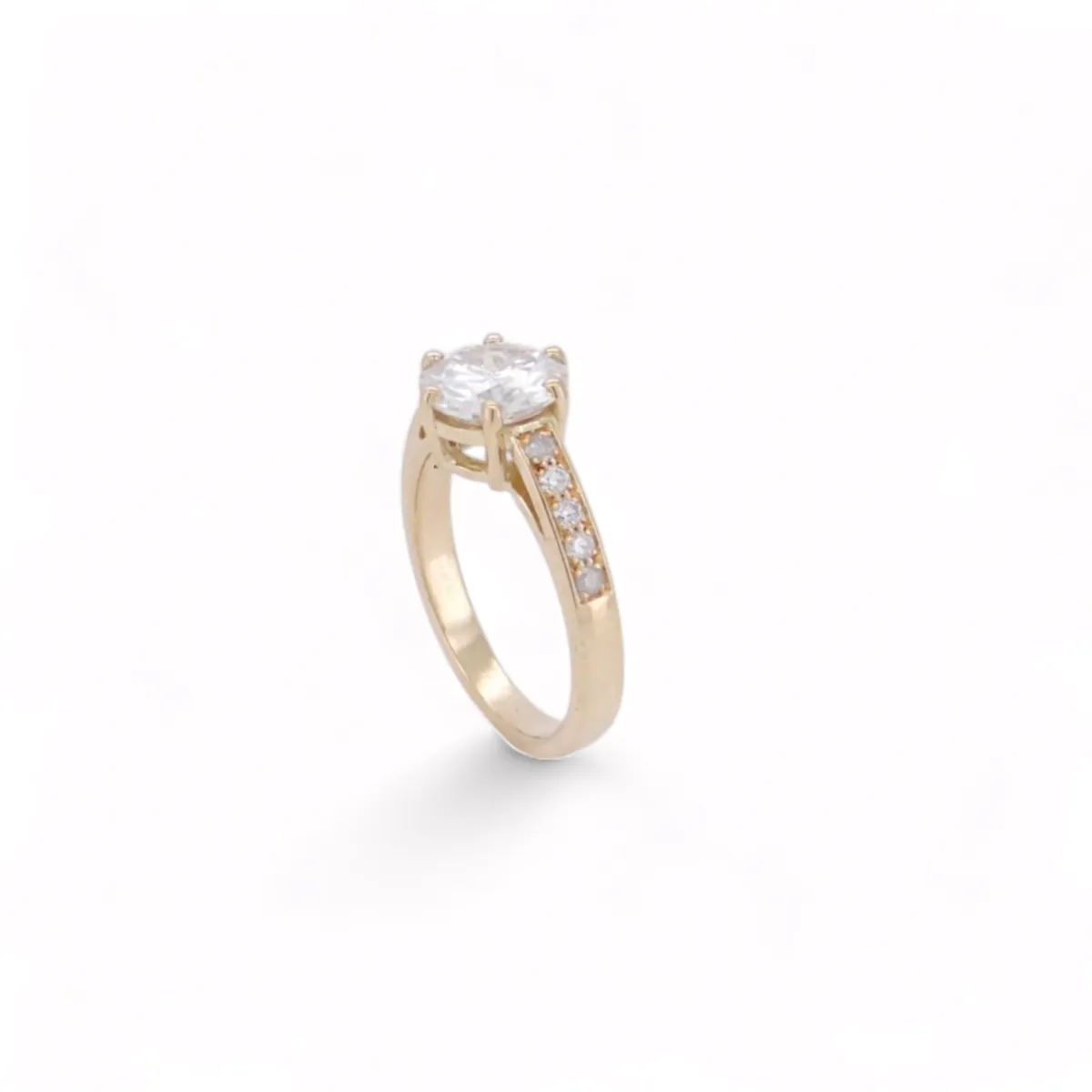
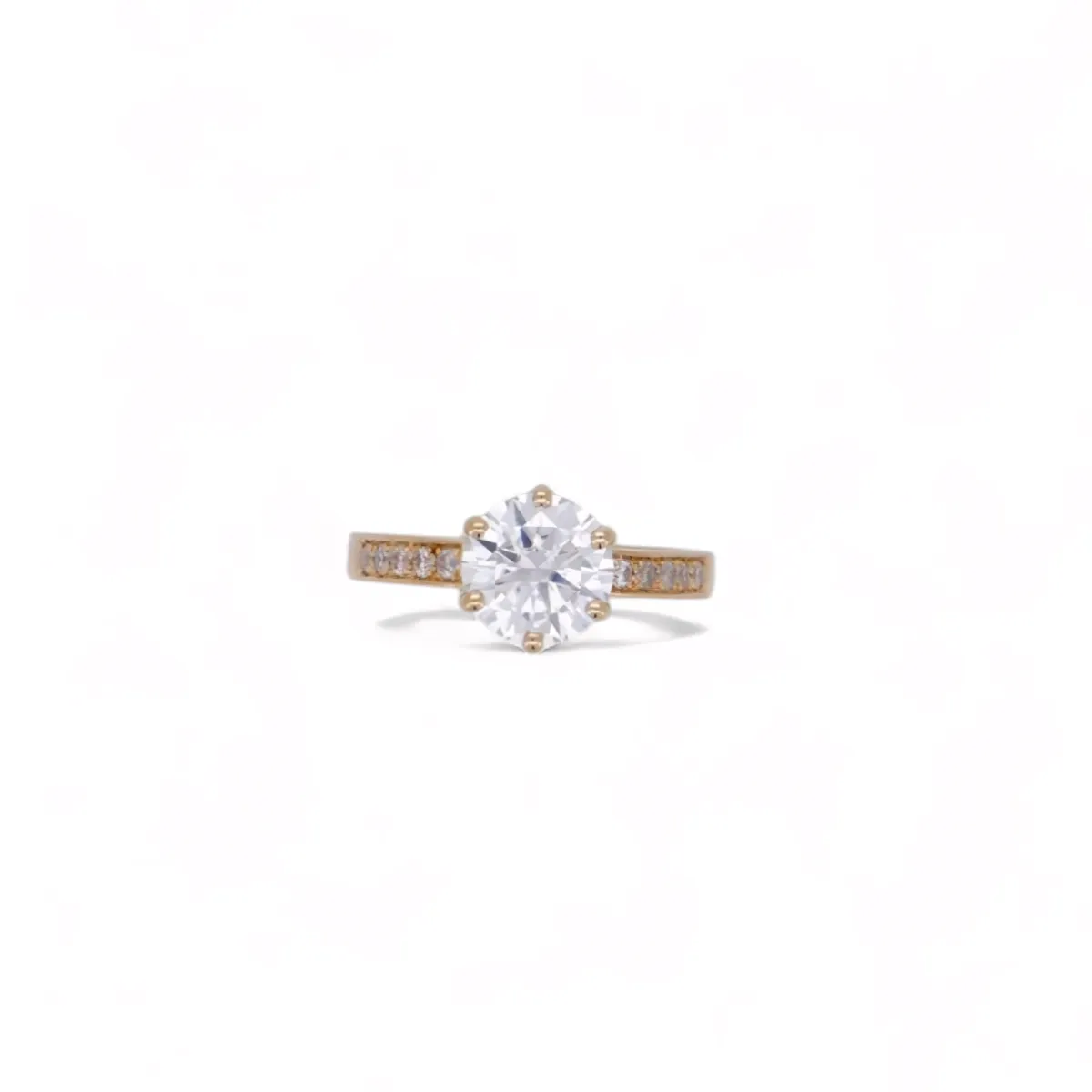
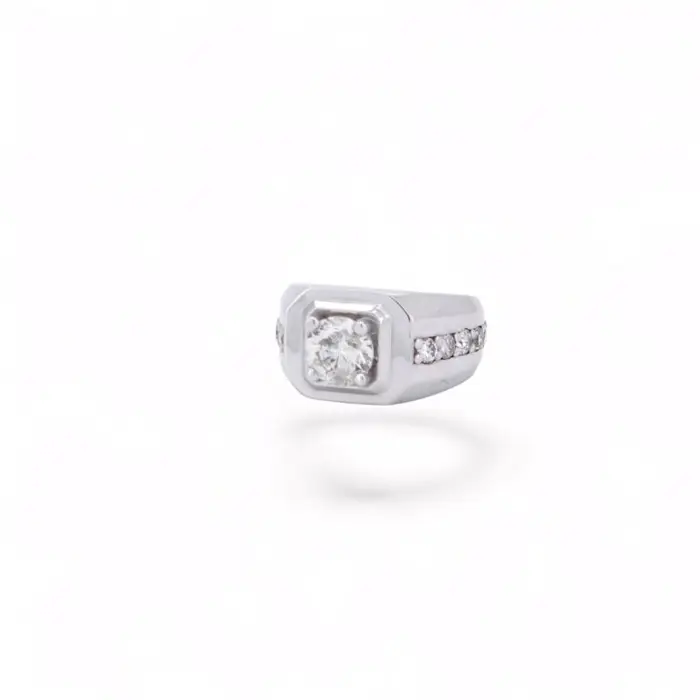
An engagement ring is unlike any other piece of jewellery. It carries a promise, sometimes even an entire life plan. The one I want to tell you about today, an 18-carat yellow gold engagement ring set with a 1-carat central diamond and a pavé of diamonds on the shoulders, was born in my workshop in Saint-Sébastien-sur-Loire, near Nantes. It is made of gold and stones that already had a story. I will tell it to you as I lived it.
A proposal that begins with a family heirloom
It all began with a discreet visit. A man pushed open the door of the workshop with a very precise idea in mind and, I sensed it immediately, a certain hesitation. In the pocket of his jacket he had a small pouch. He placed it on the bench with great care: an antique 18-carat yellow gold ring, a solitaire handed down by his grandmother, and a few small diamonds salvaged from other family jewels.
His wish touched me. He was preparing to propose and wanted to give his partner a ring that would not simply look like her, but like the two of them together. By transforming the gold and diamonds of his family inheritance, he was slipping the memory of his loved ones into the jewel that would seal their commitment. A bespoke engagement ring was taking shape, even before the first pencil stroke.
We talked at length about his future fiancée. What are her tastes? More modern or classic? A pure solitaire or a halo? After several conversations, we settled on a classic 18-carat yellow gold solitaire: a round brilliant-cut diamond of 1 carat in a six-claw setting, flanked by two pavé shoulders set with the diamonds from the old jewels.
I then took out my notebook and drew several sketches. The chosen design favours purity of line, a restrained silhouette that leaves all the space to the central stone. The project was approved that very day, and I knew I was holding far more than a commission.
The 1-carat diamond and the 4Cs
Before turning to the making, a word about the stone. Diamond is the hardest mineral known: 10 on the Mohs scale. It formed more than 150 kilometres below the surface, under colossal pressure, and took several billion years to come into being. Cut as a brilliant with 57 facets, it returns light with an intensity that nothing else can equal.
To assess a cut diamond, jewellers rely on the 4Cs, a system formalised by the Gemological Institute of America (GIA):
- Carat (weight): one carat equals 0.2 grams, which is roughly 6.4 mm in diameter for a brilliant.
- Colour: the scale runs from D, perfectly colourless, to Z, slightly yellowish.
- Clarity: it measures internal inclusions, from FL (flawless) to I3.
- Cut: it is the cut that determines the stone's final brilliance.
The 1-carat diamond holds a special place among engagement rings. A strongly symbolic threshold, it offers real visual presence. It is rarer than smaller stones, while remaining more accessible than diamonds of several carats. For this project, I chose from my stock a diamond of very fine quality, checked under a x10 loupe: colour, clarity and proportions were examined one by one.
The family's small diamonds were sorted, re-graded, then distributed across the shoulders to form a harmonious pavé. As for 18-carat yellow gold, an alloy of 75% pure gold completed with copper and silver, it brings the warmth that suited a promise ring so well.
From casting to setting: bespoke creation in the workshop
Now comes the part I love most, the work of the hands. Everything was made on site, in my workshop, without intermediaries.
Giving new life to old gold
First I melted down the 18-carat yellow gold from the old jewels. The metal was heated to 1,064 °C, its melting point, then refined and poured into an ingot. Rolled into a sheet, it was then drawn through the draw bench to produce the thick wire needed for the shank.
The body of the ring was cut with a piercing saw, shaped on the ring mandrel to fit the ring finger perfectly, then soldered into a band. With a file, I worked the shoulders to give them the slope that will showcase the central diamond.
A six-claw mount for the central stone
I shaped the six claws from round wire, then fitted them one by one with a needle file. The gallery beneath the diamond was structured to let as much light through as possible, which heightens the stone's brilliance. The six-claw setting remains the most classic choice for an engagement solitaire, and it suits round stones particularly well.
Setting and polishing
For the pavé, I prepared the seats for the small diamonds with a conical bur, on both shoulders. This step demands millimetre precision: one gesture too many, and everything has to be started again.
Then came the moment of setting. The 1-carat diamond was lowered into its seat, and its claws were closed over it with great delicacy using my pusher. The tips were rounded off with a bell bur for a clean finish. The small family diamonds were finally grain-set with my graver, and the sparkling pavé came to life before my eyes.
The ring was sanded, filed, then polished with felt and cotton mops. This mirror finish revealed all the warmth of the yellow gold and the brilliance of the diamonds.
Presenting the engagement ring
A few weeks later, my client came back to the workshop. He had the smile of someone who has held his breath for far too long: his proposal had been accepted. I must admit I had a lump in my throat as I listened to him.
This ring, born from the transformation of a family heirloom, now sits on the finger of his future wife. The grandmother's gold still shines in it, in a new way, and the family's diamonds accompany a fresh beginning. It is for moments like this that I do this work.
If you are planning a proposal, or if you keep an old piece of jewellery in a drawer that is simply waiting to live again, push open the door of my workshop in Saint-Sébastien-sur-Loire, near Nantes. We will take the time to talk it through, quite simply, around a workbench and a sketchbook.