Published on by Olivier Maupas-Sehikyan · Necklaces
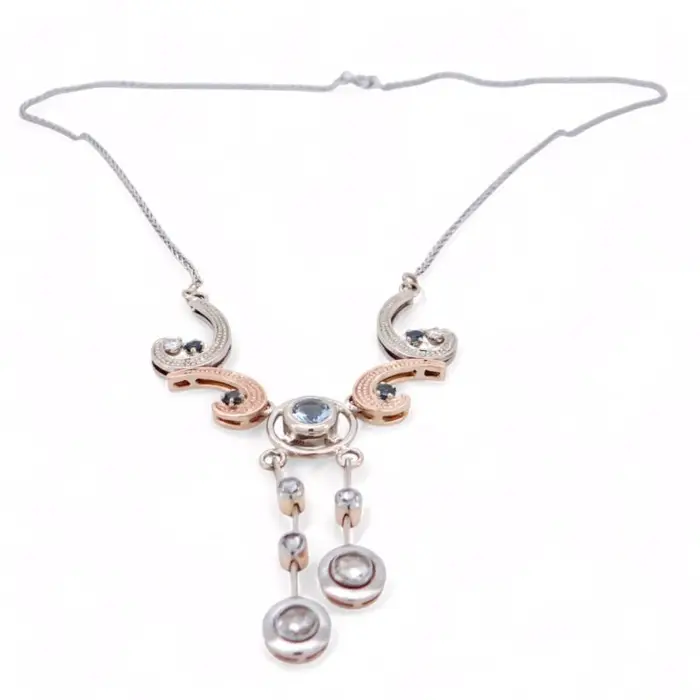
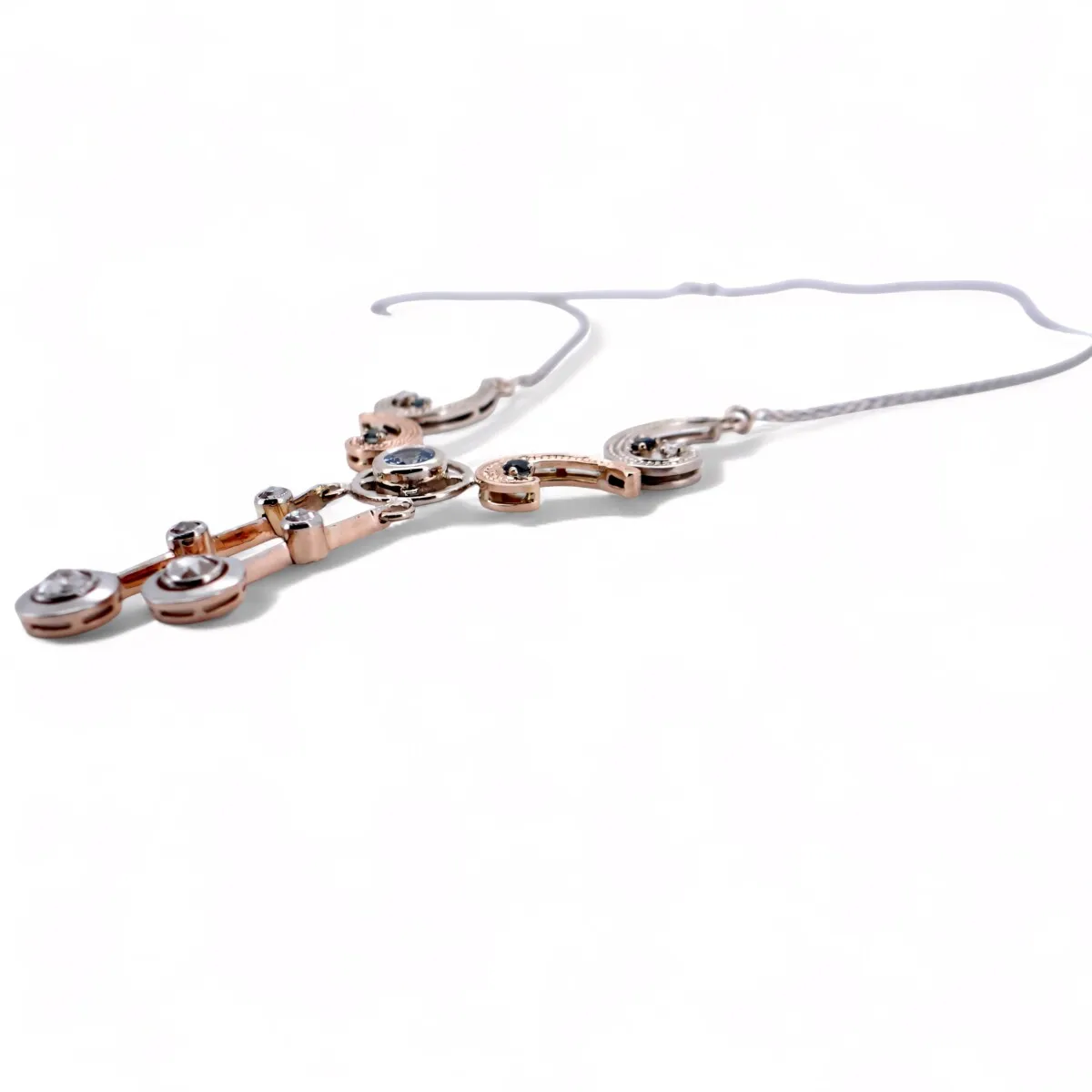
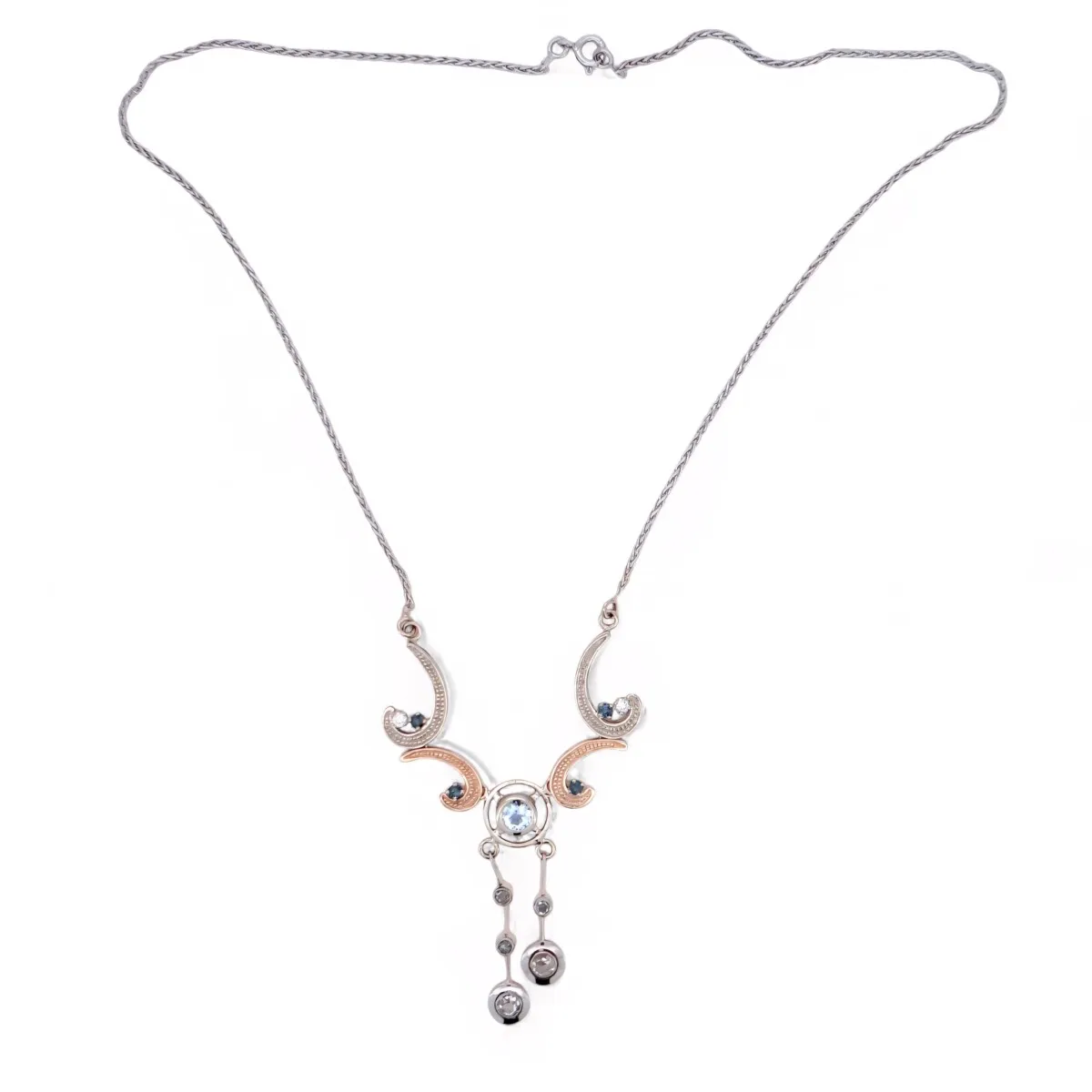
Some creations are the sum of a lifetime. The one I am telling you about today is the most moving I have ever been given to make. One day, a client pushed open the door of my workshop in Saint-Sébastien-sur-Loire, near Nantes, carrying a wooden casket filled to the brim. She left with the promise of an Art Deco platinum and gold necklace that would bring together everything that box contained.
A casket of memories and a very clear wish
When she lifted the lid, I understood that we would not be talking about a simple piece of jewellery. There were dozens of pieces: a white gold wedding band handed down from her mother, a diamond solitaire given to her for her 30th birthday, several small rose gold rings, a platinum chain given by her late husband, and an assortment of earrings, pendants and bracelets gathered over the decades.
Her assessment was clear-eyed. None of it was worn any more. Some pieces were broken, others out of fashion, and many no longer suited the woman she had become. Yet she refused to leave them sleeping in a box, and even more so to sell them. What she wanted could be summed up in a sentence: for these memories to be reborn together, melted into a single piece of jewellery that she would wear close to her.
We talked for a long time. Which piece of jewellery could hold so much memory? A necklace, naturally, for its generous surface. And what style would carry it through the years without ageing? The Art Deco of the 1920s and 1930s imposed itself almost on its own, with its rigour and elegance.
I took out my pencils. Several sketches later, we settled on an articulated Y-shaped design, made of geometric scrolls and stylised motifs, with two drops at the centre, a nod to the sautoirs of the Roaring Twenties. The design was approved that very day, and my client left with a slightly lighter heart.
The Art Deco style and the marriage of three metals
Before I tell you about the making, let me explain why this style was so close to my heart. Art Deco officially emerged in 1925, at the International Exhibition of Modern Decorative and Industrial Arts in Paris. It was born as a reaction to Art Nouveau and its plant-like curves. In their place, it chose geometry, symmetry and pared-back purity. Cubism, the Bauhaus, Egyptian art and Asian art all nourished it, and above all it celebrates line, rhythm and light.
In jewellery, it gave rise to some of the most famous pieces of the 20th century, at Cartier, Boucheron and Van Cleef & Arpels. Platinum became the metal of reference: white, strong, and able to receive a setting of rare delicacy. Diamonds reign supreme, sometimes combined with onyx, sapphire or emerald for striking contrasts.
For this bespoke creation, I chose to combine three metals: 18-carat white gold, 18-carat rose gold and platinum, all taken from my client's own jewellery. The platinum, at the centre, brings the historic whiteness of the style. The rose gold adds softness and a more contemporary note. The white gold links the two tones.
This choice was not without its difficulties. White gold and rose gold melt at around 1,064 °C, whereas platinum requires 1,768 °C, some 700 degrees more. Bringing these metals together in a single piece therefore calls for real mastery of fire.
The recovered diamonds were first sorted under a x10 loupe, then calibrated and arranged according to the design. The finest were reserved for the central drops, the smallest for the scrolls on either side.
Made entirely by hand
Everything was made in my jeweller's workshop near Nantes, by hand, without lost-wax casting. I began by melting each recovered metal separately. The white gold, rose gold and platinum were remelted, purified, then poured into clean ingots. Each ingot was then rolled into sheet, or drawn through the draw bench to provide the wire I needed.
The scrolls were cut with a piercing saw from these thin sheets, then fitted with a file, one by one. The milgrain, those tiny rows of metal beads running along the edges, was hand-engraved with a milgrain tool. It is the signature of Art Deco, and it catches the light with a liveliness that a machine cannot give.
The articulation: the challenge of comfort
The articulation required the most patience. Each scroll is joined to the next by a fine link soldered as a double hinge, allowing the necklace to follow the curve of the neck with suppleness. It is a technique inherited from high jewellery, and it guarantees excellent comfort when worn.
The soldering and the setting
The solder joints between the gold and the platinum were the most delicate. So as not to melt the gold lying next to the platinum, I used a high-temperature gold solder and guided the flame with extreme precision, concentrating the heat on the platinum areas.
The setting came last. The diamonds in the scrolls were grain-set, using the graver and the milgrain tool. The principal stones in the drops were bezel-set, to protect them as well as possible. Then came the polishing, long and meticulous, until every surface returned the light just as I had imagined it.
The day she put on her necklace
On the day of delivery, I confess I was almost as moved as she was. My client took the necklace in her hands, looked at it in silence, then put it around her neck for the first time. She burst into tears. In this piece of jewellery were her mother's wedding band, the solitaire from her 30th birthday, her husband's chain: an entire life, now worn close to her heart.
It is for moments like these that I chose this profession. If you too keep old jewellery in a drawer, or dream of a complete transformation, come and talk to me at my workshop in Saint-Sébastien-sur-Loire. We will take the time to look at what you have, and to imagine together what it might become.