
Published on by Olivier Maupas-Sehikyan · Rings
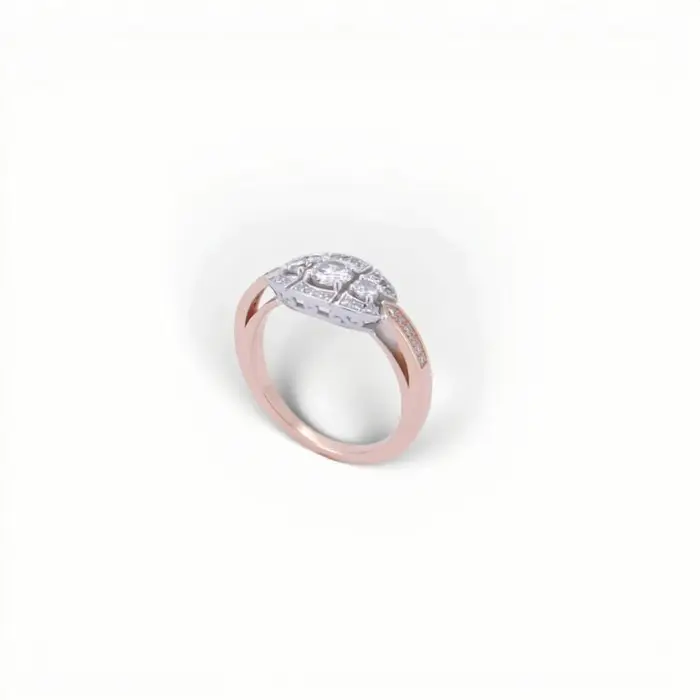
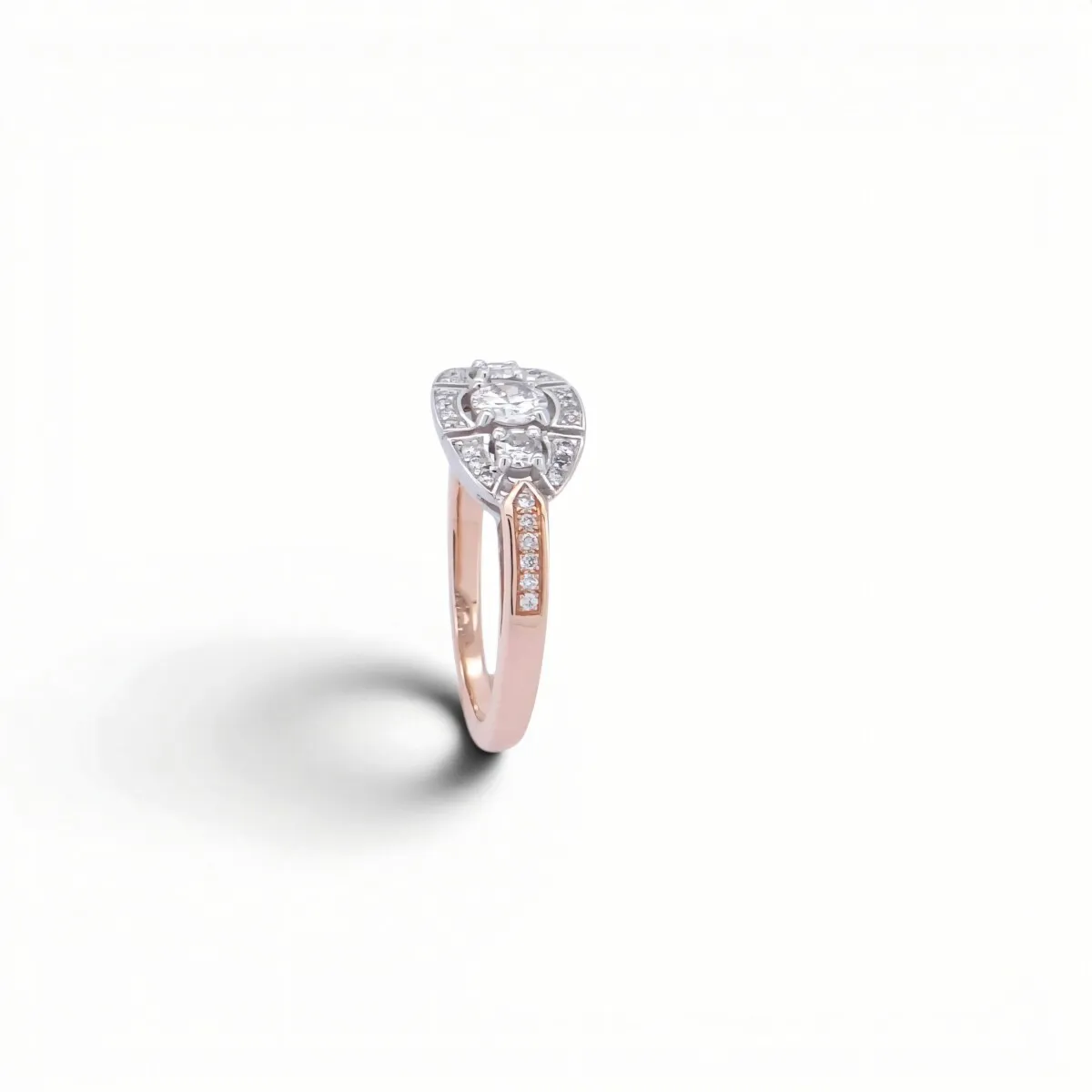
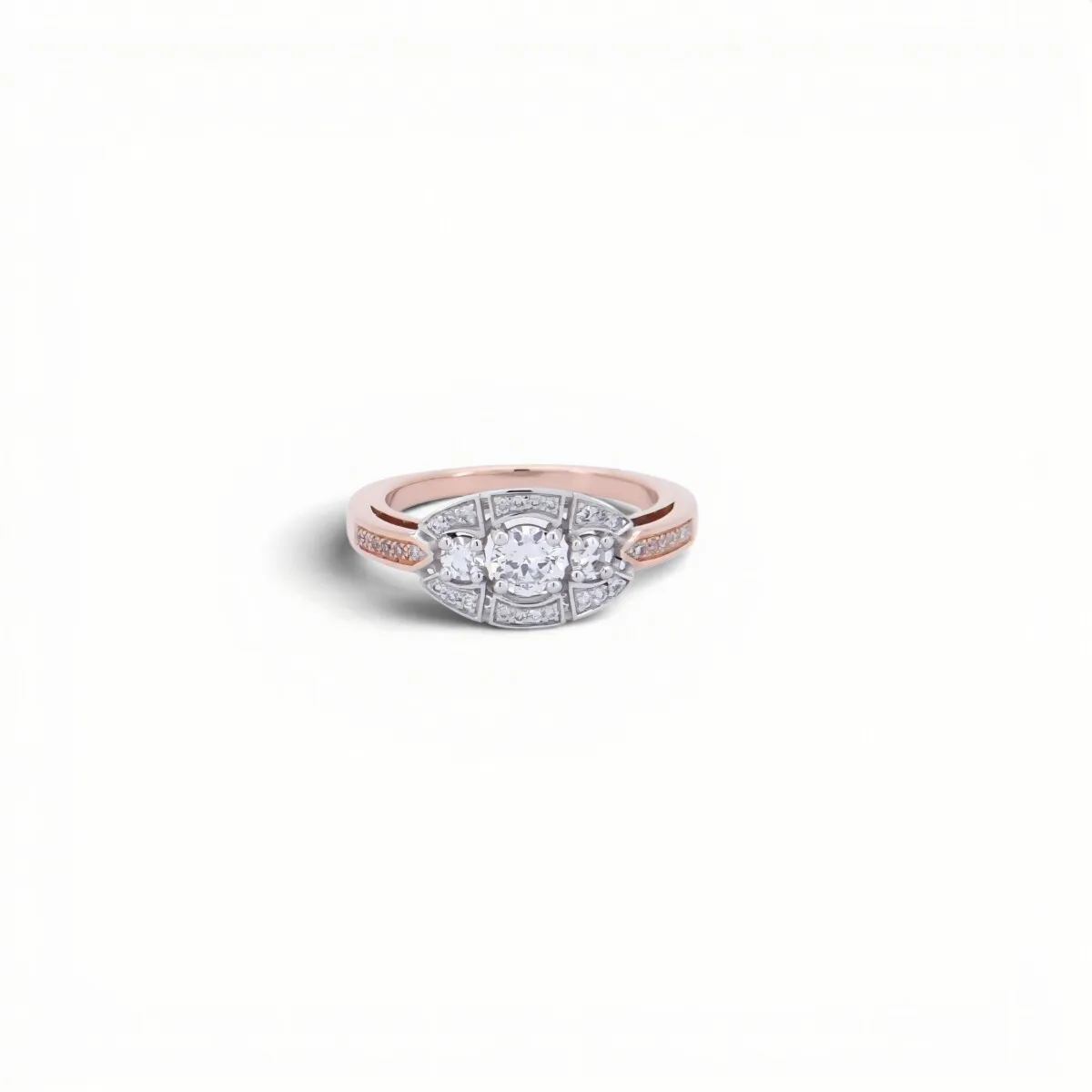
Some appointments one never forgets. That day, a client pushed open the door of my workshop in Saint-Sébastien-sur-Loire, near Nantes, accompanied by her husband. They had just celebrated 60 years of marriage, their diamond wedding anniversary. They were looking for an Art Deco rose and white gold ring to mark the occasion. Let me tell you how it came to life.
An Art Deco ring for sixty years of marriage
They stood side by side, a little shy, as if the workshop were a solemn place. The husband wanted to give his wife a meaningful gesture, worthy of six decades shared. She was already thinking of her mother's jewellery, the pieces brought out for grand evenings. She kept a precise image of it: understated elegance, clean lines, nothing ostentatious.
The Art Deco style imposed itself almost without discussion. Born in the 1920s and 1930s, it had left its mark on her mother's generation, and it still speaks to those who love graphic rigour. She was particularly fond of plaque rings, those pieces with an extended surface that resemble miniature architecture. She wanted something discreet yet intricately worked, which she could wear every day, not only on special occasions. For a bespoke Art Deco ring, this brief was a wonderful invitation.
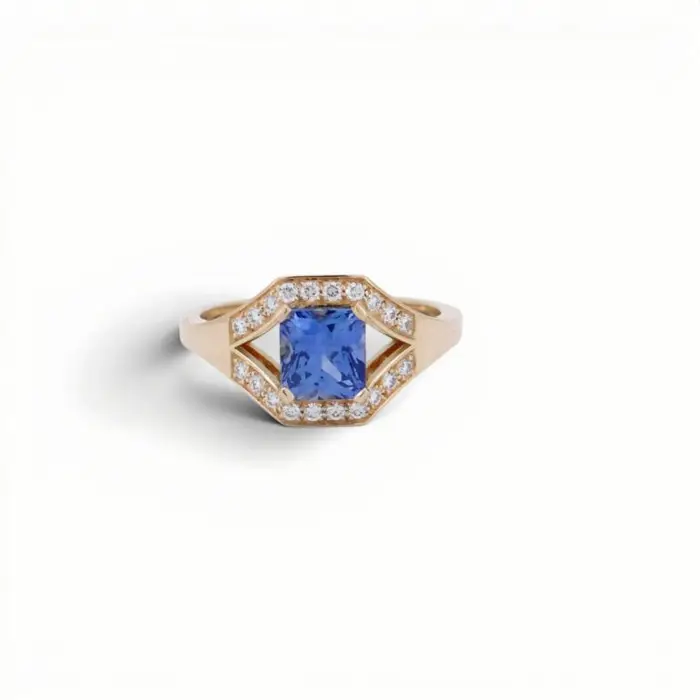
We talked at length. Then I took out my sketchbook and drew several designs. The chosen model combines an 18-carat white gold plaque with openwork geometric motifs, a round central diamond in a claw setting and a stepped pavé with graphic lines. Beneath it, an 18-carat rose gold band brings the warmth that softens the whole. The project was approved that very day, and I could tell it already meant a great deal to them.
Rose gold, white gold and diamond: choosing the materials
Before touching the metal, I like to explain my choices. 18-carat white gold contains 75% pure gold, alloyed with other white metals such as palladium. It is the metal of Art Deco par excellence. Its cool whiteness seemed modern, almost futuristic, in the 1920s. It recalled the platinum worked by the great houses of the day, Cartier, Boucheron and Van Cleef & Arpels.
18-carat rose gold, for its part, is an alloy of pure gold and copper. Its tone is warm, a little romantic. The pairing of rose gold and white gold was a signature of the Roaring Twenties, a time when jewellers dared to play with contrast. Here, the pink tempers the coolness of the plaque and gives the ring its softness.
Then there is the diamond. With its 57 facets, it returns light with rare intensity. For a diamond anniversary, its symbolism is self-evident: eternity, the unalterable, everything that sixty years of love can inscribe in a life. I chose a stone of very fine quality, examined under a x10 loupe. Clarity, colour, calibration and integrity were checked one by one. The small diamonds of the pavé were then sorted by size: each has its precise place in the composition, because symmetry forgives nothing in this style.
Stepped pavé, a goldsmith's work done by hand
The stepped pavé is one of the most recognisable signatures of Art Deco rings. The diamonds are arranged in successive tiers, each level slightly narrower or wider than the last. The idea comes directly from the New York skyscrapers of the period, the Empire State Building and the Chrysler Building, whose stepped silhouettes fascinated designers. Everything was made by hand, in my workshop, in the traditional way.
Casting and the band
I began by melting the rose gold and the white gold separately. Each metal was heated to around 1,064 °C, then refined and cast into separate ingots. These ingots were rolled into sheets and drawn through the draw bench to obtain the sections needed. The rose gold band was made from round wire, bent around the ring mandrel and then soldered into a ring, with care taken to make it comfortable for everyday wear. On the shoulders, I set a fine line of diamonds, a small echo of the more elaborate work on the plaque.
The openwork plaque
The white gold plaque demanded the greatest concentration. With a piercing saw, I cut out the shield-shaped silhouette, then hollowed out each geometric motif with millimetre precision. These openings, typical of Art Deco, lighten the piece and let the light in. Next came the construction of the steps: I marked out each level with compasses, then cut the seats for the diamonds with a conical bur. The rhythm must be exactly right. Too tight, and the steps lose their legibility; too loose, and they lose their coherence.
Soldering, setting and polishing
Assembling the two colours is a delicate moment. Rose gold and white gold do not have exactly the same properties, notably their melting points. I used a high-temperature gold solder, concentrating the heat in just the right place to avoid any distortion.
Then came the diamond setting. The central stone was seated in its claw setting, fitted with the graver. The small pavé diamonds were set one by one in grain setting, with the graver and the beading tool. It is slow work, which took several days of patience. Finally, the ring was sanded, then polished with felt and cotton. The white gold received its rhodium plating, while the rose gold kept its natural warmth. The contrast between the two golds then revealed itself fully.
Sixty years of love on her finger
On the day of the handover, I placed the case on the counter and stepped back a little. When my client slipped the ring onto her finger, under the moved gaze of her husband, nothing more needed to be said. The truth was plain to see: this jewel now carries 60 years of love, and it will carry them for a long time to come. Moments like this give my craft its whole meaning.
If you too have an anniversary, a story or a family memory you would like to place in a piece of jewellery, come and tell me about it at the workshop in Saint-Sébastien-sur-Loire, near Nantes. We will take the time to talk, to draw, and to see together what your bespoke diamond ring could become.