Published on by Olivier Maupas-Sehikyan · Rings
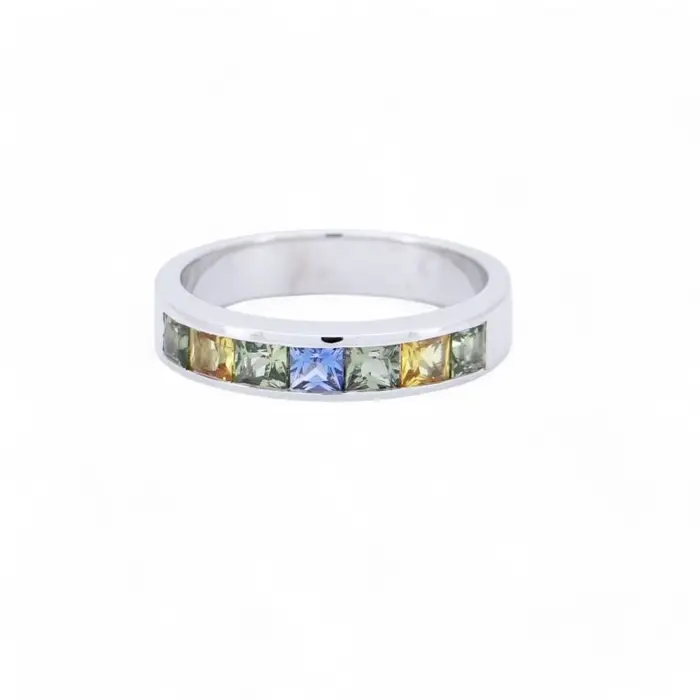
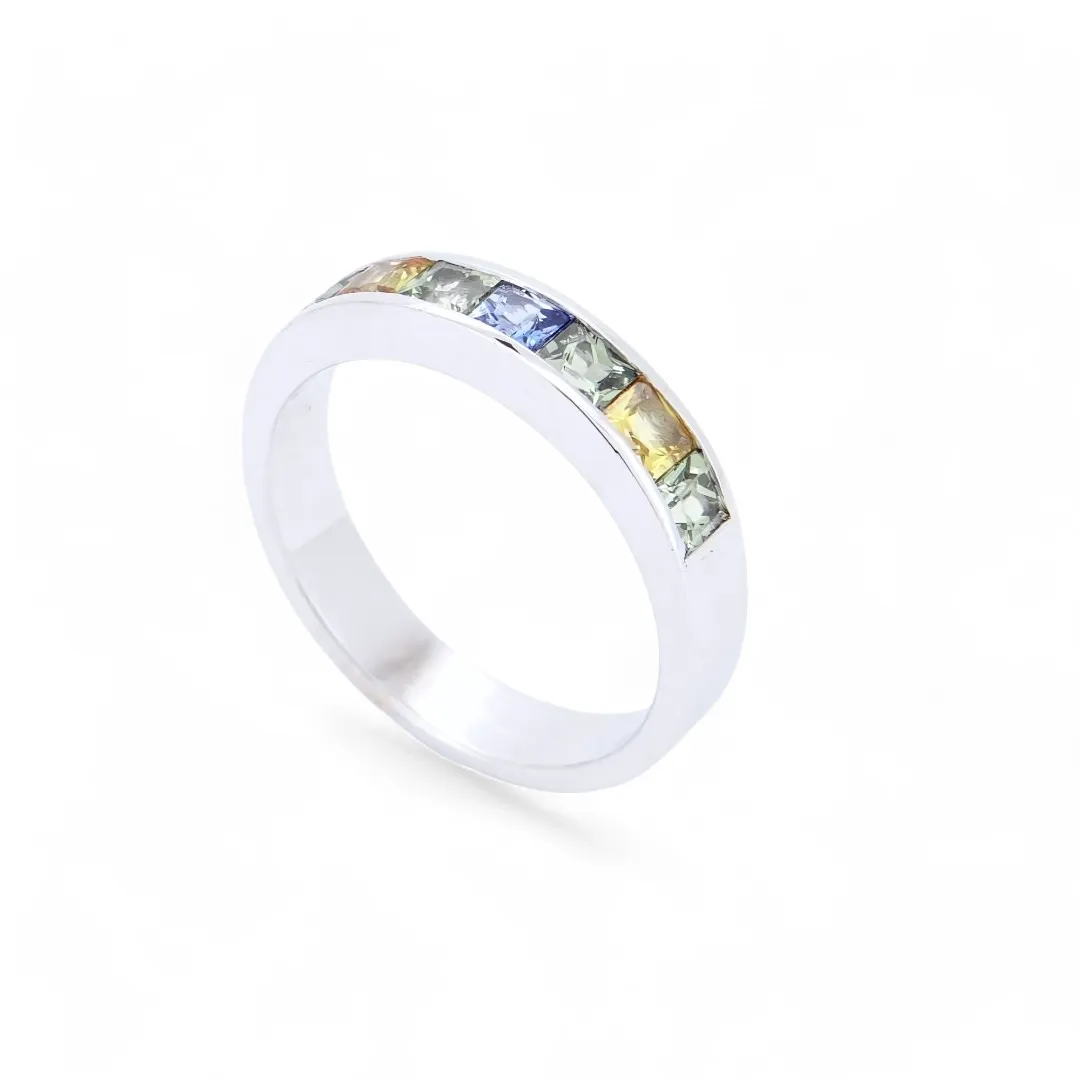
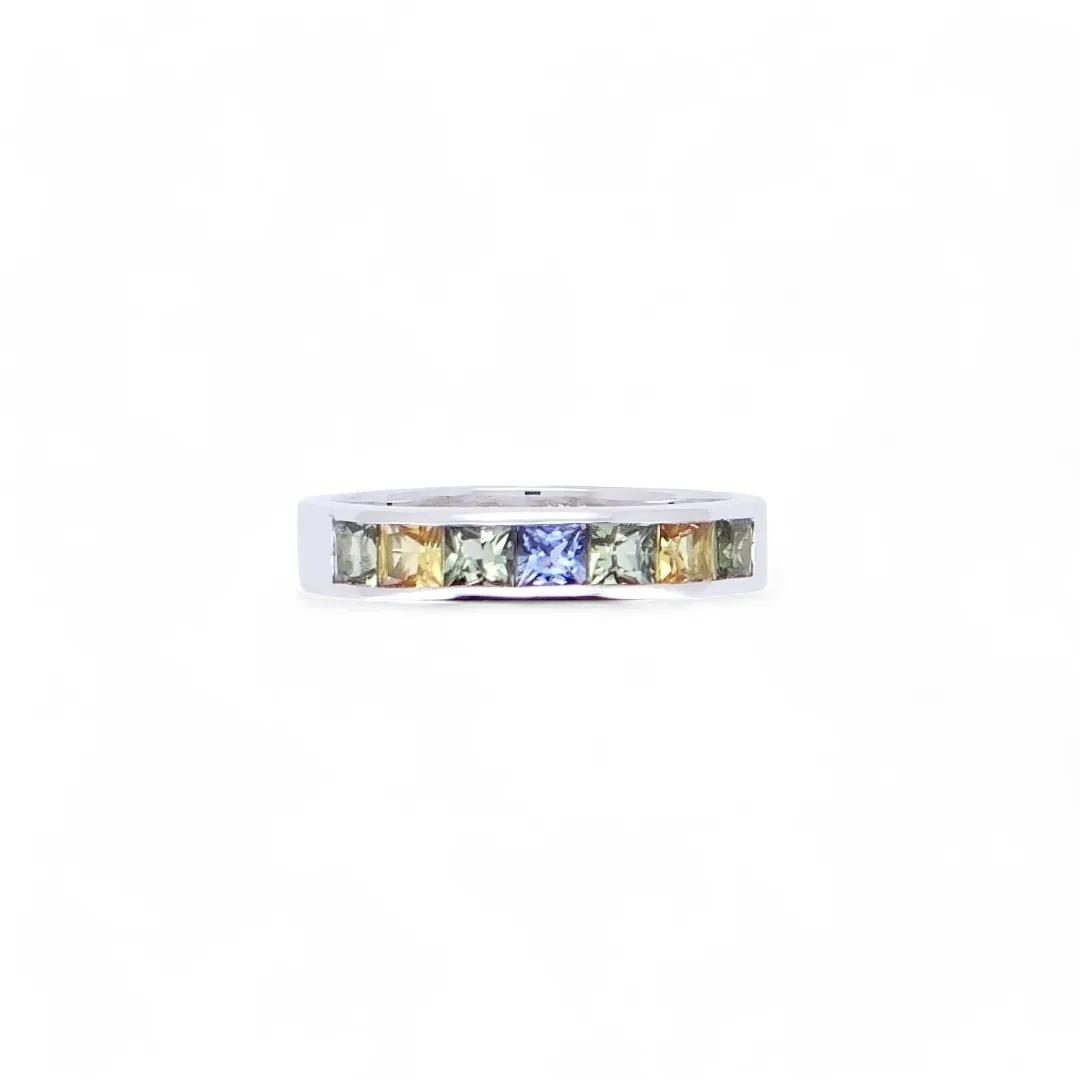
Some wedding bands turn their back on tradition and embrace colour. The one I want to tell you about began as a project shared with a client, at the moment she was turning a page in her life. I made this bespoke white gold wedding band in my workshop in Saint-Sébastien-sur-Loire, near Nantes, from her own gold. Here is how it took shape.
A bespoke wedding band in Nantes for a new chapter
It all begins with a visit to the workshop. My client walks in with a small velvet pouch. Inside are a broken chain, two rings she no longer found to her taste, and a few pieces she had set aside. All of them in 18-carat white gold. She wanted to part with them, but not for good: she hoped to give them a second life.
The project touches me from the very first minutes. She is soon to be remarried. After a difficult period, she has found love again, a love that is stronger, happier, brighter. What does she want? A wedding band that looks nothing like the ones she has known before. No classic plain band, no yellow gold, no obligatory discretion. A piece of jewellery that finally looks like her.
We talk at length. She loves colour, travel, nature just after the rain, rainbows. I listen, I take notes, I sketch a few ideas. Then I bring out from my collection a lot of square sapphires: green, yellow, orange, tanzanite blue, green again, yellow again, green once more. Her smile said everything there was to say.
I pick up my notebook and draw several sketches. The design we chose places the seven sapphires side by side, at the centre of a flat white gold band, held in a channel setting. The design was approved that very day.
Multicoloured sapphires on 18-carat white gold
Before moving to the bench, I always take the time to explain my stones. Sapphire belongs to the corundum family, just like ruby. Only colour sets them apart: ruby is red, while the name sapphire covers every other shade. There are blue, yellow, green, orange and pink sapphires, and even colourless ones.
These colours come from elements present in the crystal structure. Iron and titanium give blue, iron alone gives yellow, and traces of iron and vanadium give green. Each shade is the product of a slow geological alchemy, formed underground over millions of years.
Another point weighed in my choice: its hardness of 9 on the Mohs scale, just behind diamond. For a wedding band worn every day, in contact with water, objects and the movements of daily life, this resilience makes all the difference. The seven stones were sorted under a x10 loupe, according to their clarity, their calibration and the evenness of their colour. Their square cut, known as princess cut, catches the light with great liveliness and creates a pleasing geometric contrast with the roundness of the band.
As for the 18-carat white gold, it contains 75% pure gold, alloyed with other white metals such as palladium. Its understated whiteness acts as a setting for these vivid colours without ever competing with them. It lets the orange-red, the green and the tanzanite blue speak for themselves.
From molten gold to channel setting: how it was made in the workshop
Everything was made by hand, in my workshop, with no intermediary. That is how I work, and I believe you can feel it in the result.
Casting and shaping
First, I melted the gold my client had brought. The old pieces were refined, then cast into a clean ingot. This ingot was rolled into a sheet of the desired thickness, then cut with a jeweller's saw into a strip of the exact length for her finger size. Curved on a ring mandrel, the strip was then soldered to form a comfortable band. I take great care over the flatness of the upper surface, since this is where the sapphires will sit.
The channel, then the setting
Now comes the most delicate stage. With a square burr, I cut a long rectangular groove across the top of the band, matched precisely to the stones. Too narrow, and they will not fit. Too wide, and they shift and risk damage. Precision is a matter of a millimetre.
The channel setting holds the stones between two fine parallel lines of metal. For a wedding band, it offers real advantages: no claws to catch on clothing, the sapphires are well protected, and the line of colour remains unbroken, very contemporary.
Each sapphire was placed in the channel in the colour sequence chosen with my client. With my hammer and punch, I then closed the two lips of metal over the stones, with gradual pressure. A badly judged blow could chip a corner, so I work slowly, almost holding my breath.
The band was finally sanded, filed, then polished with felt and cotton. A light rhodium plating completed the work and gave the white gold its mirror-like brilliance.
The day she slipped on her rainbow wedding band
When my client came back, I placed the case in front of her. She slid the band onto her finger, and her eyes lit up as brightly as the stones. I shall not forget that silence, followed by a slightly emotional laugh. This multicoloured sapphire wedding band, born from her gold and our conversations, will now accompany her in her new life.
If you too dream of a wedding band that looks like you, or if you keep in a drawer jewellery that is waiting for a second story, come and talk to me at the workshop in Saint-Sébastien-sur-Loire. We shall take the time to talk over a coffee, and imagine together what it might become.