
Published on by Olivier Maupas-Sehikyan · Rings
A Cardboard Folder and a Silver Wedding Anniversary Project
One morning, a man pushed open the door of my workshop in Saint-Sébastien-sur-Loire, near Nantes, with a cardboard folder under his arm. He opened it carefully in front of me. Inside were a few old yellow gold pieces, a broken chain and a family ring that had gone out of fashion. He had just found them at the back of a forgotten drawer.
His idea could be summed up in a single sentence. His wife was about to celebrate their silver wedding anniversary, twenty-five years of marriage, and he wanted to give her a piece of jewellery she would never forget. Not something chosen from a shop window, but a bespoke ring designed for her, born from the objects he had kept for years. As for the centre stone, he was waiting for my advice.
A request like this always moves me. Turning a forgotten drawer into a piece of jewellery gives a new chapter to objects that had lost their place. I laid them out on the bench one by one to see what each could offer: gold to be melted down, diamonds to be reused.
We then spoke at length about her. She loves understated elegance and classic lines that are nonetheless well constructed. A solitaire that announces itself does not suit her: she prefers the rightness of a beautiful detail. And blue is her colour, the colour of her eyes, the colour of the blouse she wears so often. Listening to him, I already felt I knew her a little.
A Ceylon Sapphire in a Cut-Cornered Rectangular Cut, Chosen for Its Depth
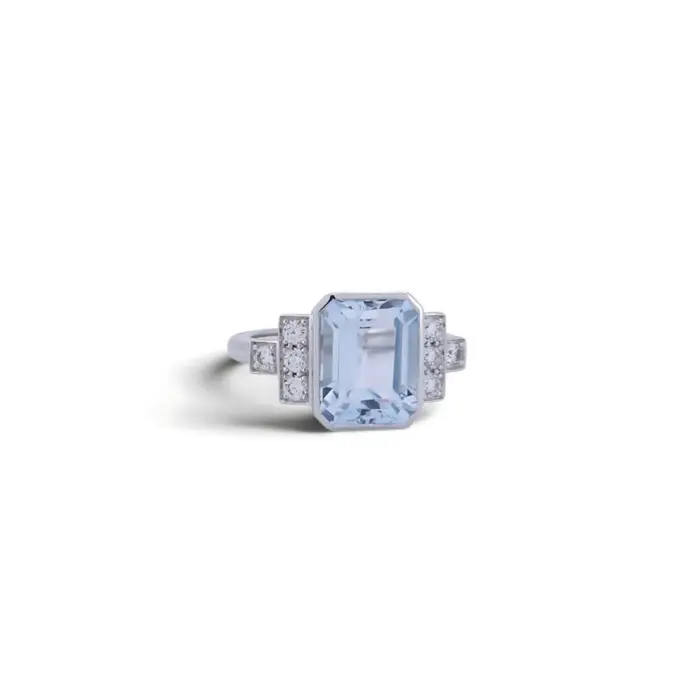
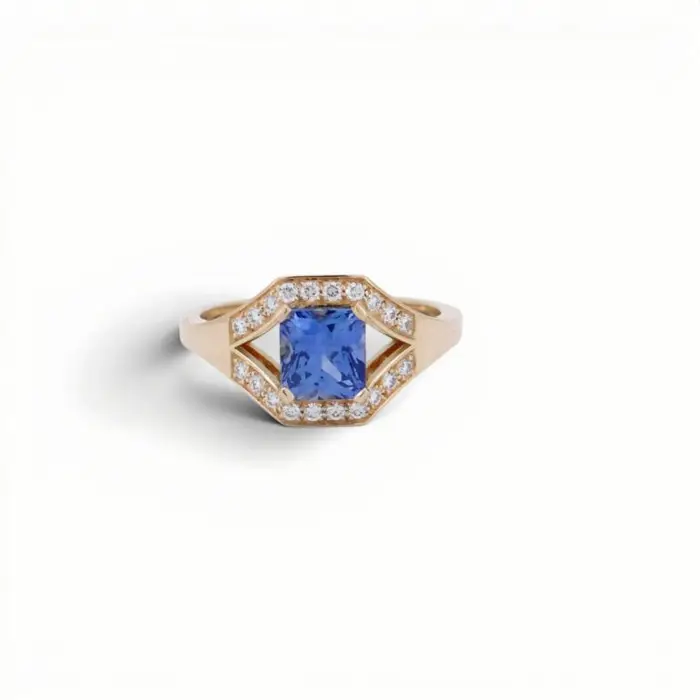
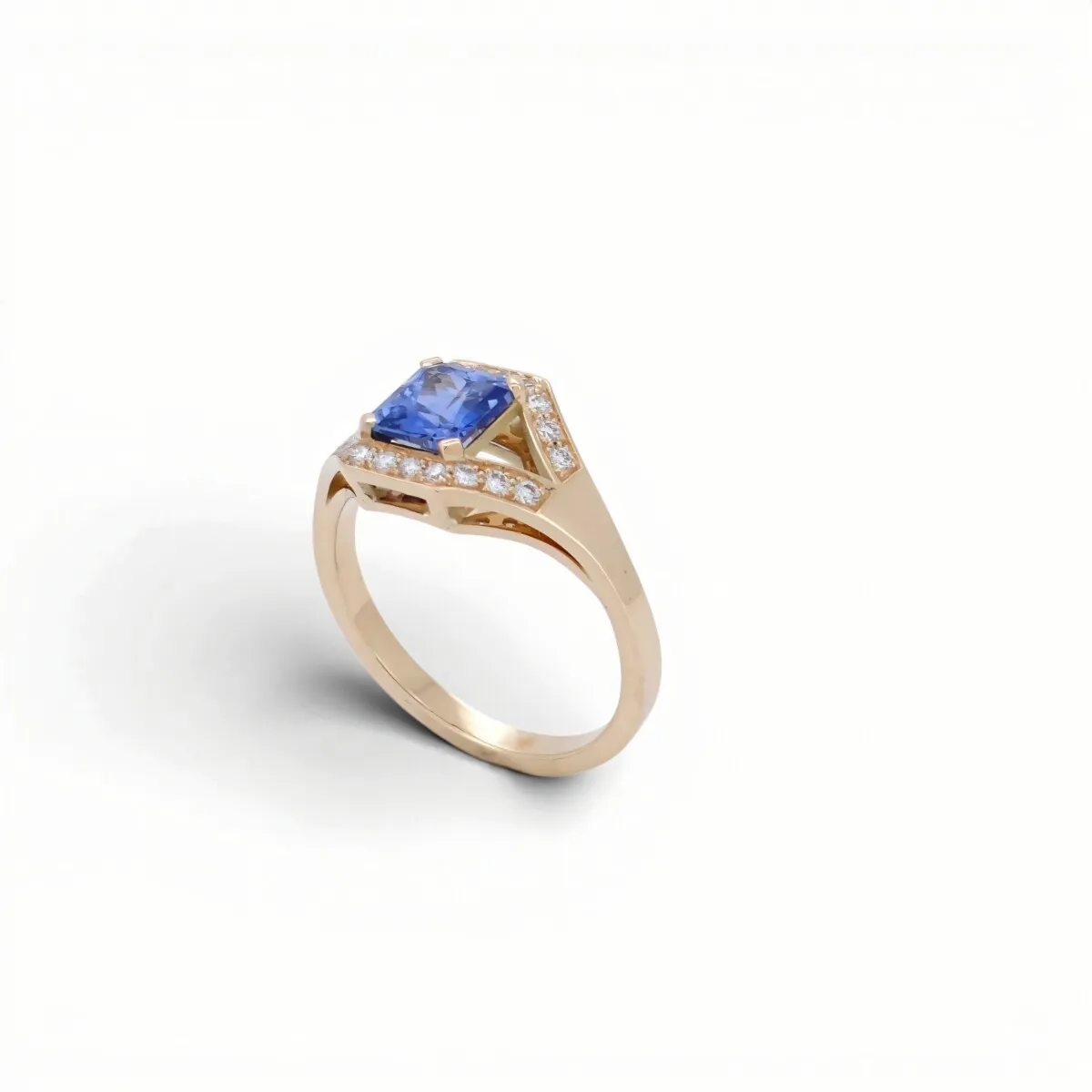
I then took from my collection a Ceylon sapphire in a cut-cornered rectangular cut, of a velvety, deep blue. My client was won over at once. This rectangular cut with softened corners recalls Art Deco, with a restraint that matched exactly what he was looking for.
A few words about this stone, because it matters. The Ceylon sapphire comes from Sri Lanka, the former Ceylon. It is a corundum with a hardness of 9 on the Mohs scale: only diamond resists scratching better. Its blue owes much to traces of iron and titanium within its crystal structure, sometimes with a hint of violet. It is said to symbolise fidelity and wisdom, and one remembers that Lady Diana chose one as her engagement ring, later passed on to Kate Middleton. For twenty-five years of life together, it is hard to imagine anything better.
The cut-cornered rectangular cut, close to the emerald cut, relies on large rectangular facets arranged in parallel steps. It reveals the depth of a transparent stone. Its cut corners also protect the angles from knocks, which a pure emerald cut does not always allow.
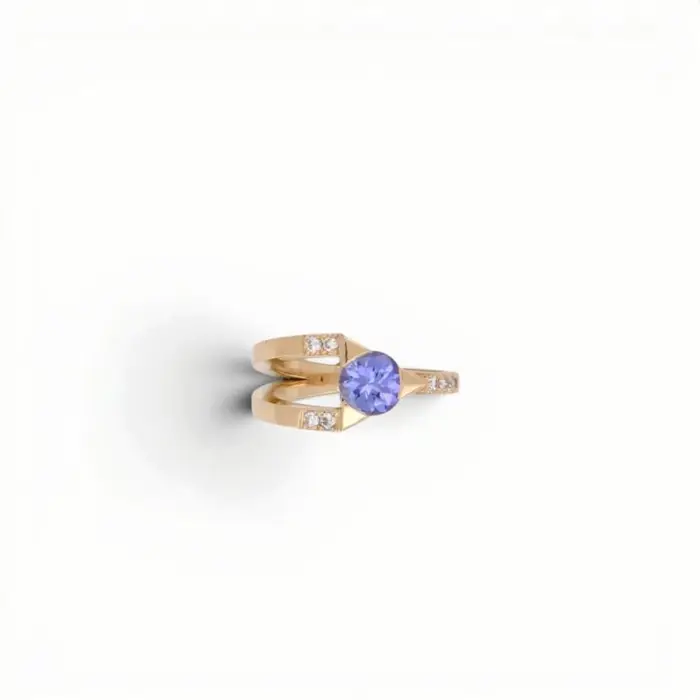
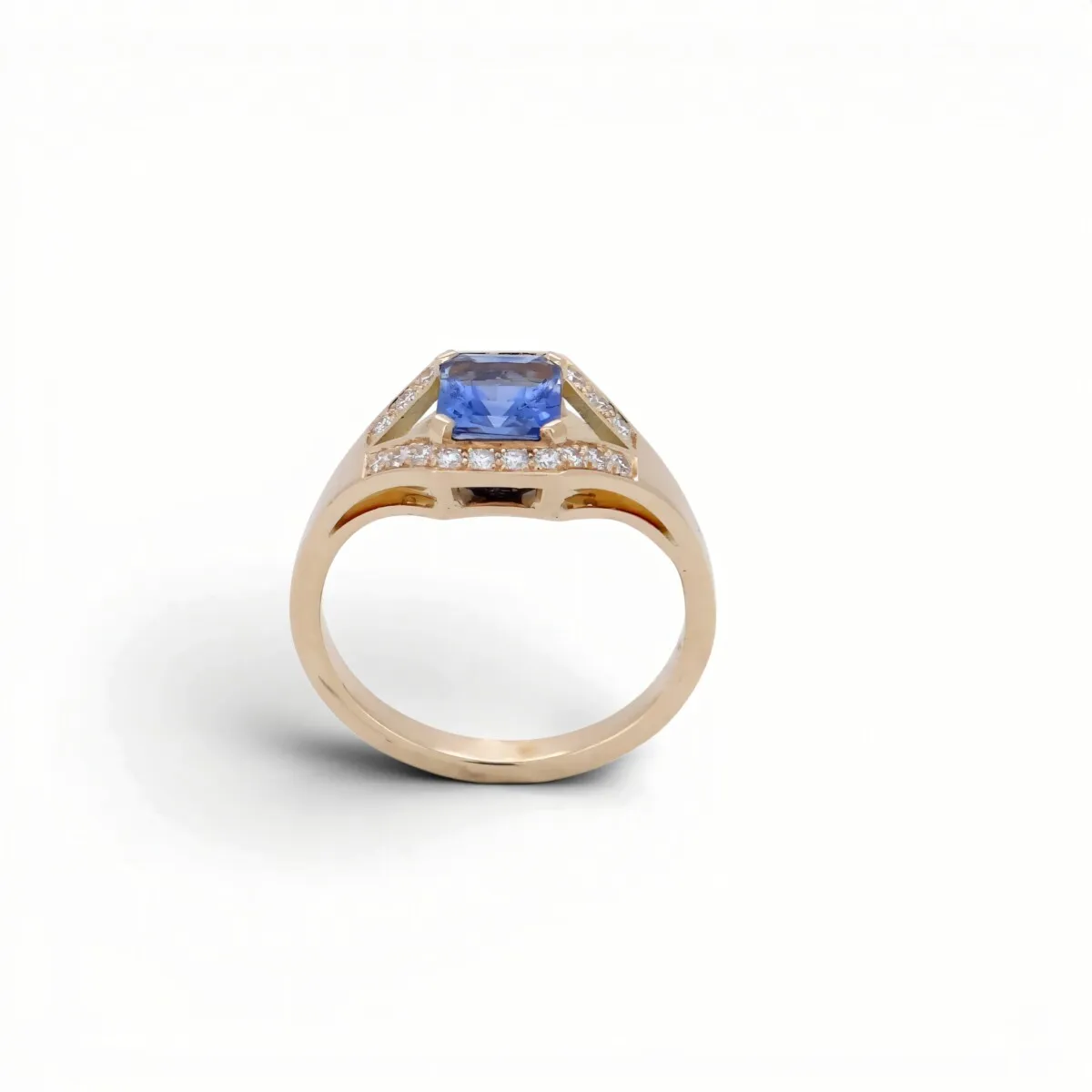
I took my notebook and drew several sketches. We chose the sapphire in a closed setting at the centre, surrounded by a geometric diamond pavé. On the shoulders, an open, openwork structure lightens the whole and lets the light in. The design was approved.
From Old Gold to an 18-Carat Yellow Gold Ring: The Work in the Workshop
Everything was made here, by hand, without intermediaries. The diamonds for the pavé also come from the old jewellery: each one was sorted under a x10 loupe, according to its clarity, colour and size, so as to fit the rhythm of the halo.
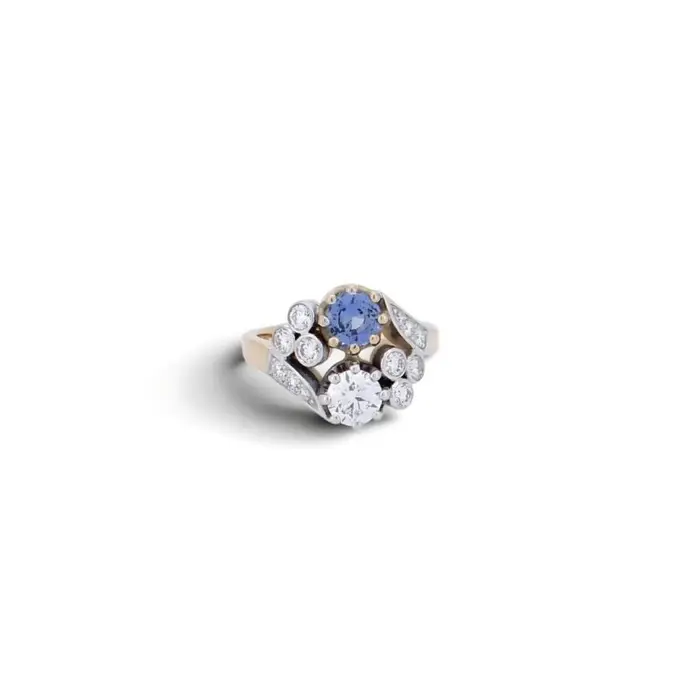
As for the 18-carat yellow gold, an alloy of 75% pure gold combined with copper and silver, it brings its warmth to the blue of the sapphire. The pairing recalls Victorian royal jewels, while remaining very contemporary.
Melting the Gold and Building the Open Shank
I first melted the gold recovered from the old pieces. Brought to 1,064 °C, its melting point, the metal was refined and then cast into an ingot. I rolled it into a sheet, then drew it through the draw bench to obtain the required sections. The body of the ring was then cut out with a piercing saw, bent on a ring mandrel to fit the size of his wife's finger, then soldered into a band. I kept a slim shank, true to her taste for discretion.
The central plate was built separately, with its openwork structure between the setting and the shoulders. This work demands rigour: every line, every angle is calculated to a tenth of a millimetre. For the sapphire's mount, I bent a fine strip of gold to the exact perimeter of the stone, cut corners included.
Setting and Polishing
The seats for the diamonds were cut with a conical burr. Then came the moment of setting. The sapphire was placed in its closed setting, and the gold strip was folded over its girdle with an onglette, applying gradual pressure. The diamonds followed in grain setting, using a graver and a beading tool, in a regular rhythm around the centre stone.
Finally, the ring was sanded, filed, then polished with felt and cotton, until the yellow gold regained all its lustre and the sapphire revealed its depth.
Handing Over the Ring: An Emotion That Speaks for Itself
A few weeks later, my client came back to collect the ring. His emotion spoke for him. In this band there was the gold of his old jewellery, their diamonds, twenty-five years of shared history. Given to his wife for their silver wedding anniversary, this ring will now carry the story of their life together.
It is for moments like these that I love my craft: a piece of jewellery is only truly finished when it reaches the person who will wear it.
If you too wish to give a personalised piece of jewellery to someone who matters, or to give a second life to family jewellery, do come and visit my workshop in Saint-Sébastien-sur-Loire. We will talk it over simply, over a notebook and a few sketches.