
Published on by Olivier Maupas-Sehikyan · Rings
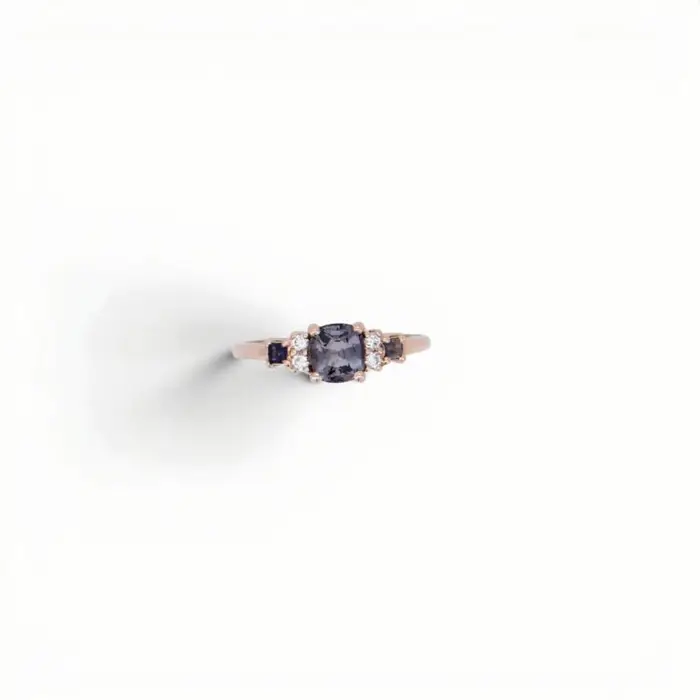
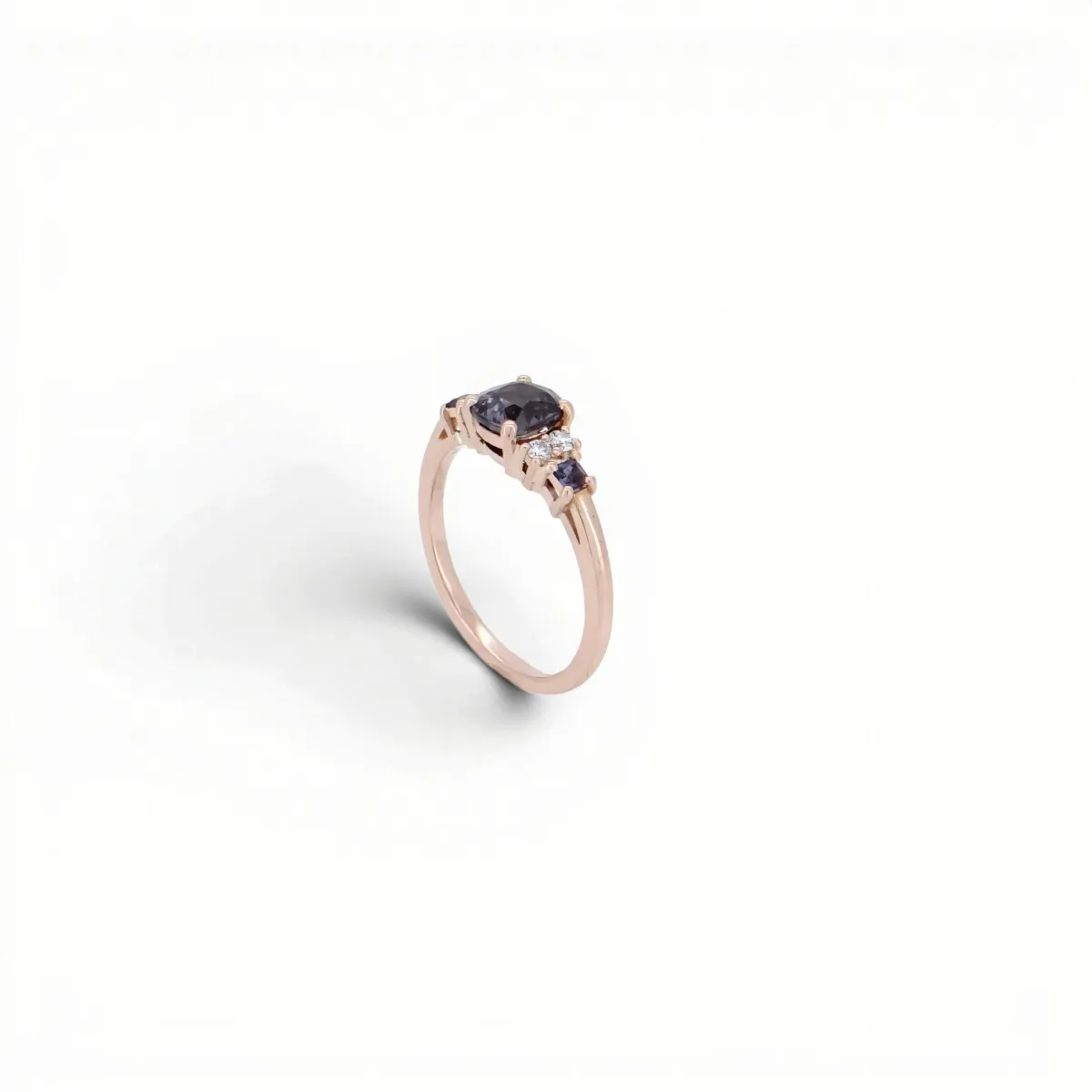
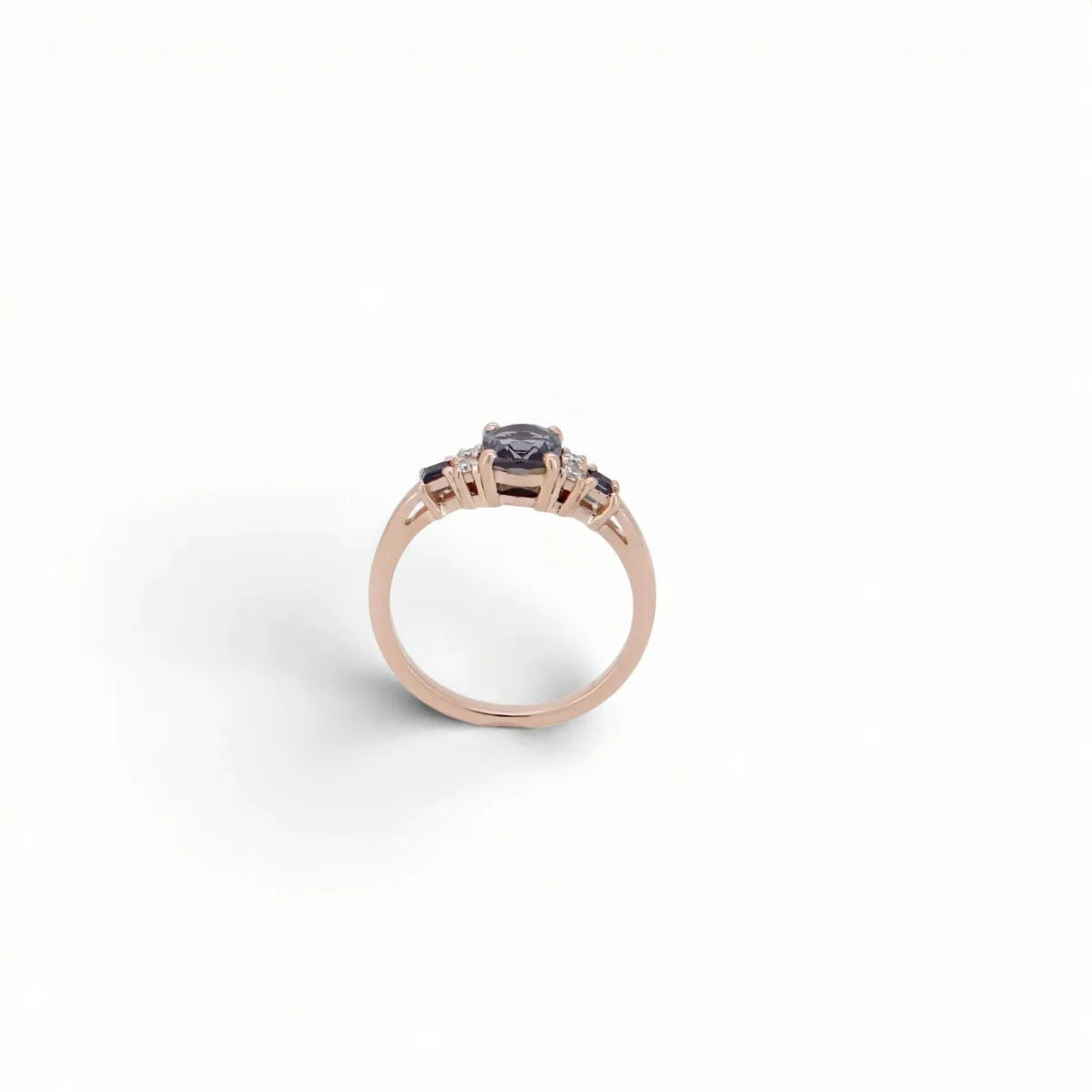
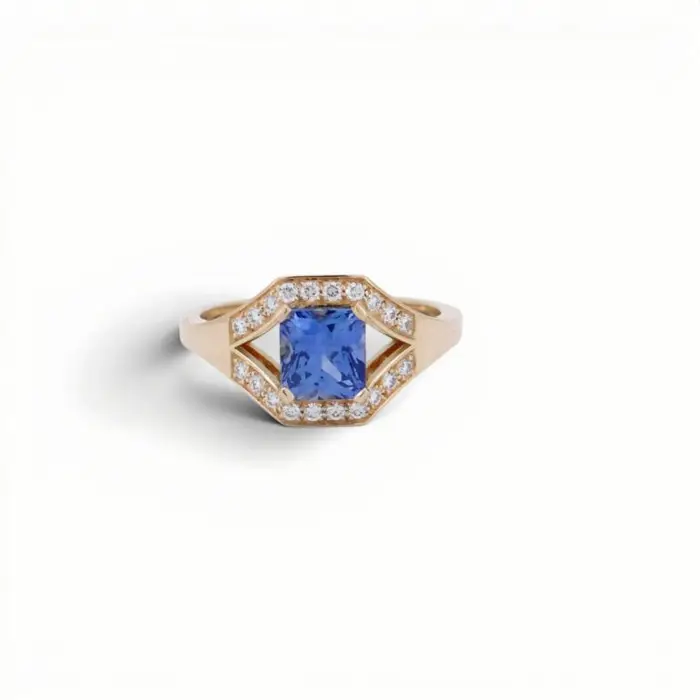
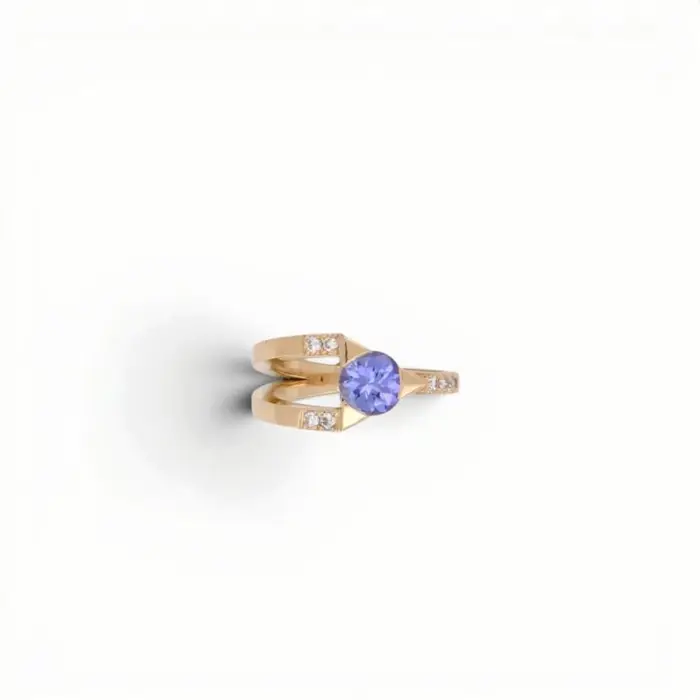
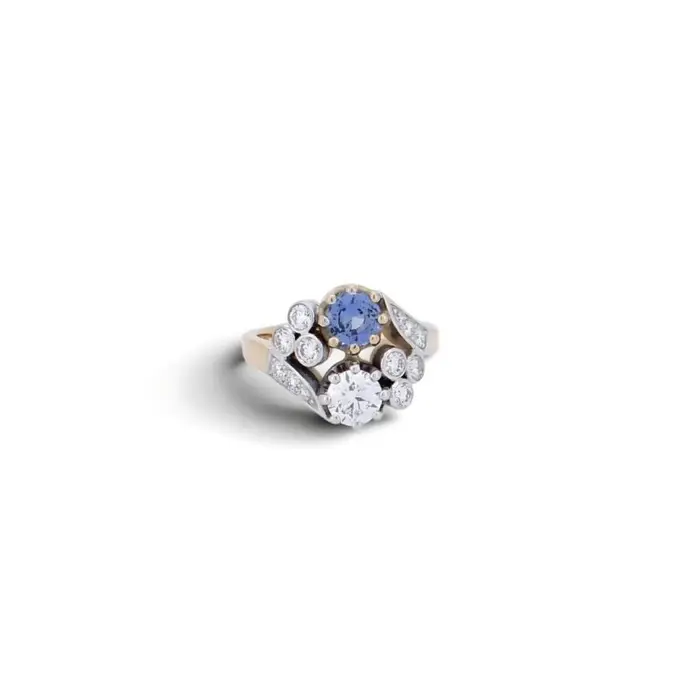
Some creations win you over with their delicacy rather than their boldness. The one I want to tell you about today is just such a piece. It is an 18-carat rose gold ring with a round spinel at its centre, framed by diamonds and square-cut sapphires. It was born in my workshop in Saint-Sébastien-sur-Loire, near Nantes, from a box of keepsakes and a very clear wish: to wear something that no one else would have.
A client, a box and the wish for an original ring
It all began with a visit. A client came through the door of the workshop with a small box in her hands. Inside were a broken rose gold chain, a few small diamonds, and a pair of inherited earrings that she no longer wore. Nothing spectacular at first glance, but each piece had its own past. She did not want to leave them lying forgotten. She wanted to give them a second life, a transformation of old jewellery that would truly be hers.
Her brief was precise, yet unconventional. No classic solitaire. No ruby or emerald, which she found too familiar. She was looking for a feminine, discreet piece, but one full of personality. We talked at length. She loves subtle nuances and deep, lesser-known colours. The usual blue of sapphire had tired her, and the green of emerald no longer spoke to her. Rare gemstones with captivating shades, on the other hand, made her dream.
I then brought out a round spinel from my personal collection, in a deep lavender-grey. She chose it almost at once. Its shade, somewhere between plum and graphite, had something mysterious about it that suited her perfectly. To accompany it, I suggested two round diamonds and two square-cut blue sapphires, placed on either side of the central stone.
Notebook in hand, I drew several sketches. We settled on this one: the spinel at the centre, claw-set, and on each side a small asymmetrical cluster made up of one round diamond and one square sapphire, all resting on a slender rose gold band. The project was agreed.
Spinel, square-cut sapphires and rose gold: a trio of carefully chosen materials
Before moving to the bench, I like to explain to my clients why each material has its place. Spinel lived for a long time in the shadow of the ruby. It is an oxide of aluminium and magnesium, with a hardness of 8 on the Mohs scale, which makes it perfectly suited to everyday wear. For centuries it was even mistaken for its red cousin: the famous "Black Prince's Ruby" in the British crown is in fact a spinel. Lavender-grey and plum shades now appeal to those who prefer alternative stones to the great classics.
Square-cut blue sapphires, also known as princess cut, bring a graphic touch. They belong to the corundum family and have a hardness of 9 on the Mohs scale. Their geometry creates a very soft contrast with the roundness of the spinel and the diamonds. As for diamonds, they are the hardest mineral known. Each one was examined under a x10 loupe for its clarity, colour and calibration.
Then there is the metal. 18-carat rose gold is an alloy of 75% pure gold enriched with copper. Its coppery warmth plays against the lavender-grey of the spinel and brings out all its nuances. It is also a nod to the original chain and earrings, whose gold was destined to become the new ring.
From ingot to setting: making a bespoke ring
Then comes time at the bench, my favourite part. Everything was made on site, by hand.
Giving old gold new life
I began by melting the rose gold recovered from the old jewellery. The metal was brought to 1,064 °C, its melting point, then refined and cast into an ingot. The ingot was rolled into a sheet, then drawn through the draw plate to obtain a fine round wire, suited to the slenderness we wanted for the band. Watching the gold of an old chain become new wire moves me every time.
The band and the mountings
The shank was cut with a piercing saw, bent on the ring mandrel to fit the finger perfectly, then soldered into a ring. This slenderness is essential: it preserves the quiet elegance of the piece. The central mounting was then built from the same wire. I shaped the four claws one by one with a needle file, at equal distances, to hold the spinel securely while letting in as much light as possible.
On each side, I built the settings for the diamonds and the square-cut sapphires. The latter demand real vigilance: their sharp corners must be protected by perfectly placed claws. A slight misalignment, and the stone could chip at the first knock. Each mounting was soldered to the band with precision, under very controlled heat, since too much would be enough to distort or melt such a fine ring.
Setting, then polishing
Setting is the moment when one holds one's breath a little. The spinel was seated in its claws, closed over with a pusher using gradual pressure. The diamonds and sapphires followed, each in its own little casket of metal. Then the ring was smoothed, filed and polished with felt and cotton mops, until it revealed the full glow of the rose gold and the contrast between the three gemstones.
The handover: a ring that is truly hers
On the day of the handover, my client slipped the ring on her finger. She understood at once that she was wearing a piece apart, at once discreet and singular, made from her own memories and a rare stone chosen together. What I love about this craft is precisely that: a forgotten box becomes a piece of jewellery to be worn every day, with a story behind it.
If you too keep old jewellery in a drawer, or if you dream of a bespoke rose gold ring in Nantes with a stone out of the ordinary, come and talk to me at the workshop in Saint-Sébastien-sur-Loire. We will take the time to look at what you have, to listen to what you love, and to imagine your next piece together.