
Published on by Olivier Maupas-Sehikyan · Creations
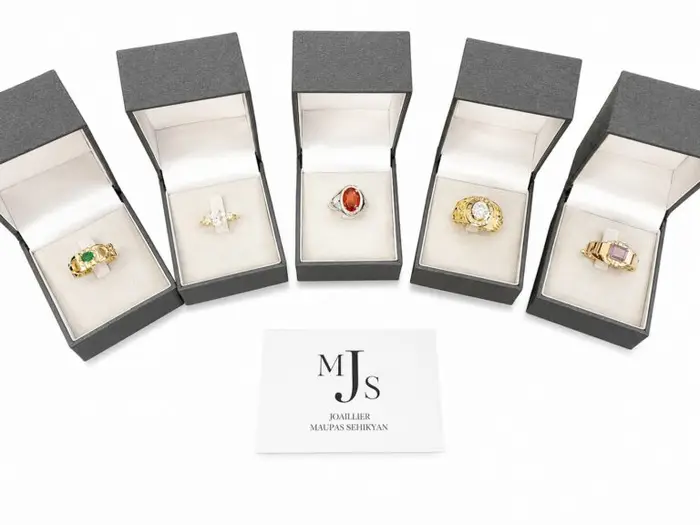
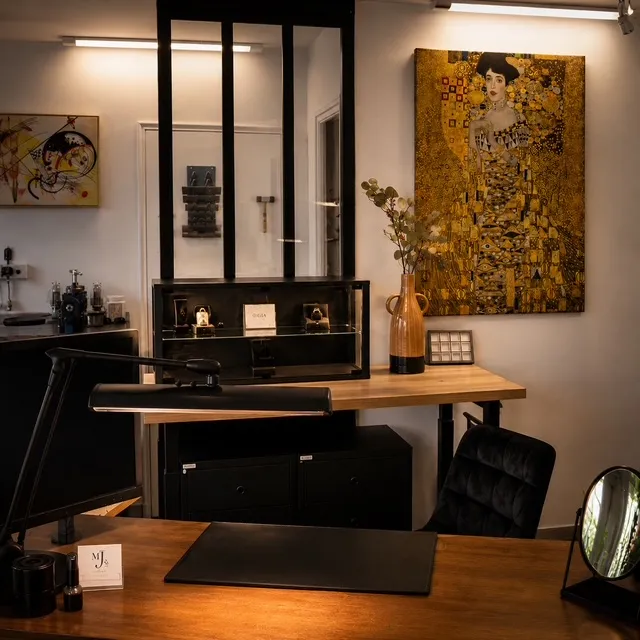
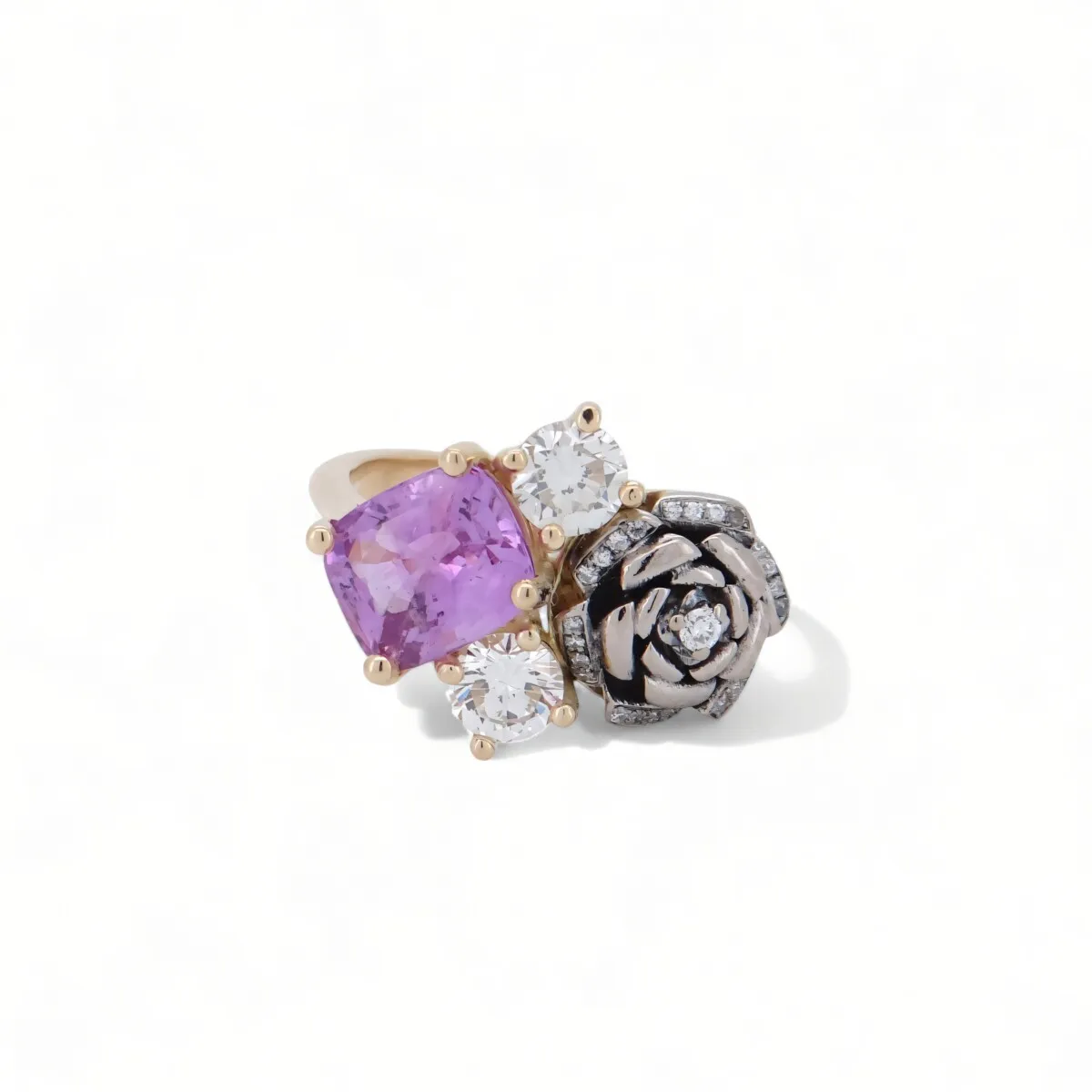
Some jewellery houses outsource, distribute or resell. I make. In my workshop-boutique at 36 rue du Général De Gaulle, in Saint-Sébastien-sur-Loire, just south of Nantes, every piece is carried through from the melting of the gold to the very last gesture of setting, under my eyes and in my hands. To show you what a difference that makes, I will take you through the creation of a four-claw diamond solitaire, one of the most emblematic pieces of my workshop.
An appointment at the workshop, where bespoke jewellery is born
It all begins with a door opening. A client comes in, wanting a solitaire. I do not reach for a catalogue. I invite them to sit down, and we talk: about the person who will wear the ring, what they love, the way they live with their hands. This first meeting is for understanding, nothing else. Bespoke jewellery is first built with words.
Then come the sketches, several of them, all drawn by hand. Sometimes I add a 3D rendering so that the client can see the ring before it exists, and, if the project calls for it, I prepare a wax model. Nothing is fixed until the design looks like what we had imagined.
This jewellery workshop is a true laboratory. It holds a gold forge with its refractory crucibles, a jeweller's bench fitted with its tools (piercing saw, ring mandrel, needle file, burnisher, graver, bead tool, conical burs), a rolling mill, a draw bench, a lost-wax casting station and, finally, the polishing station with its felts and cotton mops. Everything needed so that a piece never leaves my hands before it is finished.
Choosing the diamond and the gold for a bespoke solitaire
Once the design is chosen, we select the stone together. I am both a gemstone dealer and a designer jeweller, and this dual role allows me to select gemstones at source (Cambodia, Sri Lanka, Madagascar, Colombia) before bringing them into my creations. Few craftsmen do this: most depend on intermediaries.
For the diamond, we examine the stone under a x10 loupe. Colour, clarity, cut, carat weight: these four criteria, known as the 4Cs, make the beauty of a stone as much as its value. I let the client look, compare and ask questions. Once the stone is approved, we talk about the metal: yellow gold, white gold or rose gold, always in 18-carat.
From melting the gold to the band: handmade jewellery at the bench
The gold is melted on the premises, at around 1,064 °C, its melting point. When a client brings in old jewellery, an increasingly common practice, each piece is weighed, checked, then melted down with the rest. The metal is purified with borax, then poured into a clean ingot. This gives the ring a known and transparent history.
The ingot then passes between the steel rollers of the rolling mill. Drawn through successive draw plates at the bench, it becomes a round wire that will form the band. This wire is bent around the ring mandrel, a graduated steel cone, to fit the client's finger size exactly, and the ends are then soldered with a flame to form the ring.
The head, for its part, demands particular attention. The four claws are shaped separately from a thicker wire, cut with the piercing saw, adjusted with the needle file, then soldered symmetrically onto the body of the ring. Each must have the same height, the same inclination, the same angle. Without that, the stone would not sit straight. This handmade jewellery work leaves no room for approximation.
Setting and polishing: the moment of truth
Now comes the stage I consider the queen of all: the setting. The diamond is placed in its head, then, with my burnisher and under the gemmologist's loupe, I close the claws one by one over the girdle of the stone, with progressive pressure. A shift of a tenth of a millimetre is enough to weaken the stone or spoil the harmony of the piece. The tips are then rounded with a cup bur for a clean finish.
Setting has its techniques, each suited to a particular stone and use:
- claw setting, the most common for a solitaire, where small metal prongs hold the stone;
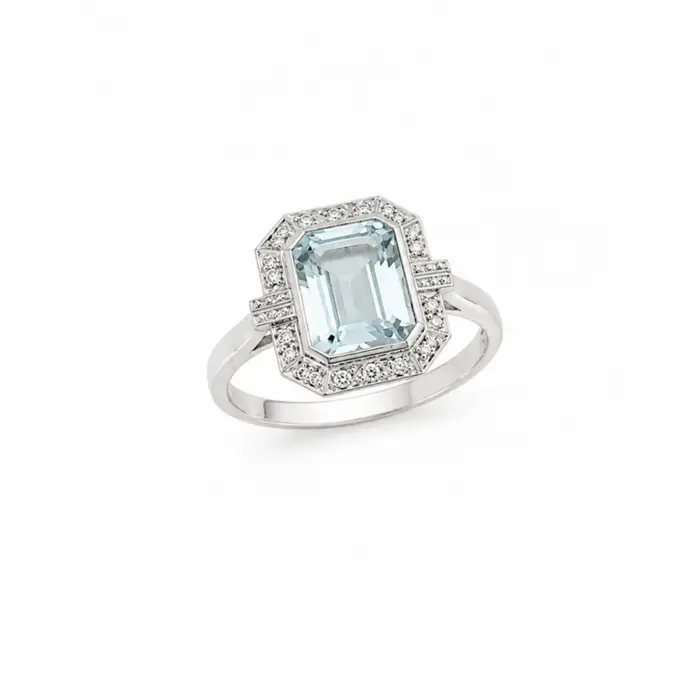
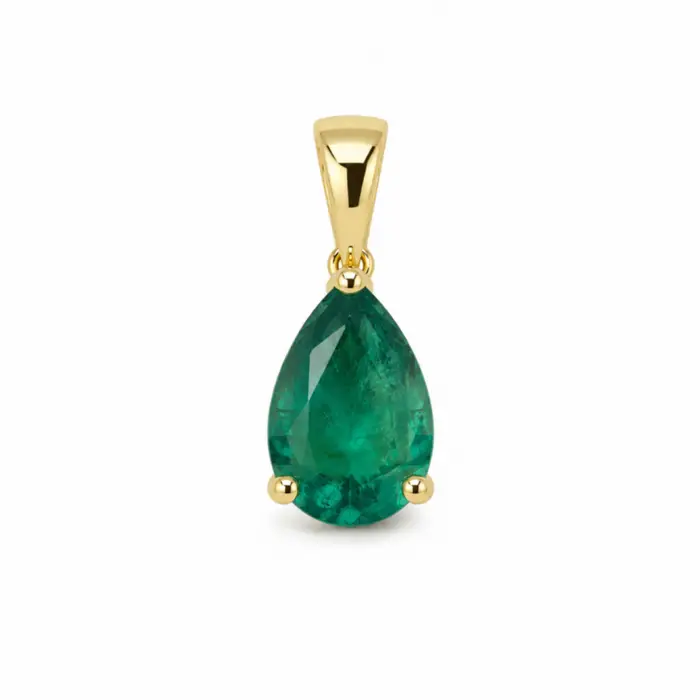
- bezel setting, which encircles the stone with a continuous band, ideal for fragile gemstones such as emerald, opal or topaz;
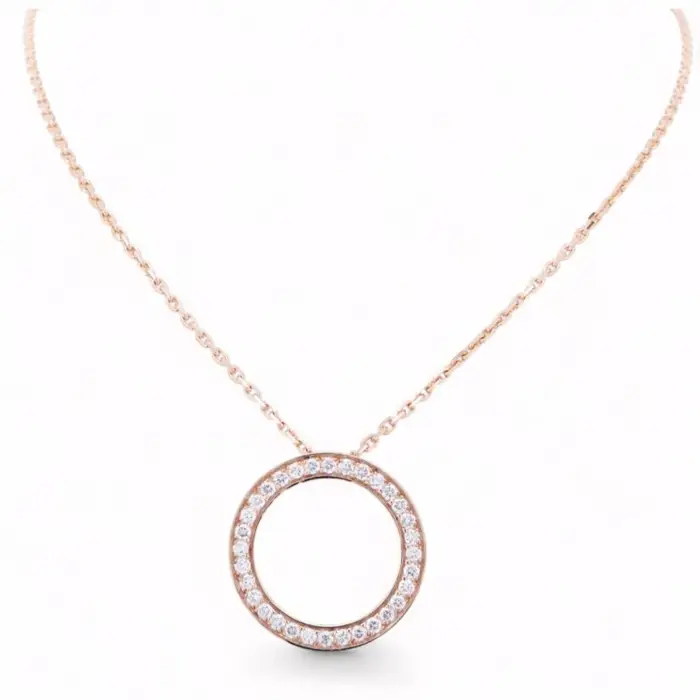
- grain setting or pavé, to align small diamonds into a luminous surface;
- channel setting, to place square-cut stones between two parallel bands;
- individual collet setting, where each stone is given its own circular casing.
Then comes the polishing. The ring is first sanded, then taken to the felt to erase tool marks, and finally to the cotton mop to reveal its mirror shine. If the creation is in white gold, a rhodium bath perfects its whiteness.
Handing over the ring, and an invitation to step through the door
There is one moment I love more than any other: when the ring, at last finished, is presented to its owner. After the sketches, the casting, the hours at the bench, it rests there in the palm of the hand, and it is no longer a project. It is an object with an author, an origin and a reason for being. The client knows which hands it passed through, and where every gram of gold comes from.
If you have in mind a solitaire, a wedding band, a signet ring, a pendant or something more singular, come and talk to me at the workshop, at 36 rue du Général De Gaulle, in Saint-Sébastien-sur-Loire, very close to Nantes. We will take the time to look together at what you imagine, and to see how to bring it to life.