
Published on by Olivier Maupas-Sehikyan · Rings
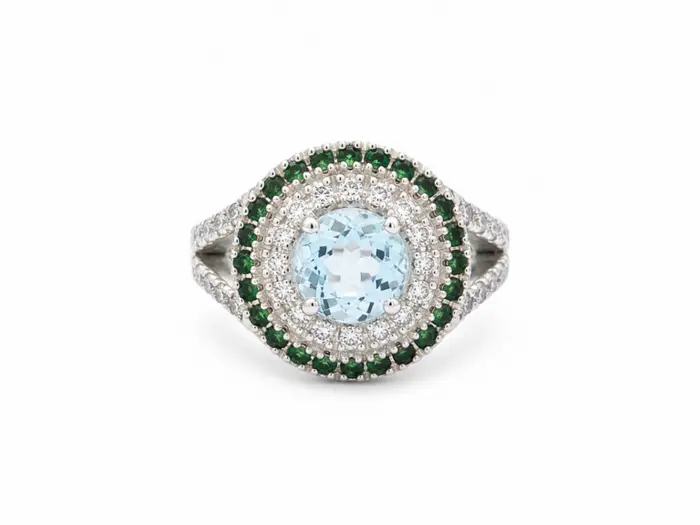
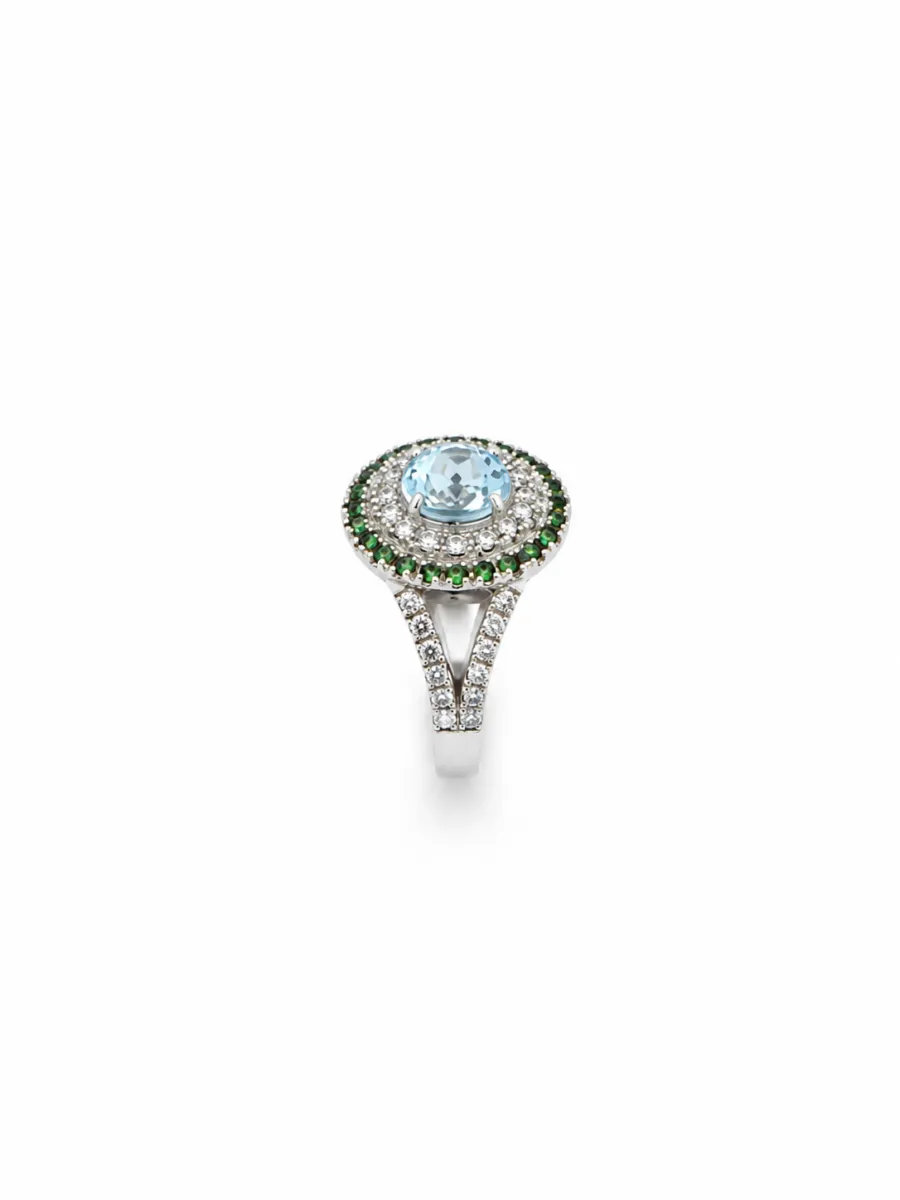
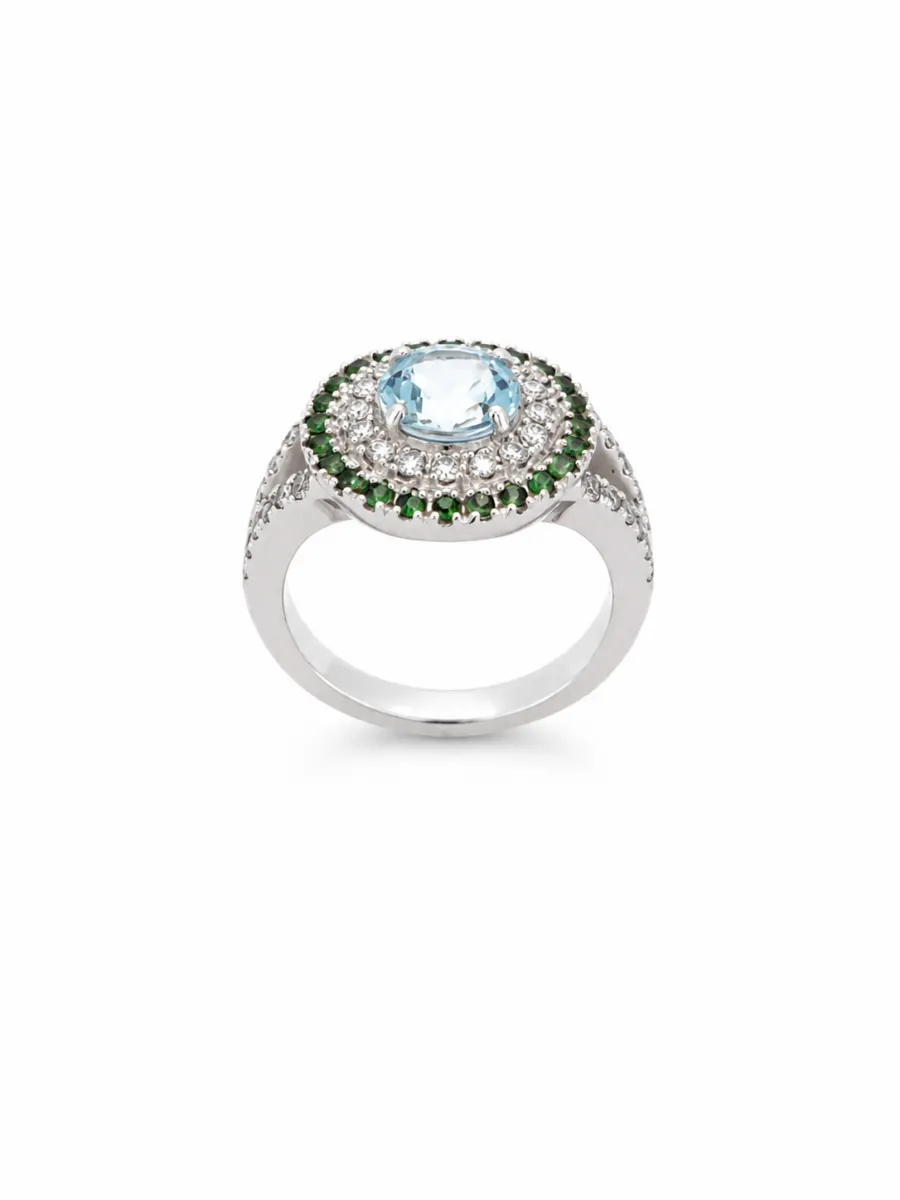
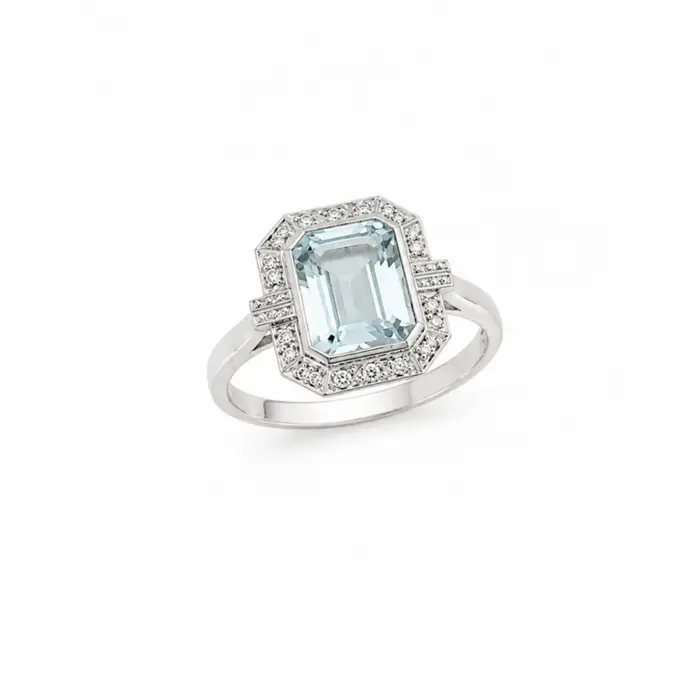
Some creations are the sum of many stories. The one I am telling you about today was born in my workshop in Saint-Sébastien-sur-Loire, south of Nantes, from a wish that seemed very simple: to bring together several family and personal jewels into a single piece that my client could at last wear every day. The result is a bespoke blue topaz ring in 18-carat white gold, surrounded by a halo of diamonds, then a second halo of tsavorite garnets. Let me tell you how it came to life.
A wooden box on the workbench: a client's request
One day, a client pushed open the door of my workshop, a large wooden box in her hands. She set it down carefully on my worktable, the way one puts down something fragile. When she opened it, a whole chapter of life unfolded before me: an antique 18-carat white gold ring handed down by her mother, a few diamonds salvaged from odd earrings, a broken chain and two tsavorite garnets brought back from a journey to East Africa.
Her idea took only a few words to express, but it was remarkably apt. Each of these jewels belonged to a different chapter: her mother, her student years, her travels, her birthday presents. All of them carried a memory, yet none was worn any more. She wanted to gather them into a single ring, a daily gesture on her finger that would distil that whole story. This is exactly the kind of transformation of old jewellery that I love to guide.
We talked at length. She loves colour, and she wanted a luminous, joyful piece, true to her personality. The green of the tsavorites reminds her of nature and of her travels: they had to be there, without question. That left the centre stone to find. I showed her several gemstones from my stock. A Sky Blue topaz caught her eye at once, its clear blue already in conversation with the deep green of the garnets.
I then took out my sketchbook and drew several designs. The one we chose places the topaz at the centre in a claw setting, encircled by a first halo of white diamonds and then a second halo of tsavorites. The doubled ring shank carries a pavé of grain-set diamonds on each branch. The project was approved.
Blue topaz and tsavorite garnet: blue and green in dialogue
Before moving to the bench, allow me to introduce these two gemstones, for they deserve a moment of attention.
Blue topaz, the softness of a morning sky
Blue topaz is a fine gemstone, an aluminium fluorosilicate. With a hardness of 8 on the Mohs scale, it ranks among the most resistant minerals used in jewellery. It comes in three main shades: Sky Blue, a light sky blue, Swiss Blue, more vivid, and London Blue, deeper still. The one my client chose evokes a clear morning sky or the waters of a lagoon.
Tsavorite garnet, a green rarity
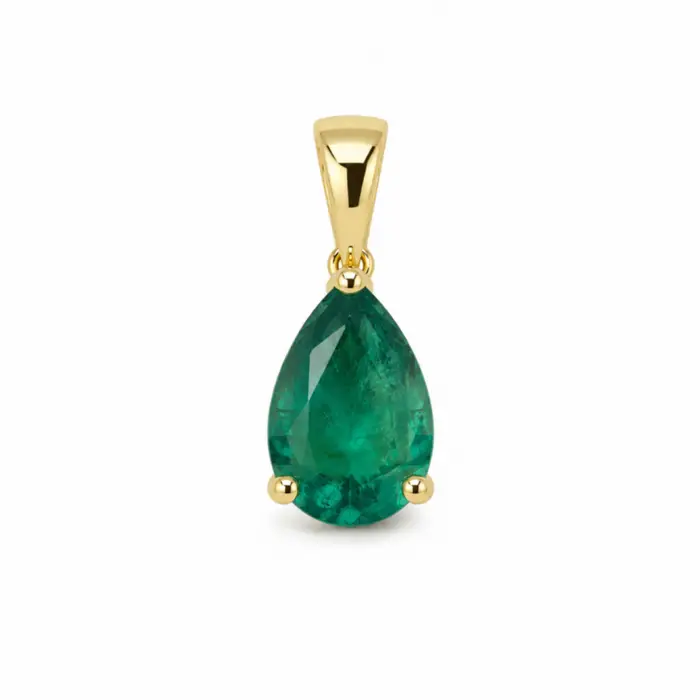
Tsavorite garnet remains one of the least known gemstones. It was discovered in 1967 by the gemmologist Campbell Bridges and takes its name from Tsavo National Park in Kenya. The house of Tiffany & Co. gave it its trade name in 1974. This variety of grossular garnet comes from only two deposits in the world, in Kenya and Tanzania.
According to gemmologists, it is 200 to 1,000 times rarer than emerald. Its deep green owes its intensity to the chromium and vanadium present in its crystal structure. Unlike emerald, it is never treated: its colour is entirely natural. With a hardness of 7 to 7.5, it withstands daily wear very well, which mattered a great deal for a ring meant never to leave its owner's hand.
Together, the blue and the green create a contrast of great softness, reminiscent of tropical landscapes. The small diamonds of the intermediate halo and the shank add the white brilliance that ties everything together. I sorted every stone under a x10 loupe: clarity, calibration, evenness of colour. My client's two tsavorites were completed with a few stones from my stock to form the entire halo.
Making a halo ring in white gold, by hand, near Nantes
Then comes the time of the metal. Everything was made on site, by hand, in my jewellery workshop in Saint-Sébastien-sur-Loire.
I began by melting the 18-carat white gold from the old jewels. Each piece was weighed and checked, then the metal was purified with borax to drive out impurities before being cast into an ingot. I will not hide that this moment always moves me: several distinct jewels, several eras, were coming together in a single material.
The ingot was then rolled into a sheet, then drawn on the draw bench to obtain the sections required. The doubled shank demanded particular care: two branches were cut out with the piercing saw, bent separately on the ring mandrel, then joined into a split shank. For the central mount, I shaped the claws from round wire and fitted them one by one with a needle file.
The most delicate stage is the construction of the two halos. Each seat, for the diamonds as for the tsavorites, was cut with a conical bur, in a perfectly regular rhythm. The symmetry must be accurate to the millimetre, for the slightest shift would break the harmony of the circle. The positions for the pavé on both branches were prepared in the same way.
The setting followed. The topaz was secured in its claws, closed over with my pusher. Each diamond of the first halo was grain-set, forming a ring of light, then the tsavorites of the second halo received the same treatment and brought their brilliant green. Finally, the diamonds on the branches were fixed with the graver and the beading tool. To finish, the ring was sanded, polished with felt and then cotton, and rhodium-plated to achieve a mirror-bright white finish.
The day of the handover: her mother, her travels, one single jewel
When my client slipped the ring on her finger for the first time, she hardly said a word. Her emotion spoke for her. She now wore, in a single jewel, her mother, her travels and her love of nature. The wooden box could remain closed: nothing slept in it any more.
If you, too, keep old jewellery, broken or simply forgotten, and dream of making it into a piece that is truly yours, come and talk to me at the workshop in Saint-Sébastien-sur-Loire, south of Nantes. Bring your box, tell me what it holds, and together we will look for the form your story might take.