Published on by Olivier Maupas-Sehikyan · Rings
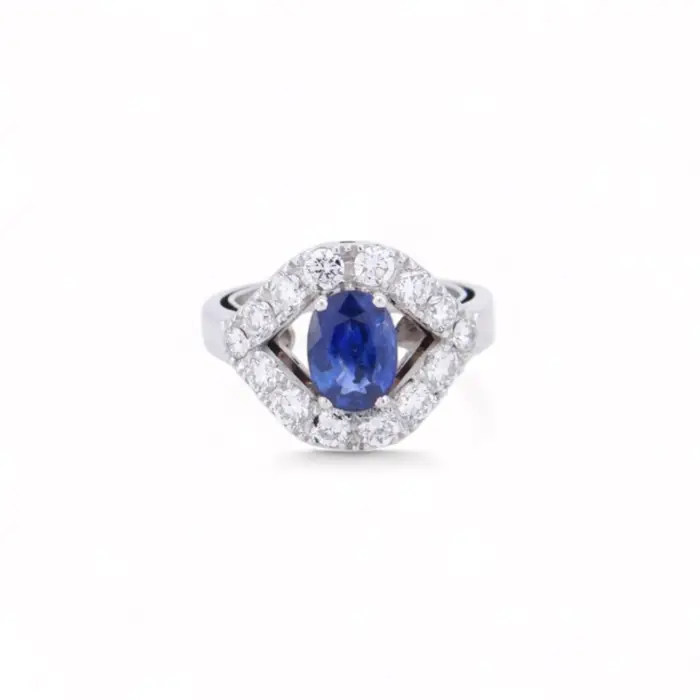
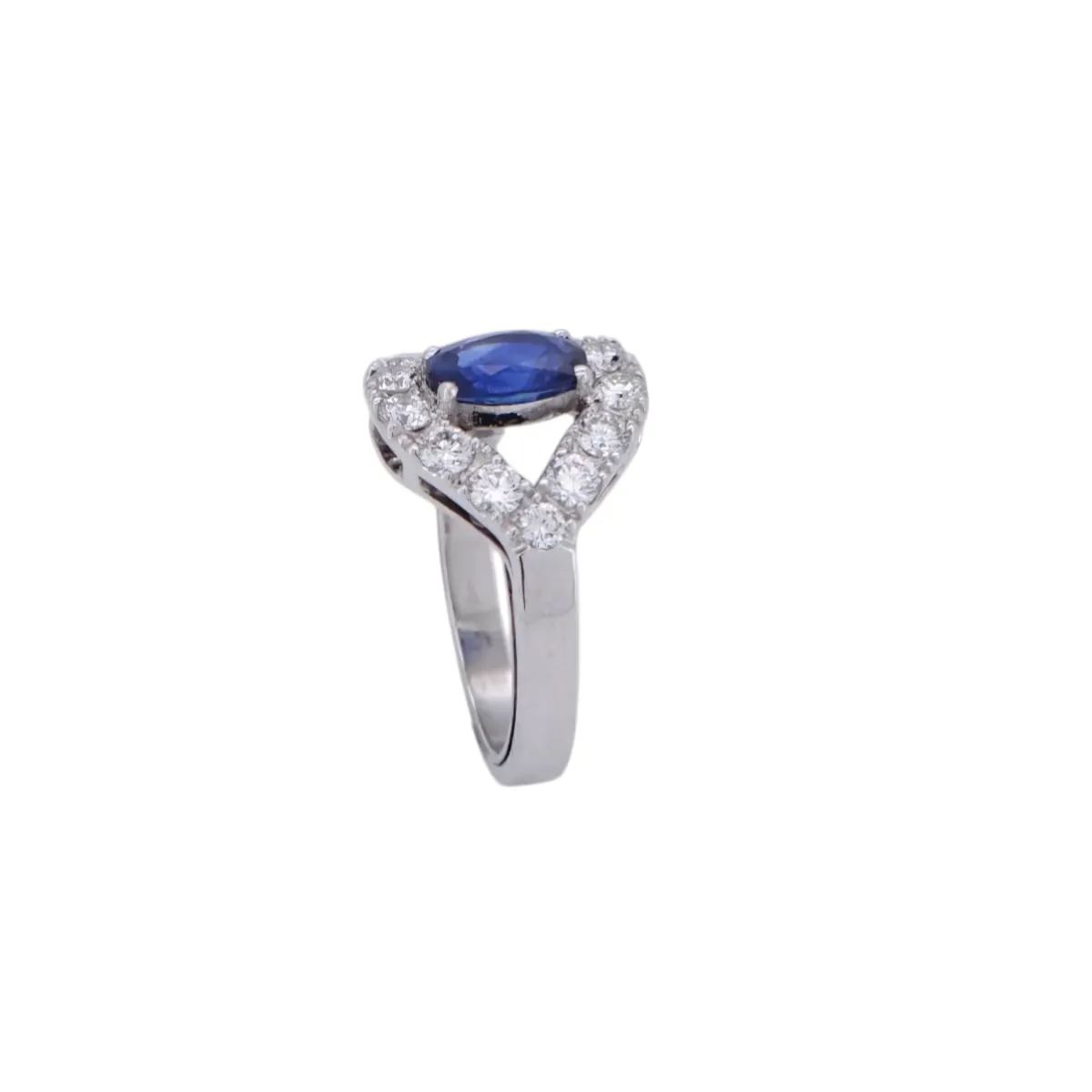
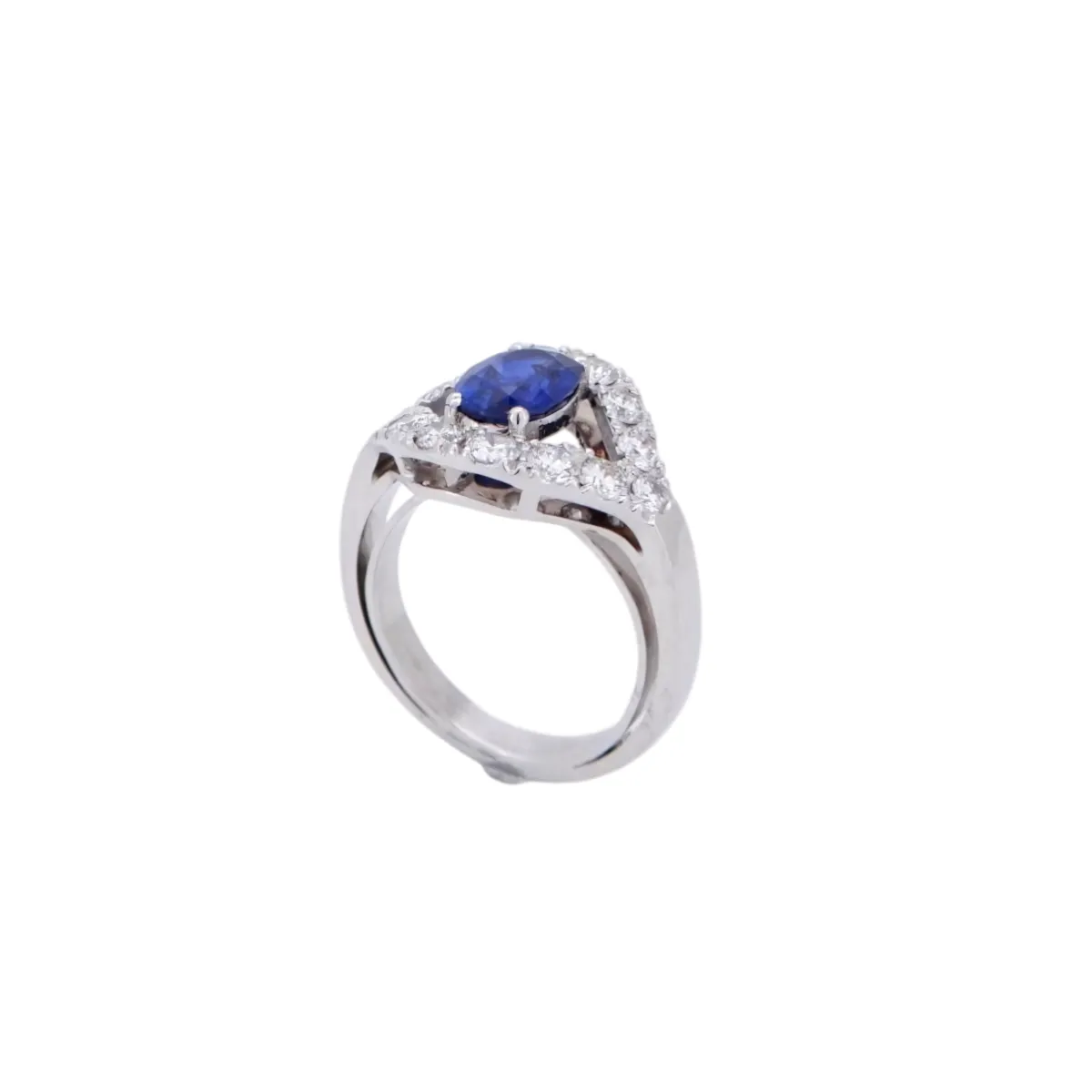
Some clients arrive with an idea, and others with a memory. One day, one of them pushed open the door of my workshop in Saint-Sébastien-sur-Loire, near Nantes, holding a small, softly worn leather case close to her. I did not yet know that I was about to find the starting point of one of my finest bespoke Ceylon sapphire rings.
A leather case and jewels no longer worn
She opened the case on my workbench. Inside lay several old pieces in 18-carat white gold: a family ring that had gone out of fashion, a broken chain, a few diamonds set aside over the years. And then, resting a little apart, an oval Ceylon sapphire that had been passed down to her by her mother.
Her request was clear. She no longer wanted these pieces to sleep at the back of a drawer. She wished to give them a second life, in a modern, luminous piece of jewellery that would be entirely her own. A wedding anniversary was approaching, and she wanted to celebrate it with a piece that carried both her family's story and her own.
We talked for a long time: about her tastes, her way of dressing, the jewellery she truly wears every day. In these moments, I listen as much as I look. Because transforming old jewellery begins with understanding what each piece means before deciding what to keep.
The design: a floating crown around the sapphire
I opened my sketchbook and drew several proposals. One of them held her attention completely: an open ring body in 18-carat white gold, topped with a crown that seems to hover, fully paved with diamonds, framing the central sapphire like a setting of light. A slight asymmetry in the line gives the whole piece character and avoids anything too demure.
The design was approved by mutual agreement. It remained for me to keep that promise with metal and stones.
Ceylon sapphire and diamonds: choosing the stones with care
Before beginning, I always take the time to look at the gemstones properly. The Ceylon sapphire comes from Sri Lanka, formerly known as Ceylon. It is a corundum, with a hardness of 9 on the Mohs scale, just behind diamond: a stone made to be worn every day. Its velvety blue, sometimes shaded with violet, comes from minute traces of iron and titanium within its crystal.
The sapphire is associated with the 45th wedding anniversary, which gave this project a particular resonance. And it has long been a favourite of Europe's royal courts: Lady Diana's engagement ring, later worn by Kate Middleton, is the best-known example.
I examined my client's sapphire under a x10 loupe: colour, clarity, cut, brilliance. Its transparency and deep blue were all there, intact. It needed nothing, except a beautiful setting.
The diamonds recovered from the old jewellery were sorted one by one. Those suited to the pavé were kept. For the rest, I drew on my own stock for complementary stones, chosen so that colours, clarities and sizes matched perfectly. A pavé in grain setting forgives no difference: the small stones are set very close together, and it is the harmony of the whole that creates that scintillating, continuous, almost liquid surface.
A white gold ring shaped entirely by hand
I chose to make this ring without resorting to any mechanical casting. It takes longer, but it is my way of working when a piece carries such emotional weight.
From old gold to workable wire
It all began with melting down the white gold of the old pieces. The metal was brought to fusion, refined, then cast into an ingot. I then rolled it into sheet and drew it through the draw bench to obtain the wire sections I needed. There is something deeply moving in watching a family's ring become fresh material once more, ready to tell a different story.
The mounting, then the setting
With a piercing saw, I cut out each element: the body of the ring, the two arms of the open section, the crown intended for the pavé. Each piece was fitted with a file, then soldered with a flame using a compatible 18-carat white gold solder.
With the mounting assembled, I prepared the seats for the diamonds with a conical bur. This stage demands millimetre precision: one movement too many and the stone will not hold, or there is not enough metal left to form the grains.
Then comes the moment I love best. With a graver, I raise tiny beads of gold around each diamond. They are pressed down onto the stone, then rounded with a beading tool to form those little pearls of metal that are the signature of grain setting. The sapphire rests in its own dedicated seat, claw-set, so that light can enter from beneath and awaken its blue.
The ring was then sanded, filed, and polished with felt and cotton. A rhodium bath gave it its brilliant, lasting white.
Handing over the ring
When my client returned to the workshop, I let her open the case alone. She remained silent for a long moment, then slipped the ring onto her finger. The oval sapphire floated at the centre of its crown of diamonds, and in its blue she recognised the stone she had entrusted to me a few weeks earlier. Her eyes shone.
This ring is no longer a collection of memories tucked away in a drawer. It is a piece of jewellery to be worn, admired, and passed on in turn. That is what I love about my craft: giving a new form to what we hold most dear.
If you too have family jewellery you no longer dare to wear, or a stone waiting for its moment, come and talk to me at the workshop. We shall take the time to look at what you have, to understand what it says, and to imagine together what it might become.